Forex Tax in Vietnam
Do forex traders and IBs in Vietnam owe tax? The legal status of offshore brokers, typical tax rates, the risk of back taxes and practical ways to reduce it.
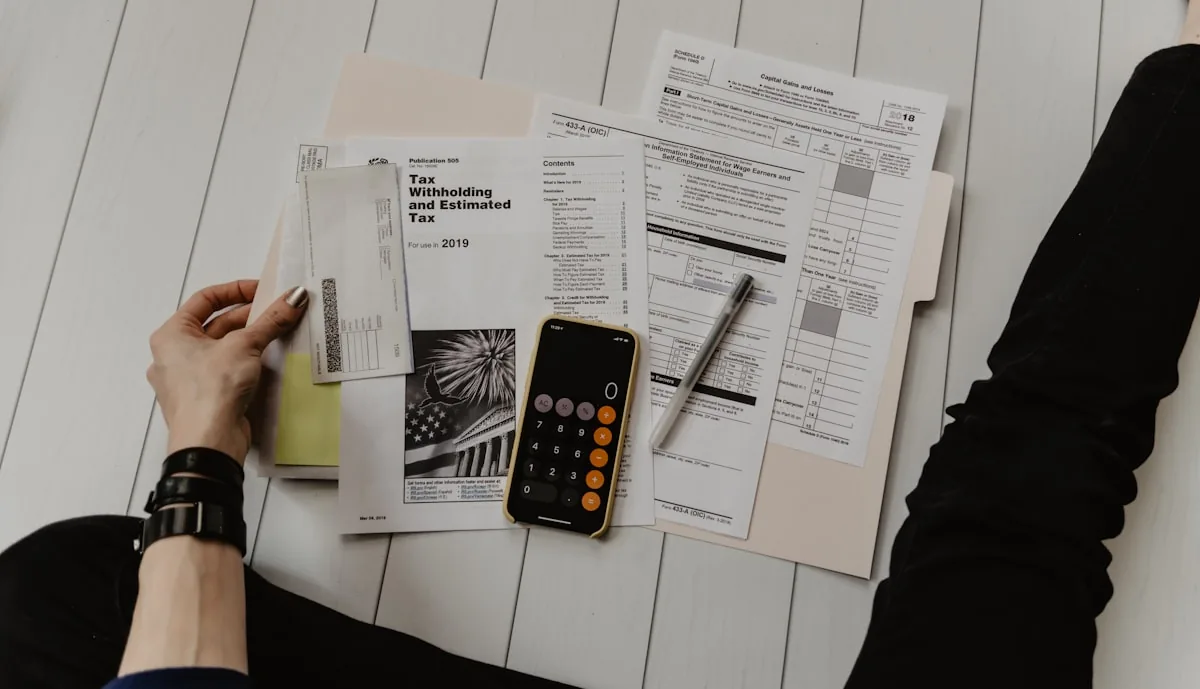
Foreign exchange (forex) trading is attracting more and more people in Vietnam, from retail traders to those who earn commission by referring clients to international brokers. Once profits or commissions become meaningful, the most common question is whether that money is taxable and, if so, at what rate. It is a sensitive area, because most investors are unclear about their tax obligations, especially when they trade through offshore brokers.
The following sections move from the legal angle to day-to-day practice: whether forex is legal in Vietnam, how retail traders and IBs are treated for tax purposes, the risks involved and some ways to limit them. The content is general information only. Before making decisions, traders should ask their local tax authority or a tax professional directly, since rules can change and every case is different.
Is forex legal in Vietnam
The tax question only makes sense once the legal status of the trading itself is clear. Under the current rules of the State Bank of Vietnam, international forex brokers have not been licensed to operate in the country. As a consequence, an individual in Vietnam trading forex through an offshore broker is not engaged in an activity recognised as legal.
Even so, hundreds of thousands of Vietnamese traders trade through international brokers such as Exness, IC Markets, XM and many others. The activity is not fully banned, yet it has not been legalised either. Traders usually call this situation a legal "grey zone".
Because of that grey zone, retail traders using international brokers may face certain legal risks. The most visible one concerns tax, as the next sections explain.
Do retail traders have to pay tax
At present, no specific rule requires retail traders to declare tax on forex profits made through international brokers. Vietnam's Personal Income Tax Law lists the categories of income from financial investment, and forex trading profits are not among them.
The picture changes when a trader withdraws a large sum from a broker to a domestic bank account. The bank may then ask the account holder to explain where the money came from. From that point, the tax authority may require the person to declare and pay personal income tax (PIT) as non-contractual income, at a rate that typically falls between 10% and 20%.
Example: a trader withdraws 1 billion dong of forex profit to a bank account. If the tax authority collects back PIT at 10%, the amount due is 100 million dong.
So although the law does not name forex explicitly, traders should still declare proactively when they have large transactions or significant income from trading. Acting early is usually far easier than being asked to explain the funds and then facing back taxes.
Do forex affiliates (IBs) have to pay tax
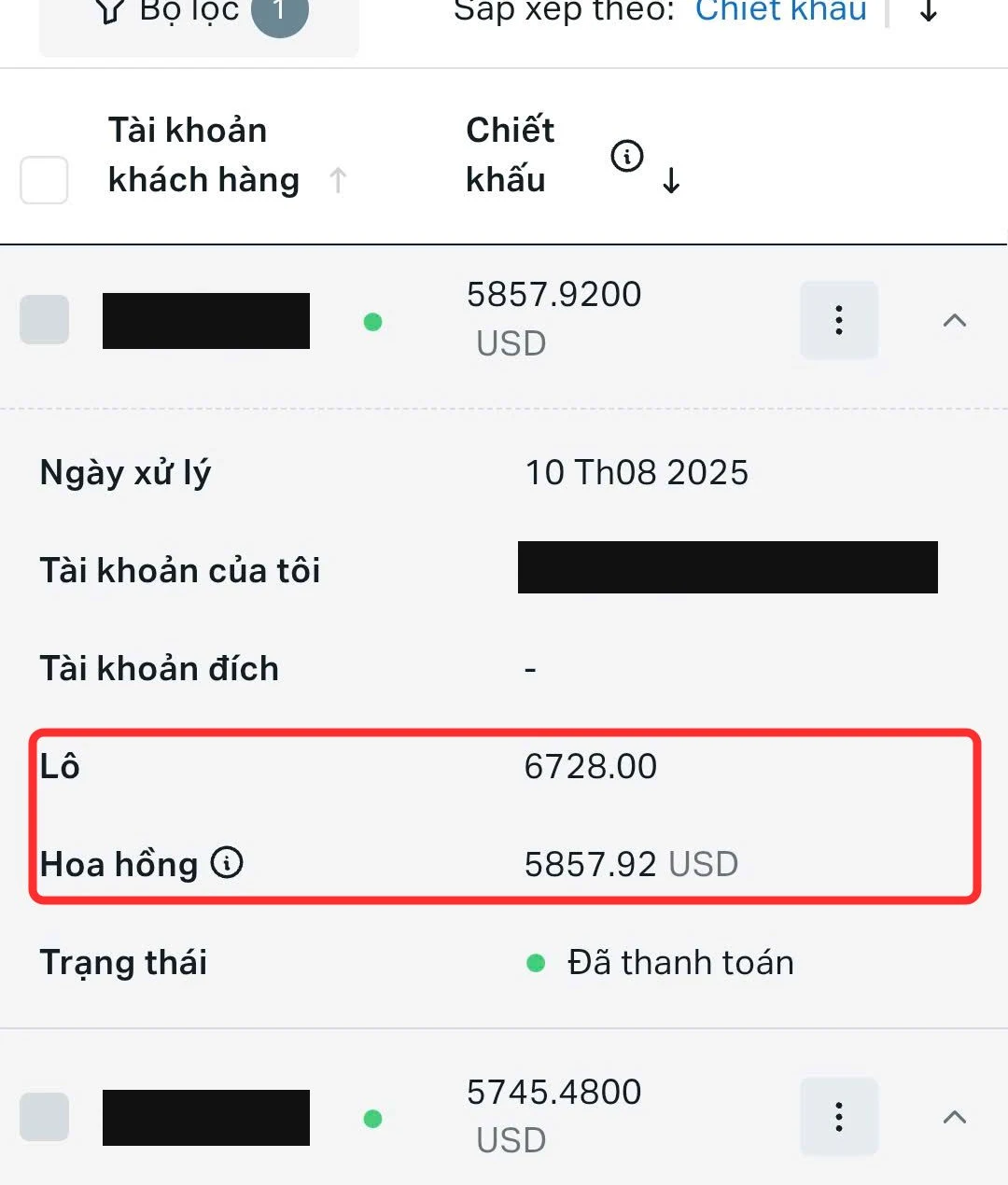
Besides traders, forex affiliates, also called IBs (introducing brokers), need to think about tax as well. An IB earns money by referring clients who open accounts and trade with international brokers. Payment can come through an IB link, per qualifying client (CPA) or as a share of revenue (Revenue Share). How this model works is explained in what backcom is.
Whatever the payment method, the activity is essentially a marketing service business, unlike trading on one's own account. Under current law, IBs must declare personal income tax or corporate tax, depending on how they operate.
The common cases are summarised in the following table:
| Form of activity | Tax payable | Notes |
|---|---|---|
| Individual receiving commission | 5–10% of income | Under an outside contract or self-declared |
| Individual with a tax code | about 7% (PIT + VAT) | Registered as a household business |
| Company | 20% corporate income tax + 5% VAT | Fully legalises IB activity, easier to scale |
The table shows that the more formal the setup, the clearer the tax treatment, at the cost of more paperwork. In addition, withdrawals from brokers to e-wallets or bank accounts may be checked if the amounts are large or look unusual. In that situation an IB can struggle to prove the source of income, and if tax obligations have not been met, legal consequences may follow.
Legal and tax risks
The biggest risk is failing to pay tax while earning substantial income from trading or IB work. If discovered, the person may face back taxes and administrative fines. On top of that, oversight of cross-border financial investment is tightening, particularly since 1 July 2025 under new government policy directions.
Looking further ahead, formal rules taxing income from forex, cryptocurrency and international financial platforms are quite likely. This is a forecast rather than a rule, but if it materialises, both traders and forex affiliates in Vietnam will be directly affected.
Ways to reduce tax risk
From these risks, a few concrete steps follow for each group. They help reduce the chance of unexpected back taxes, but they do not replace advice from the tax authority or a professional.
For traders
Traders should prepare to explain the source of their money before they need to:
- Avoid withdrawing an excessively large amount at once, since that kind of transaction is the most likely to prompt a bank to check the source of funds. Planning withdrawals does not replace the duty to declare once income becomes significant.
- Keep a full trading history, including deposits, withdrawals and profits, so there is documentation when questions come.
For affiliates
IBs can choose a level of formality that matches the size of their income:
- Register a personal tax code or set up a household business so the income has a legal basis when needed.
- Set up a company to make legitimising income easier and to expand affiliate operations.
On the choice of broker
Forex brokers are currently under fairly tight control in Vietnam. For that reason, some traders move to platforms that support both forex and crypto, such as BingX, hoping to avoid legal risk, and use P2P flows (direct trades between users) to reduce risk when depositing and withdrawing. However, switching platform or payment channel does not change the tax obligation on income already earned, and P2P trades carry their own counterparty and source-of-funds risks.
Conclusion
At present, forex trading and affiliate income in Vietnam are not taxed directly. That does not mean traders or IBs are fully exempt from tax responsibility in every situation. Legal and tax risks remain, and they grow as transaction amounts or income increase.
The safest approach is therefore to learn the tax rules currently in force and to consult the tax authority or a professional once income becomes significant. When needed, traders and IBs can register a personal tax code or set up a company so that their forex income has a clear legal basis.
Sources
- State Bank of Vietnam, foreign exchange management regulations: https://www.sbv.gov.vn/
- Personal Income Tax Law and guiding documents, available via the General Department of Taxation portal: https://www.gdt.gov.vn/
- DCtoptrade (screenshots): https://dctoptrade.vn/