
Six Warning Signs of a Forex Scam Broker
Six early signs of a forex scam broker: real or fake licences, company age, vague information, promised profits, heavy complaints and bonuses with strings.

The foreign exchange market draws every kind of participant, from individual investors and large funds to outright fraudsters. In Vietnam, the number of forex brokers courting clients is estimated at around 500, and many participants still casually call it "playing Forex". Among so many names, honest brokers and scam brokers are mixed together, so the most important question before depositing is how to tell the two apart as early as possible.
Each scam broker has its own trick for getting investors to open an account and fund it. The people most likely to fall for them are those hoping for high returns without doing anything, yet some scams are built so carefully that even cautious traders can be caught out without thorough checks. The sections that follow set out six traits these brokers share, along with how to check each one.
1. No licence, or a fake one
A licence from a well-known financial regulator, such as the UK's FCA, Cyprus's CySEC or Australia's ASIC, is the strongest evidence that a broker can be trusted. These regulators supervise how a broker holds client money and handles orders, so it is hard for the broker to cheat without being caught. A broker outside their oversight, by contrast, operates with almost no one watching, and treating clients unfairly becomes far easier.
Lacking a reputable licence does not automatically mean a broker is a scam, but traders should still avoid such brokers to keep their account balance safe. The reason is that in a dispute, or if the broker becomes insolvent, a well-licensed broker has a third party that steps in to resolve the matter and pay compensation. With an unlicensed broker, traders have almost nowhere to complain.
More sophisticated brokers do not leave the licence section empty; instead they fake a licence from a reputable regulator or register somewhere that licenses only as a formality. Because licence images and links supplied by the broker are easy to forge, traders should not rely on them. A safer method is to visit the regulator's own website, search the official register for the company name or licence number, such as the FCA register, the list of CySEC-licensed firms or ASIC's search tools, and then compare the website domain listed in the record.
Among the licences used in advertising, the US NFA and Saint Vincent and the Grenadines' SVGFSA are the two that scam brokers exploit most skilfully. With the NFA, many brokers simply register details to obtain an ID number, without being members and without any NFA supervision. So when something goes wrong, traders cannot ask the NFA to intervene or protect them, even though the broker's website displays that number prominently. Actual membership status can be checked in the NFA BASIC search system.
SVGFSA is considered one of the "weakest" licences in forex and finance. Saint Vincent and the Grenadines is known as a place where companies go to avoid tax, and also where many financial scams set up their base. The authority there cares more about registration fees than about clients' interests, which is why scam brokers like this licence so much. An example often cited is Tradeska, a broker that was rated highly by a number of websites and organisations despite operating without a licence.
2. Company age and location
Forex is a market that formed long ago, so established brokers have usually been operating for at least 5 years, and many for more than 10. Traders should therefore be careful with brokers founded less than 5 years ago, especially those only one or two years old. Not every young broker is a scam, but an estimated 80 to 90% of them either turn out to be scams or shut down after two to three years of operation.
Besides age, where a broker is based is also a signal worth checking. According to the statistics commonly cited, brokers set up in Saint Vincent and the Grenadines, Limassol or Hong Kong are more prone to scams. So when a broker is both young and based in one of these places, traders should check the other signs before depositing.
3. Vague, non-transparent information
A broker that operates honestly wants clients to see clearly what it offers. It publishes full information about the company and its management team, the products available, each account type, its platforms and trading conditions, so traders can read them and decide for themselves. The more transparent a broker is, the easier it is to trust.
A scam broker does the opposite: its website has only a few sketchy lines. Traders do not learn the specific trading conditions, the minimum deposit or the product list until they have opened an account, deposited and placed their first trade. By then, the money is already in the broker's hands.
This sign is the easiest to check, since it only takes visiting the broker's website and reading everything posted there. Scam brokers usually have no detailed fee table by account type and only write something vague like "spreads from 0.0 pips". Once the account is opened, traders find many different spread levels, and which one applies is decided by the broker's representative rather than chosen by the trader. How to read the real cost of a trade is covered in the guide to spread and commission.
Another detail that is easy to spot is the "Open account" button appearing everywhere. Whatever section of the website a trader is reading, that button sits there, as if the page's only purpose is to pull clients into depositing. Spreads are also a frequent complaint at less transparent brokers; Startrader is one example, with many traders having raised concerns about its spreads.
Scam brokers also tend to present a management team that does not exist and awards that do not exist. To check the team, traders can search Google for the name and photo of each "expert"; if they are fake, those names either do not exist or belong to people with no connection to forex trading. As for awards, scam brokers often edit images or receive awards from organisations unknown in the industry. The simplest method, therefore, is still to search Google for the award and the awarding body to see whether they are real.
4. Promises of high profits
Reputable brokers rarely sell managed trading, trading signals or trading robots. Instead, they focus on providing sound forex education so traders can trade better on their own. Scam brokers do the reverse, heavily promoting services that trade on clients' behalf, signals and automated robots with promises of unbelievably high returns.
Anyone who has traded forex knows it is a risky market, and high returns always come with high risk. So any broker promising large profits with low risk is suspicious from the start. That promise contradicts how the market works, so its only purpose is to get clients to deposit.
A familiar trick is to build up the image of a "professional trader". The broker picks someone, a Vietnamese person if it targets Vietnam, and gives that person a successful look with luxury cars, expensive phones, get-rich philosophy posts and screenshots of accounts worth a few thousand dollars. The goal is to recruit others into the group. This kind of scam repeats very often, and widely cited cases in recent times include BPS, Tradeska, Dex Investing, Scope and FVP Trade.
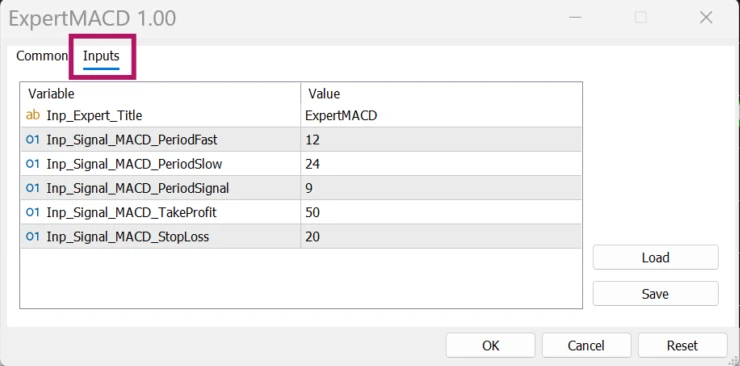
Of the products scam brokers like to sell, two are especially popular: robots and dividends. A forex robot, or EA (Expert Advisor), is really a program written to help place trades according to preset parameters. However, most robots on the market today lose money, and they sell mainly by playing on the wish to earn without working. A well-known recent example is FVP Trade's "quantum robot".
Dividends on US or European company shares are used as bait in a similar way. A dividend is money a company pays back to shareholders, but right after it is paid, the share price falls by a corresponding amount. In other words, receiving a dividend does not make the trader richer, because the cash received has already been subtracted from the share price. Any broker advertising dividends as a steady source of profit is exploiting clients' lack of knowledge.
5. Many complaints, even fraud accusations
Competition between brokers is normal, and sometimes one broker pays people to write smear pieces about another. With long-standing reputable brokers, however, rivals rarely bother, because a few unfounded accusations are not enough to make traders lose faith in them. That is why scattered criticism is not a reliable measure.
Scam brokers, on the other hand, usually collect a flood of complaints from investors themselves, appearing all over forums and social media. To check, traders can search Google with phrases such as "broker name + review" or "broker name + scam", then see whether the complaints repeat the same pattern. When many different people tell the same story, such as being unable to withdraw or having trades closed for no reason, that is a very worrying signal.
The five signs above are the easiest to notice when traders first start learning about forex. Even so, some brokers market their brand so skilfully that newcomers struggle to see these signs. Only after depositing and trading do the irregularities show up, in the form of tricks that wipe out the trader's account or seize money outright.
6. Attractive bonuses with conditions
Putting promotions on a list of scam signs may sound odd, since every broker runs offers. Traders should nevertheless assess a bonus programme carefully before joining, for two reasons:
- A bonus is only extra credit, letting traders open more positions. In essence it allows larger volume, and the risk grows with it, much like the effect of leverage.
- Bonuses usually cannot be withdrawn, and some brokers use them as a pretext to require clients to trade a certain volume before any withdrawal is allowed. This condition is often not made clear when clients sign up for the bonus.
Before accepting a bonus, therefore, traders need to read the full terms, especially the parts about required volume and the right to withdraw the original deposit. A bonus programme with vague withdrawal conditions should be treated as a warning sign rather than a gift.
Conclusion
Every investment carries risk, and no method is certain to make a profit. A reputable broker is one with no fraudulent behaviour and no seizing of client funds, but that does not mean money invested there cannot be lost. Before opening an account with any broker, traders should therefore check the licence on the regulator's website themselves, read the trading conditions carefully and stay wary of any promise of high returns.
Sources
- Financial Conduct Authority (FCA), Financial Services Register: https://register.fca.org.uk/
- Cyprus Securities and Exchange Commission (CySEC): https://www.cysec.gov.cy/
- Australian Securities and Investments Commission (ASIC): https://asic.gov.au/
- National Futures Association (NFA), BASIC: https://www.nfa.futures.org/BasicNet/
- DCtoptrade (screenshots): https://dctoptrade.vn/

