Forex Leverage for Beginners
What forex leverage is, how to read a 1:10 ratio, how to work it out from the margin rate, how to choose a level and three ways to limit the risk.
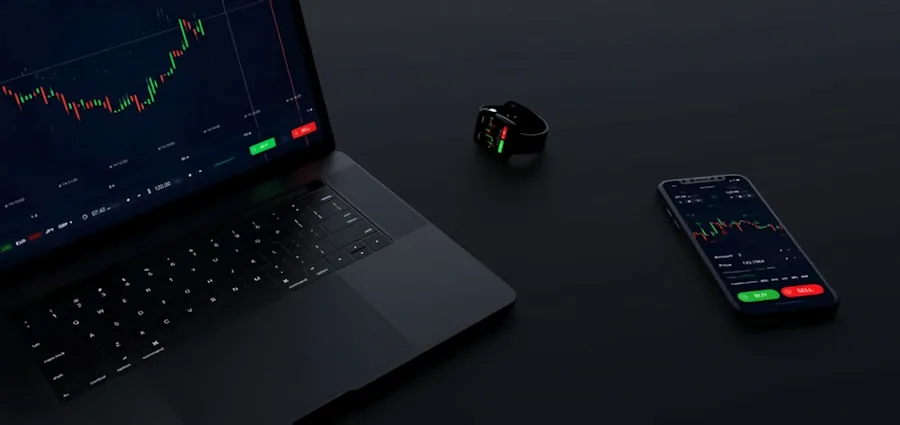
Almost every forex trade a retail trader places on MT4 or MT5 runs on leverage, whether the trader thinks about it or not. An account holding a few thousand dollars can still open a position worth hundreds of thousands, because most of that value is lent by the broker. That is why gains can be far larger than the money put in. The catch is that losses grow by exactly the same ratio. New traders tend to see only the first half of that equation, which is one reason so many accounts are wiped out within the first few weeks.
Using leverage under control comes down to four things. The first is the borrowing and margin mechanism behind every position. The second is how to read and calculate a ratio such as 1:10 or 1:20. The third is the set of factors that decide which level suits a particular trader. The last is three habits that cap the damage when the market moves the wrong way.
What leverage is
Leverage is capital the broker lends a trader so the trader can open a position larger than the cash actually in the account. In other words, the trader puts up only a small slice of the trade's value and the broker fronts the rest. The money the trader must set aside to secure the position is called margin, and the account that holds this collateral is known as a margin account.
Each margin account comes with its own leverage limit and minimum margin requirement, and leverage is only available once the balance meets those terms. For example, if an account requires 10% margin and the trader wants to open a $100,000 position, the account must hold at least $10,000 as collateral. When the trader commits that full $10,000 to hold the $100,000 position, the leverage in use is 10:1, meaning each dollar of real capital is carrying ten dollars of position.
The currency market is risky on its own, and leverage adds to that risk. Profit and loss are calculated on the full value of the position, not on the trader's own capital. As a result, the same price move can produce a gain, or a loss, several times larger than it would without borrowed money. That is why traders often call leverage a double-edged sword, and why it deserves careful thought before it is used.
Reading a leverage ratio
The simplest way to read a leverage ratio is to treat the number on the left as a multiplier. It shows how many units of position each unit of account balance can control. At 10:1, for instance, every $1 of real balance supports a $10 position. Many platforms write the same ratio the other way round, as 1:10, but the meaning does not change.
Applied to a real account, that multiplication shows the true size of a trade. Suppose the balance is $10,000 and the trader uses 20:1. The largest position available is then 20 times $10,000, or $200,000. This explains why a small price move can shift the balance noticeably: the trader is exposed to profit and loss on $200,000, not on $10,000. To see what each price step is worth in money, traders can read the guide to lots, pips and pip value.
What traders use leverage for
The most common purpose is to open larger positions in a set proportion to the real balance. A trader with $1,000 who chooses 10:1, for example, can hold a position worth up to $10,000. This is the use most beginners think of first.
Some traders use leverage the other way, to reduce the amount of margin tied up in each trade. For the same position size, higher leverage means the broker holds back less money as collateral. The rest of the balance then stays free to absorb price swings or to fund other trades.
Others commit their entire margin balance to open the largest position possible, hoping for an outsized profit. This approach pays the most when the trade goes the right way. However, it also leaves the thinnest cushion when price turns, which makes it the style of leverage most likely to blow up an account.
Calculating leverage
Two inputs are needed to work out the leverage on a trade. The first is the notional value of the trade, also called the trade size, which is the total value of the position the trader wants to open. The second is the margin percentage, the share of the trade's value the broker requires as collateral. Brokers publish this rate so traders know the minimum capital each trade needs.
For this calculation, margin and deposit are treated as the same thing. The equity needed to open the trade equals the margin percentage multiplied by the trade size. Dividing the trade size by that equity then gives the leverage. The two steps look like this:
- Required equity = margin percentage × trade size
- Leverage = trade size ÷ required equity
Going back to the opening example, a $100,000 trade at 10% margin needs $10,000 of equity, and $100,000 divided by $10,000 gives 10:1. Likewise, if the broker asks for only 5% margin, the same trade needs just $5,000 and the leverage rises to 20:1. In short, the lower the margin rate, the higher the leverage, so traders should treat the two figures as two sides of the same setting.
Choosing a leverage level
Once beginners understand leverage, the question they ask most is which level to pick. In practice there is no single right number for everyone. The right level depends on several factors, chiefly each trader's goals, financial situation and strategy.
As a general rule, low leverage makes risk easier to control, although traders can still lose money at low leverage. High leverage, by contrast, produces very large gains when a trade works. When a trade fails, however, the loss can also be very large relative to the account. Before choosing, traders should therefore check six factors:
- Financial fit: whether the leverage level suits the trader's overall financial position.
- Goal: what the trader wants to achieve with leverage, and which levels serve that goal.
- Holding period: how long the position is meant to stay open, and which leverage level matches that expectation.
- Risk tolerance: the most the trader is willing to lose, and the leverage that fits within that limit.
- Budget per trade: the capital the trader is prepared to commit to each trade, which in turn sets the leverage to use.
- Trading style: short-term trading, day trading and long-term positions each call for different leverage.
None of these factors produces the final number on its own. Instead, traders need to weigh them together to land on a level that fits their own plan and objectives.
Advantages of leverage
The biggest benefit of leverage is that it lets a trader with a small account take part in large trades. With little money, a trader can open a position many times the size of the real capital. As a result, the earning potential of each dollar rises considerably.
The second benefit is a low cost of entry. Compared with traditional investing, where the buyer pays the full value of the asset, leveraged trading allows a start with far less money. Many people still believe forex requires at least $1,000. In reality, leverage means a trader can enter the market with as little as about $1.
Disadvantages of leverage
The main drawback is amplified risk. When a trade loses, the loss is magnified by exactly the leverage the trader chose. Leveraged trading can therefore cause heavy damage, and without a sound risk management strategy the loss can even reach several times the starting capital.
The second drawback is the knowledge and experience it demands. Using leverage well requires a solid understanding of the market and the skill to manage risk, so that decisions are made accurately. Traders without that foundation usually see only the upside of leverage until their first losing trade.
Three ways to limit the risk
Leverage opens up large opportunities but carries real risk, just as the double-edged sword image suggests. Traders who want to last in the currency market therefore need a suitable way to manage that risk. The three methods below work together, from how capital is split to how exit orders are placed.
Do not put everything into one trade
Putting all the money into a single trade is a highly risky approach and is generally seen as a mistake. The reason is that no one can predict market direction correctly 100% of the time. Forex moves constantly, so a trend can go completely against what the trader expected. Each trade should therefore put only a small share at risk, an amount the trader can afford to lose if the trade fails.
For example, a trader who decides to put 10% of the account at risk on one trade is already using substantial leverage. That decision brings a very large danger with it. If the trade loses, the trader can easily slip into negative emotions and start placing uncontrolled trades to win the money back. The account then loses even more, and that money is hard to recover, because making up a 10% loss requires a gain of about 11% on what remains. Disciplined risk management is the key to avoiding that chain of consequences when the market does not behave as expected.
Use a stop loss
A stop loss is a key tool for managing risk when trading with leverage. With this order, the trader sets a price in advance, and when the market reaches it, the broker closes the position automatically. The main benefit is that the trader knows ahead of time exactly how much money is at risk on each position.
Where the stop is placed depends on each trader's strategy. However, traders need to understand one important limit: the broker can only close the position at the best price available, especially when the market is moving fast. The actual fill can therefore land as much as a hundred pips away from the stop level that was set.
That limit is exactly why no single trade should risk too much. Suppose a trader risks just 1% of the account and the fill slips past the stop by a further 3%. The real loss then falls somewhere between 1% and 4%, so in the worst case it is four times the plan. If the trader had risked 10% instead, a slip of the same severity could cost as much as 40% of the account. The gap between 4% and 40% shows that the initial risk level decides how much damage an incident does.
Use a guaranteed stop loss
A guaranteed stop loss (GSL) works like a regular stop loss but adds a promise. Specifically, the broker guarantees to close the position at exactly the price set in advance, however violently the market moves. This largely closes the slippage gap described above. Not every broker offers GSLs, though, and each one that does sets its own rules for them.
By common convention, a GSL is placed around 5% away from the current price. This means the closing price of the position is kept within a 5% band of the preset level, even when the market jerks sharply. The feature lowers risk considerably and adds a layer of protection for capital during very volatile sessions. Before using one, traders should read the GSL terms on the broker's official website, as these conditions vary and can change.
Using leverage with control
Leverage calls for experience and a fairly deep understanding of the market. Used carelessly, it can lead to losses far beyond what was planned. For anyone trading currencies, the key is to take advantage of the opportunities leverage creates while keeping an effective risk management strategy in place: keep the risk on each trade small, always set a stop loss, and consider a guaranteed stop where the broker offers one.
Sources
- The margin, leverage ratio and slippage examples are hypothetical illustrations based on general market conventions, not the terms of any specific broker.
- Maximum leverage, margin rates and guaranteed stop loss (GSL) conditions are set by each broker; traders should confirm them on the official website of the broker they use.