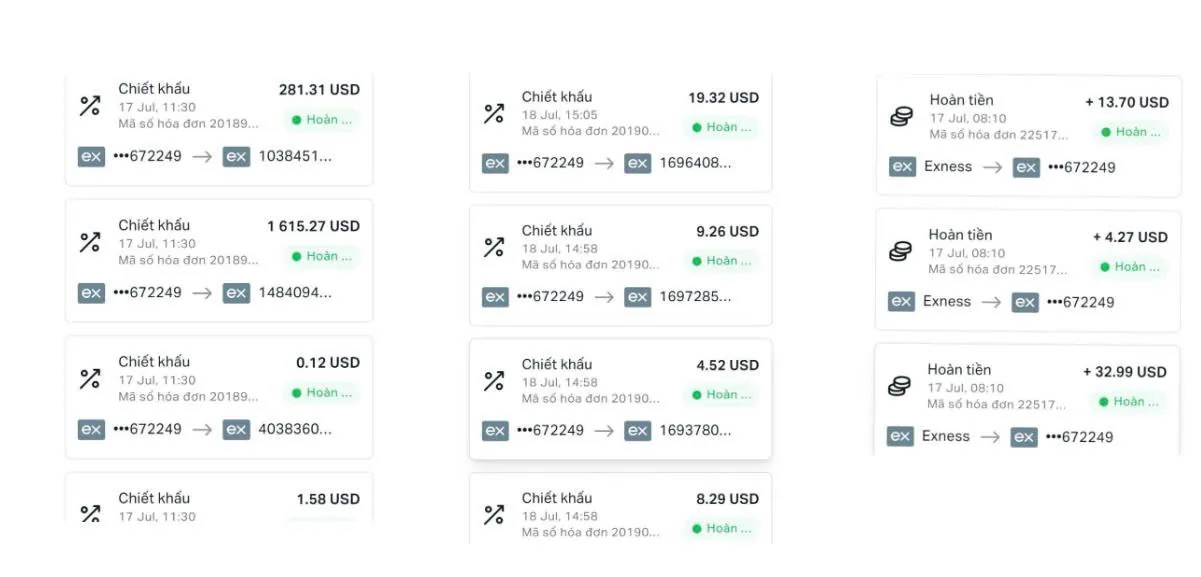
How the IC Markets IB Model Works
Where an IC Markets IB's commission comes from, whether traders pay extra, how per-lot backcom works and how to get 4 USD/lot Standard, 2 USD/lot Raw Spread.
Traders researching IC Markets sooner or later run into a cluster of terms such as IB, backcom, rebate and trading cost refund. These words appear constantly in advertising, yet they rarely come with an explanation of who an IB actually is, where the IB's commission comes from and what a trader gains by opening an account through one. Without that understanding, traders can easily pick the wrong referrer or trust promises that have no basis.
The sections that follow explain the IB's role at IC Markets, the path the commission money takes, whether any extra fee applies, how backcom is calculated per lot and the criteria that mark out a transparent IB. They end with how to open an account through BackcomHub and a short set of answers to the most common questions.
Who an IB at IC Markets is
IB stands for Introducing Broker, a partner that refers clients to a broker. At IC Markets, the IB is the party that brings a trader in to open an account and then keeps helping through registration, identity verification, deposits and withdrawals, platform installation and the usual technical problems. In other words, the IB's role does not end with a link; it continues for as long as the trader uses the account.
Even so, an IB is not a broker. Opening the account, depositing, withdrawing and placing trades all happen directly on IC Markets' own system, while the IB stays outside, referring and supporting. An account opened through an IB such as BackcomHub is therefore a genuine IC Markets account. The trader still logs in to the IC Markets client area, still uses the MT4, MT5 or cTrader platforms the broker provides and still trades on the broker's own infrastructure.
Commission moves in four stages
The IC Markets IB model can be summed up as a short chain. The trader opens an account through the IB's link, trades on it, the broker records the volume and then pays the IB commission under its partner policy. If the IB runs a rebate scheme, part of that payment returns to the trader as backcom.
Stage 1: Opening an account through a referral link
Everything starts with the trader registering through the IB's personal link. Thanks to that link, IC Markets ties the new account to the IB's referral code from the moment it is created, and this is the basis for every later commission being credited to the right party.
Stage 2: Generating trading volume
Once the account is open and the trader starts placing trades, the system counts volume in lots. A lot is the unit that measures position size, and one standard lot of a currency pair equals 100,000 units of the base currency. This lot count is the foundation for both the IB's commission and the trader's backcom.
Stage 3: The broker pays the IB
Based on the trading activity of the clients it has referred, the IB receives commission from IC Markets. That money belongs to the broker's partner programme, which means the IB never deducts anything from the trader's account.
Stage 4: The IB shares part with the trader
This is where IBs start to differ. Some keep the whole partner commission, while others such as BackcomHub pass part of it back to the trader as backcom, rebates or a trading cost refund. At IC Markets, BackcomHub pays a single flat rate per lot across all symbols: 4 USD/lot on Standard accounts and 2 USD/lot on Raw Spread accounts, with figures dated 18 October 2026.
Does opening through an IB cost extra
No. Traders pay no separate fee simply because the account goes through an IB, and trading conditions remain those IC Markets sets for each account type, including the spread, commission where it applies and the related rules.
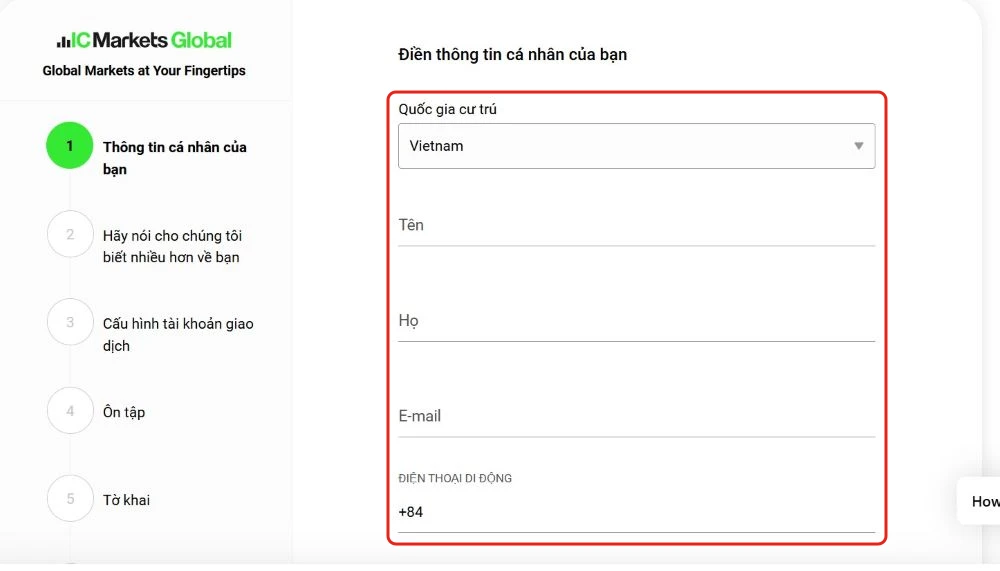
The two main account types differ in how they charge. Raw Spread usually has a tighter spread (the gap between the buy and sell price) but adds commission, a fixed charge per lot. Standard, by contrast, builds the cost into the spread and has no separate commission like Raw Spread. At the account configuration step, IC Markets lets the trader choose one of these two types along with the platform and account currency.
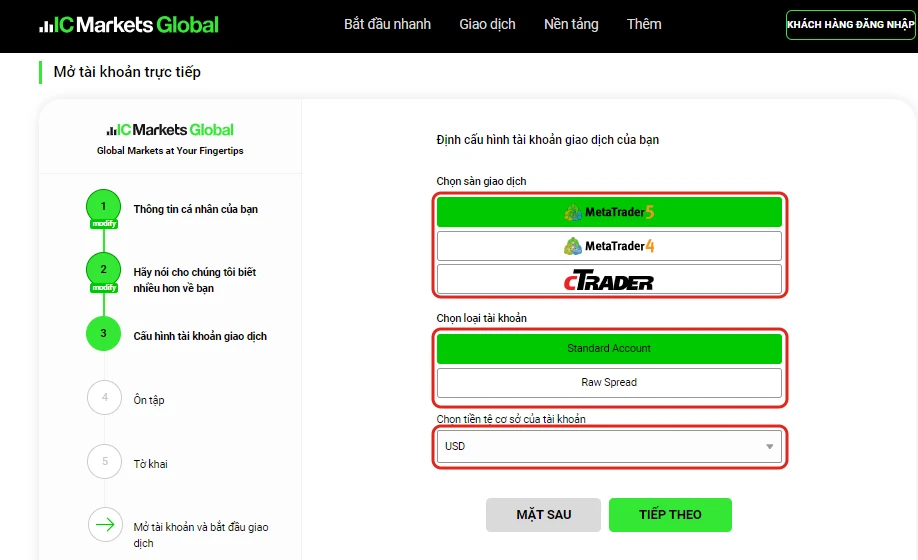
Because the IB is paid by the broker out of the partner programme, the model does not mean traders are charged more. On the contrary, if the IB has a rebate policy, the trader gets part of the money back according to the volume traded. The question worth asking is therefore whether the chosen IB is transparent. A trustworthy IB should publish its backcom rate, payment schedule and eligibility rules, and keep supporting traders after the account is open.
How IC Markets backcom is calculated
IC Markets backcom, also called an IC Markets rebate, is a refund calculated on the volume a trader has traded. When trades qualify, the IB returns a fixed amount per lot to the trader. The formula is therefore simple:
Backcom = qualifying lots × rebate per lot
For example, on a Raw Spread account refunded at 2 USD/lot, a trader with 10 qualifying lots receives 10 × 2 = 20 USD. If the same 10 lots were on a Standard account, the rebate would be 10 × 4 = 40 USD. BackcomHub's IC Markets rebate table is as follows, paid daily:
| Account type | Rebate (USD/lot, all symbols) |
|---|---|
| Standard | 4 |
| Raw Spread | 2 |
So the more qualifying lots, the larger the backcom. Standard earns more because its base cost sits entirely in the spread, which is why traders choosing an account should compare net cost, meaning fees paid minus the rebate. How to compare the two account types is covered in Standard vs Raw Spread accounts.
However, backcom should only be seen as a way of lowering cost. It is no reason to trade more often, oversize positions or trade without discipline, because a few dollars of rebate cannot offset one unplanned losing trade.
Why understand the IB model before opening an account
Knowing how the IB model works lets traders take control from the moment they open an account and avoid a number of misunderstandings. There are four concrete reasons.
First, traders know which IB their account is recorded under. That information determines who pays the backcom and who provides support when something goes wrong later.
Second, traders understand that the IB does not hold their money. Deposits, withdrawals and the trading account all sit inside IC Markets' system, while the IB only offers guidance and should never interfere with control of the account.
Third, traders have a basis for comparing policies between IBs. Some IBs only help open the account and stop there, while others also help with deposits and withdrawals, platform setup, statements, rebates and common errors.
Finally, understanding the model protects traders from bad advice. When someone talks vaguely about "high rebates" without giving a specific figure, traders should ask for clarity before opening the account.
What an IB helps traders with
A good IB does not just hand over a link and leave traders to fend for themselves. The real value of an IB lies in staying alongside the trader while the account is in use, which matters most to newcomers who tend to get stuck at verification or platform setup.
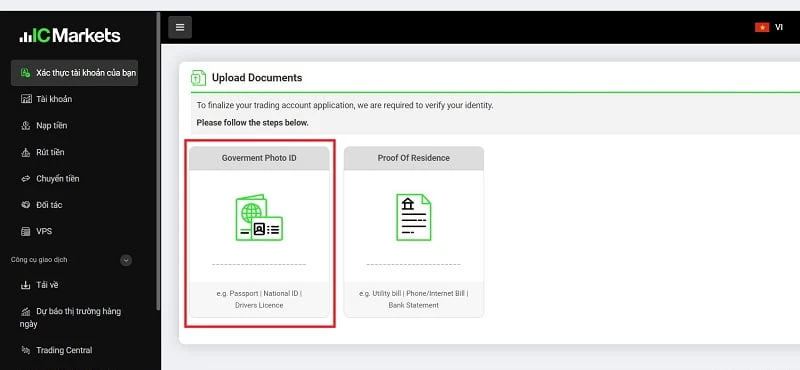
Verification is a typical example. After registering, IC Markets asks traders to upload identity documents in the client area, and an experienced IB can explain in advance which documents to prepare and how to photograph them so the application is not sent back.
What a transparent IB looks like
On the broker's side, IB programmes are a common partnership model in the forex and CFD industry. IC Markets runs a Partners system covering several formats, such as Introducing Broker, affiliate and other partner programmes.
For traders, however, transparency depends not only on the broker but also on the specific IB. A trustworthy IB usually meets the following criteria:
- it states its backcom rate clearly as a number;
- it says exactly how much Raw Spread and Standard accounts receive;
- it has a clear payment schedule or process;
- it keeps supporting traders after the account is opened;
- it never asks for passwords, OTP codes or control of the account;
- it never promises guaranteed profits.
Conversely, when an IB advertises only in vague terms, does not state its rebate, has no stable support channel or asks for sensitive information, traders should think very carefully before linking their account to it.
Opening an IC Markets account through BackcomHub
When opening an IC Markets account through BackcomHub, traders have somewhere to ask questions in Vietnamese during registration and while using the account, via Telegram or the email address on the home page. This is most useful for newcomers and for anyone unfamiliar with the IC Markets client area. Traders can ask for help with:
- the steps to open an IC Markets account;
- weighing up a Raw Spread account against a Standard one;
- choosing between MT4, MT5 and cTrader;
- completing account verification;
- checking and receiving backcom.
To link the account to BackcomHub, traders click the IC Markets sign-up button on this page or on the BackcomHub home page; BackcomHub's IC Markets partner code is 91994. The rebate is 4 USD/lot for Standard and 2 USD/lot for Raw Spread, paid daily. BackcomHub is an IB of the brokers listed on this site, IC Markets included, and receives IB commission from them; the rebates paid to traders come out of that commission. Traders with an IC Markets account opened directly can read the guide on switching IB to see what to ask the broker.
Frequently asked questions
What is an IC Markets IB?
It is a partner that refers clients to open accounts and trade at IC Markets. The IB is paid commission by the broker based on the trading activity of the clients it brings in.
Do traders pay extra when opening through an IB?
No. Trading conditions are still set by IC Markets for each account type. If the IB has a backcom policy, the trader also gets part of the fees back according to volume.
Does the IB hold traders' money?
No. Deposits, withdrawals and the trading account all sit within IC Markets' system. Traders should not send money separately to an IB without clearly understanding what it is for.
How much do Raw Spread and Standard accounts receive?
According to BackcomHub's rebate table, Standard receives 4 USD/lot and Raw Spread 2 USD/lot, across all symbols. These are BackcomHub's own rates, not a standard figure that every IB pays.
What does a trader need to do to receive backcom from BackcomHub?
The trader opens an account through the IC Markets link on this site or makes sure the account is recorded under BackcomHub's code 91994. After that, the trader generates qualifying lots and contacts BackcomHub for guidance on tracking, calculating and receiving backcom.
Key points
The IC Markets IB model is a partnership in which the IB refers traders to open accounts and is paid commission by the broker according to those clients' trading activity. Traders pay nothing extra, their money stays with the broker, and backcom is simply the share of commission the IB passes back.
When help is needed with opening an account, checking an IB link, receiving backcom or fixing problems with MT4, MT5, cTrader, deposits, withdrawals and statements, traders can contact BackcomHub via Telegram or the email address on the home page. Since account conditions can change, traders should also double-check them on IC Markets' official website before depositing.
Sources
- BackcomHub rebate table, IC Markets figures dated 18 October 2026, sourced from dctoptrade.vn: /
- DCtoptrade (screenshots of the IC Markets sign-up form and client area): https://dctoptrade.vn/
- IC Markets, official website: https://www.icmarkets.com/