What Is an IB in Forex
An IB (Introducing Broker) refers clients to a forex broker and is paid per lot traded. How IBs work, how commission is calculated, the benefits and the risks.
Most people who come to forex want to make money from the chart, buying and selling currency pairs to profit from price changes. Yet the currency market offers another source of income that sits outside the chart, open to people with a good reputation and a network of other traders. That income is tied to a familiar role in the industry, known as the IB.
Many traders have opened an account through an IB's link without knowing what the IB gets out of it, or whether they themselves pay anything extra. The sections that follow explain who an IB is, how an IB earns money, how commission is calculated, and why the job is attractive but also riskier than it looks.
Who an IB is
IB stands for Introducing Broker. It can be an individual or an organisation that sits between a forex broker and traders. An IB's main task is to bring new clients to the broker, and in return the broker pays the IB commission based on the trading volume those clients generate.
Despite the word "broker" in the name, an IB is not the broker's legal representative. An IB also does not hold client money or manage accounts on clients' behalf, since every deposit, withdrawal and order still runs directly between trader and broker. Instead, the IB acts as a bridge: helping newcomers open accounts, providing information about the broker and sometimes sharing knowledge or trading signals.
A concrete example shows the flow of money. Suppose trader A opens an account through an IB's referral link. From then on, every time A trades, the broker pays the IB an amount based on the number of lots A has executed, a lot being the unit that measures order size (explained in detail in the guide to lots, pips and pip value). A pays no extra fee for this, because the IB's share comes out of the broker's revenue. The IB, meanwhile, earns a steady income for as long as A keeps trading.
Commission depends on each broker's partnership model and ranges from a few US dollars to a few dozen per lot. As a result, an IB with many clients who trade regularly can turn it into a stable income that grows over time.
How an IB earns money
From the outside, an IB's job looks like nothing more than sharing a link and waiting to be paid. In practice, doing it well means going through four successive stages, from technical paperwork to keeping clients engaged.
Signing up as a broker partner
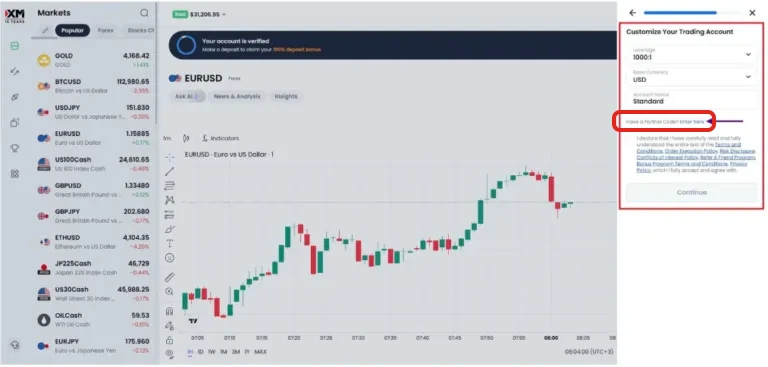
First, anyone who wants to be an IB must register with a forex broker that runs a partner scheme, usually called an Affiliate Program or IB Program. Each broker sets its own conditions and policies, but most are not especially demanding. Once the application is accepted, the IB receives two tools:
- A referral link for newcomers to click and open an account;
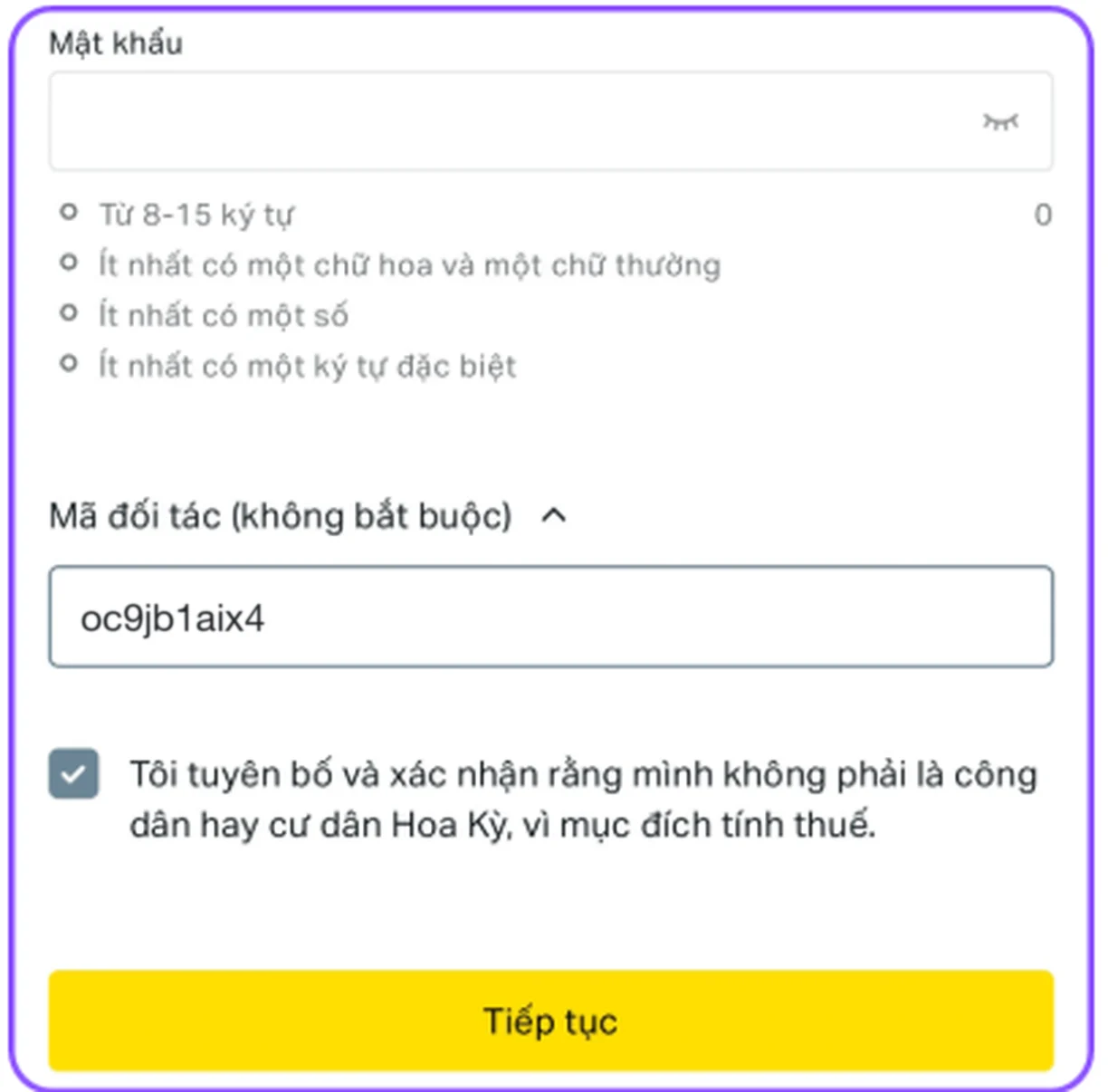
- An IB code, or tracking code, so the broker can identify exactly which clients belong to which IB.
The two tools complement each other. If the link fails to carry the referral data, for instance when a client opens the broker's site in a different browser, the partner code field on the sign-up form is the last place to tie the client to the right IB. How one particular broker records referrals is described in the guide to the XM partner programme.
Bringing new clients to the broker
Next, the IB shares the link or code with their community, such as acquaintances, Facebook groups, Telegram channels, YouTube or a blog. Any client who opens an account and trades through that link is placed in the IB's network. However, a reputable IB does not stop at handing out links. They also walk newcomers through the steps, help when technical problems arise and offer real value such as learning material, signals or market analysis.
Earning commission on volume
When clients start trading, usually spread-based products such as currency pairs, gold or oil, the IB is paid commission per lot. Three arrangements are common:
- A fixed commission per lot, for example 5–10 USD per standard lot, meaning 100,000 units of the base currency;
- Tiered or multi-level sharing where the broker supports it, meaning the IB recruits sub-IBs and earns a share from their clients;
- Direct crediting to the IB wallet, withdrawable at any time as long as the broker's withdrawal conditions are met.
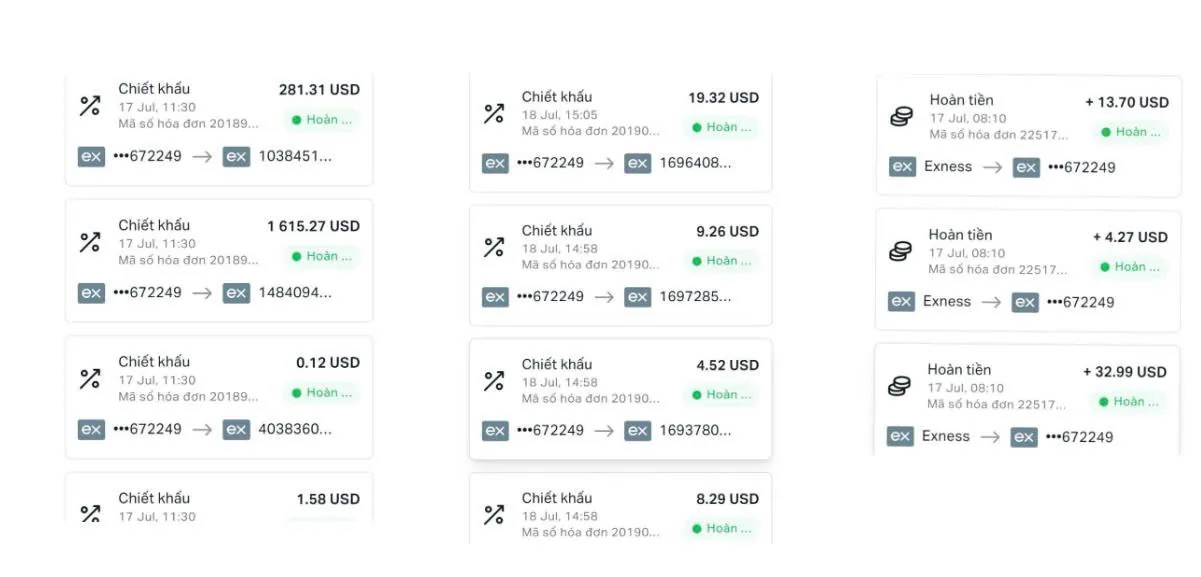
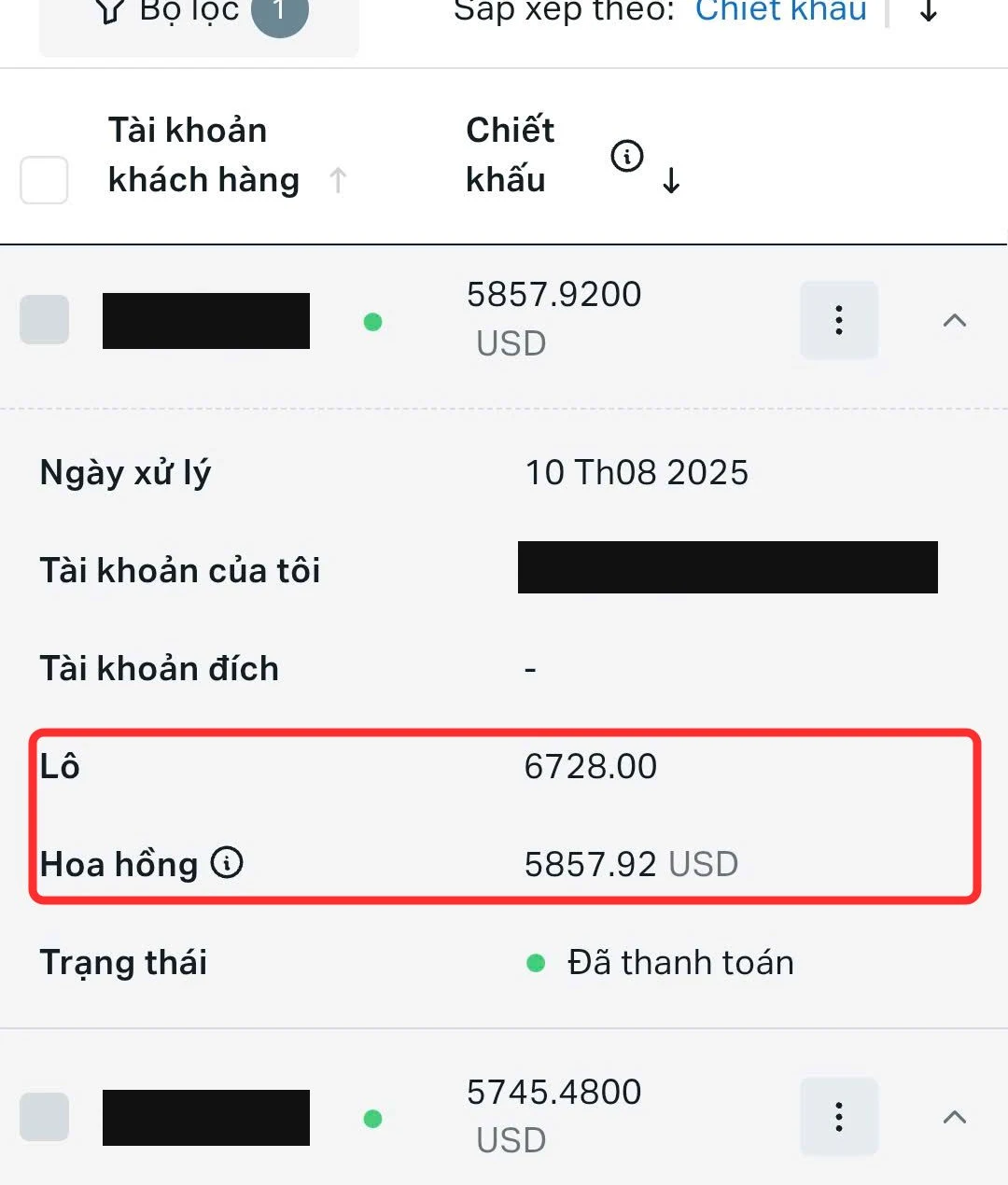
In reality, the amount per lot varies widely by broker, account type and product. The image below shows the rebate table in the Exness partner area: 6,728 lots generated 5,857.92 USD in commission, an average of less than 1 USD per lot and far below the 5–10 USD example above. For that reason, anyone weighing up IB work should look at each broker's actual commission table rather than rely on a single headline figure.
Supporting and growing the network
Finally, an IB who takes the work seriously does not treat referral as a one-off. They build lasting relationships with clients by sharing updated knowledge, providing technical support, and sending newsletters and market analysis. The reason is that IB income is cumulative: the more clients trade regularly, the steadier and more durable the cash flow.
Benefits of IB work
When IBs come up, many people think only of commission earned on other people's trades. If IB work is treated as a serious occupation rather than a quick win, it offers several kinds of value beyond money.
Income that does not depend on trade results
This is the most common reason people become IBs. When clients trade regularly, the IB earns commission on every lot without doing anything extra, and if the network is large enough this becomes a stable income. Its greatest value is that it is not tied to the IB's own trading results: the IB's trades may lose, but a well-supported client network can still generate steady returns.
No large capital required
Becoming a professional trader requires capital, knowledge and years of market experience. By contrast, IB work requires almost no upfront capital, only three conditions:
- choosing a reputable broker;
- understanding the market at a basic level;
- being able to share knowledge and support newcomers.
This makes IB work a way into the currency market for people without much money but with passion and good communication skills.
Control over time
An IB does not have to watch charts all day, is not under pressure from winning or losing trades, and is not driven by news or price ranges. As a result, the work suits office workers, students, or anyone who wants to do business in finance without becoming a full-time trader.
Building a personal brand
IBs who work methodically can gradually become key opinion leaders (KOLs) in finance. From there, they open their own groups, set up fan pages, run YouTube channels or even train their community. An IB's reputation grows in step with the value they provide, so besides money they also build influence.
Expanding industry connections
IB work brings people closer to many groups within the industry, specifically:
- professional traders;
- account managers, such as funded traders or those running PAMM and MAM accounts;
- brokers' regional managers;
- investment communities across many sectors.
These connections open up wider opportunities for partnership, learning and financial business. Developed in the right direction, IB work stops being a side job and becomes a structured career, with steady cash flow, a strong community and a clear personal brand.
Risks and challenges
IB work is not as easy as the "share a link, get paid" image suggests. Anyone aiming to stay in it for the long term and keep a good name in finance will face at least six challenges.
Dependence on broker policy. However large the network, an IB's income is still set by how the broker shares commission. If the broker changes its model, for example by cutting commission, tightening withdrawal conditions or stopping service to Vietnamese clients, years of work can be badly hit. Choosing the wrong broker is therefore a mistake at the root, and a good IB weighs carefully where to place their link.
Reputation tied to broker quality. When a referred broker is accused of fraud, price manipulation or delayed withdrawals, clients turn to the IB for an explanation even though the IB is not at fault. An IB who cannot vouch for the quality of their partner broker can easily lose their reputation, and a reputation in finance is extremely hard to rebuild.
Growing competition. The number of IBs is rising fast, from individuals and small teams to financial companies dressed up as "communities". The market has become saturated and clients more cautious, so a referral link alone is no longer enough. IBs must create real and distinctive value to hold their ground.
Hard to retain clients without a service. Someone who opens an account through a link will not necessarily trade regularly or stay for long. If the IB gives clients no reason to stay, such as advice, signals, support or knowledge, clients keep leaving and the IB falls into a cycle of finding new clients, earning a little commission and losing them again.
The temptation to mislead. Quite a few people become IBs for the commission and then exaggerate profits, promote "miracle" copy-trading services and hide the risks. The price is a collapsed reputation, complaints from clients and a name associated with fraud. In other words, an unethical IB may earn quickly but will not last.
Irregular income. When an IB relies on a handful of clients who trade unevenly, monthly commission can swing sharply, especially when the market is quiet. Only a quality client network gives an IB steady and sustainable cash flow.
These six points show that IB work is not for people chasing quick money. It is for those who understand that earning through trust means first being able to keep that trust.
IBs and referred traders
For traders, opening an account through an IB does not change the trading costs paid to the broker, because the IB's commission comes from the broker. Some IBs also pass part of that commission back to the trader, known as a rebate or backcom, explained in the guide to what backcom is. BackcomHub is an IB of the brokers listed on the site and receives IB commission from them, sharing part of it with traders under a public rebate table. Traders who want to change the IB on an existing account can read the guide on switching IB.
Key points
IB work can be a first step into financial markets that is proactive, creative and needs little capital. Even so, it is not a game of hasty link spamming or dizzying commission promises. A genuine IB creates value for clients rather than exploiting their trust, and staying in it for the long run takes ethics, support skills and a solid understanding of the market.
Sources
- Exness, official website (partner area, sign-up form): https://www.exness.com/
- DCtoptrade (screenshots): https://dctoptrade.vn/