How the XM Partner Programme Works
XM pays commission to partners who refer clients. How referrals are tracked, how XM rebates work and the six steps to open an account with code BACK100.
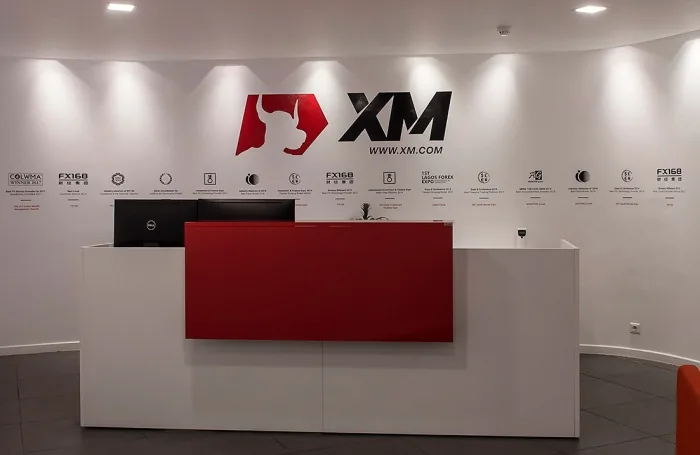
When choosing a broker, most traders compare spreads, look at the account types on offer and check whether MT4 or MT5 is supported. Few pay attention to whether the account is opened directly on the broker's website or through a referring partner. At XM, that detail decides which partner the account belongs to, and therefore whether the trader can receive a share of the rebate that partner passes on.
XM runs a partnership scheme for websites, communities and companies that bring new clients to the broker. When those clients trade enough to qualify, XM pays the referring partner, and some partners use part of that payment to give traders an extra benefit. The sections below explain how the scheme works, how opening through an IB differs from opening directly, and what a trader needs to do so the account is linked to the right partner.
Who XM partners are
An XM partner is an intermediary that brings clients to the broker and is paid for doing so. In forex, the role goes by several names, although the substance is almost identical:
- IB, short for Introducing Broker;
- Affiliate, a marketing partner paid for referrals;
- Partner;
- Referral Partner, someone who sends clients over;
- "referring partner", the plain-language version.
Instead of signing up with XM on their own, traders go through a partner's personal link or enter that partner's code on the form. Done correctly, XM's system records that the client came from that IB, and the account's later trades count towards the IB's programme.
Why XM pays its partners
For a broker, a partner programme is a client acquisition channel. Rather than carrying all of the marketing itself, the broker lets websites and trading communities send over people who are genuinely interested. When those clients trade and their volume qualifies, the broker pays commission to whoever referred them.
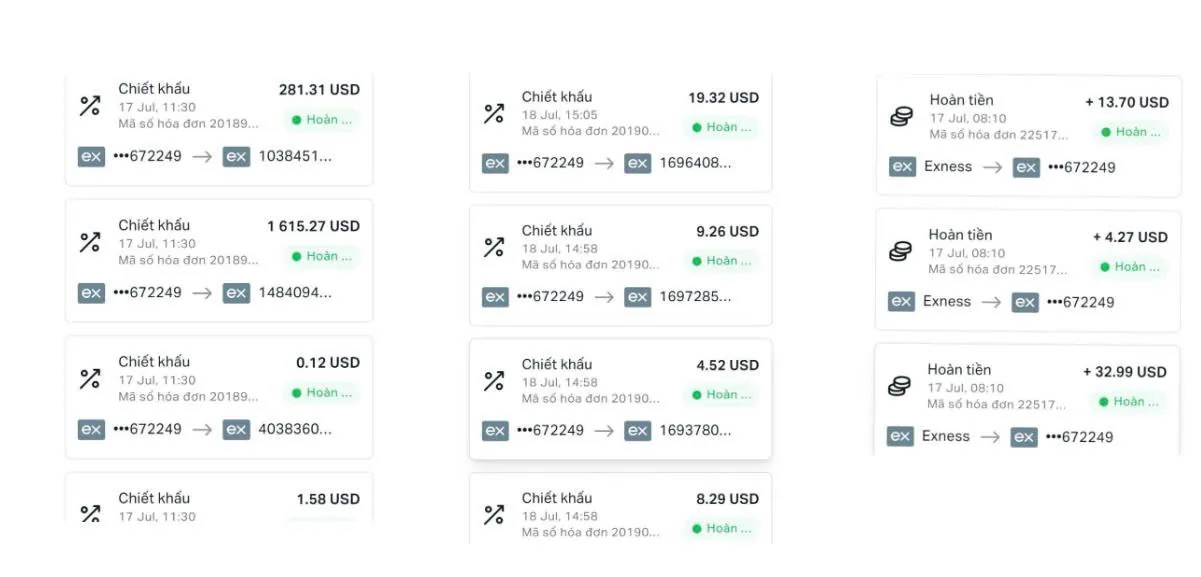
That commission is the root of the forex rebate model. Some IBs keep only part of it and pass the rest back to traders on every trade. A rebate is therefore neither money created by the market nor a guaranteed profit. It comes from a commercial agreement between the broker and the IB, and it only exists when the trader actually trades.
Opening through an IB versus opening directly
The main difference is whether the account carries the name of a referring partner. If a trader opens an XM account without any link or code, the account will most likely sit outside every IB programme. With the right link, on the other hand, XM recognises the IB from the moment the account is created. This matters most when the IB offers its own support or rebate scheme, because those benefits only apply to accounts inside its system.
Apart from the referral tag, everything else stays directly between the trader and XM. Even when going through an IB, the trader still:
- holds an account in their own name at XM itself;
- completes identity verification (KYC) under XM's own procedure;
- deposits and withdraws through XM's payment system;
- trades on the platform XM provides;
- decides their own strategy and position size.
In other words, the IB never handles the trader's money or touches their trades, and its role ends at being recorded as the referring party.
How XM rebates are calculated
Where the programme shares rebates, the trader receives part of the value generated by qualifying trades. The money moves in this order: the trader opens and closes a trade, XM counts the qualifying volume, XM pays commission to the IB, and the IB passes part of it back to the trader. Over many months, that returned amount can lower trading costs noticeably.
A rebate does not make trading free, however. The trader still pays the spread (the gap between the buy and sell price), commission (a fixed charge per lot) where the account has one, swap (the overnight holding charge) and any other fees. The rebate is simply money returned after the trade has closed.
At XM, BackcomHub lists its rebates in USD per executed lot, split by account type and by symbol. The table below shows selected symbols, with figures dated 10 November 2026 and paid daily:
| Symbol | Standard & Micro (USD/lot) | Ultra Low (USD/lot) |
|---|---|---|
| EUR/USD | 8.1 | 3.15 |
| GBP/USD | 9.1 | 3.2 |
| USD/JPY | 8.1 | 2.7 |
| Gold XAU/USD | 15.3 | 9 |
| Silver XAG/USD | 81 | 27 |
| BTC/USD (CFD) | 18 | 7.11 |
Rebates on Standard & Micro are higher because the underlying cost of that account is higher too, so traders should compare net cost rather than the rebate alone. The comparison method is covered in Standard vs Raw accounts, and the general concept in what is backcom.
Which traders benefit most
Because rebates are based on volume, the benefit is clearest for traders who trade often or in large size. Four groups tend to care most:
Scalpers
Scalpers take very short positions, opening and closing many trades within minutes. With so many trades, their total costs build up quickly. When those trades earn a rebate, the returned amount pulls total costs down over time.
Day traders
Day traders open and close positions within the same day, so their volume is usually steady from day to day or week to week. Each trade saves only a little, but over a full month the figure is worth counting.
Traders using EAs
An EA (Expert Advisor) is a programme that places trades automatically according to a preset algorithm. When an EA trades frequently, total costs grow with it, which is why traders who run EAs often pay attention to rebates.
Long-term traders
Even without frequent trading, someone who keeps an account for years still accumulates a meaningful amount in fees. Reducing those accumulated costs is therefore still worthwhile for this group.
Whatever the group, traders should never increase position size or add trades just to collect more rebate. A few dollars back cannot cover the loss on a trade that was never part of the plan.
Six steps to open an XM account via BackcomHub
For the account to be linked to the right partner, the trader needs to use the correct link and enter the correct code from the start. The process has six steps, best followed in order.
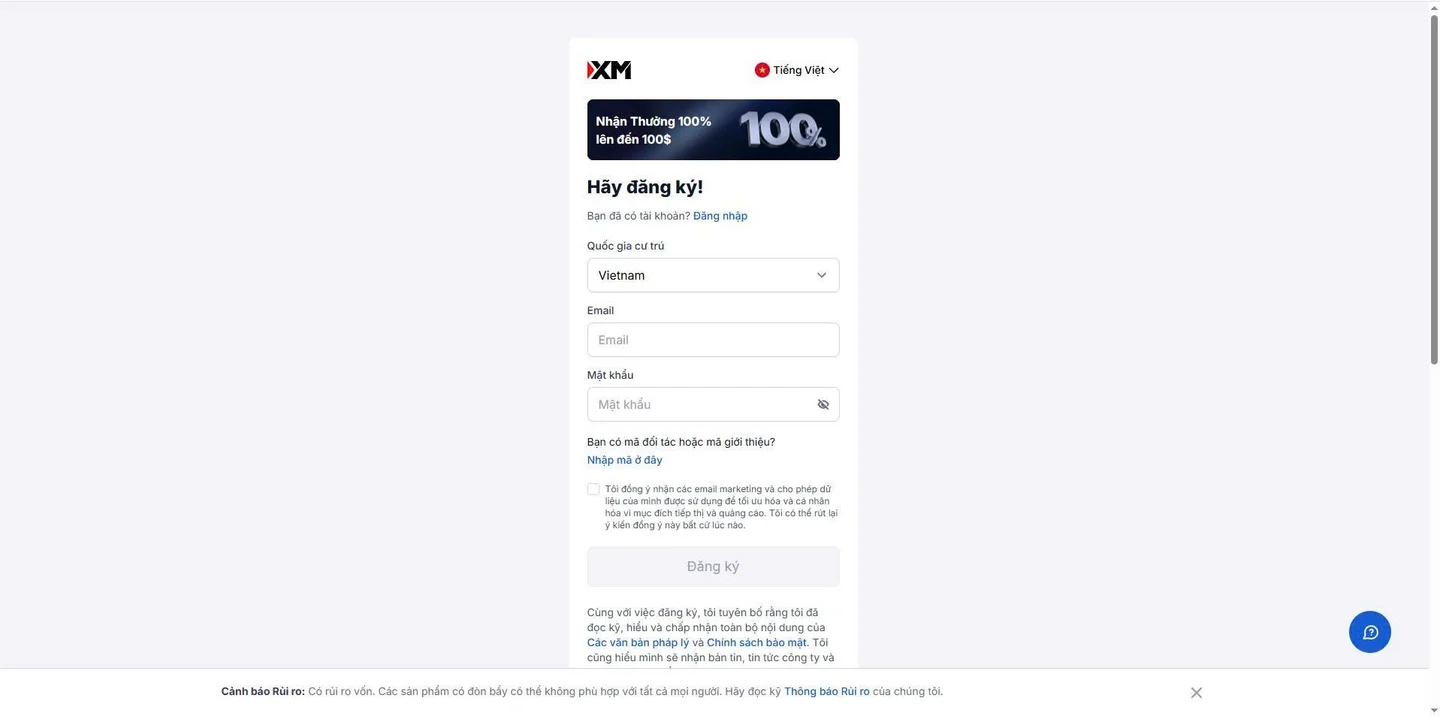
Step 1: Go to XM through BackcomHub's link
The trader uses the XM sign-up button on this page or on the BackcomHub home page instead of typing XM's address manually. That way the registration session carries the IB information from the outset.
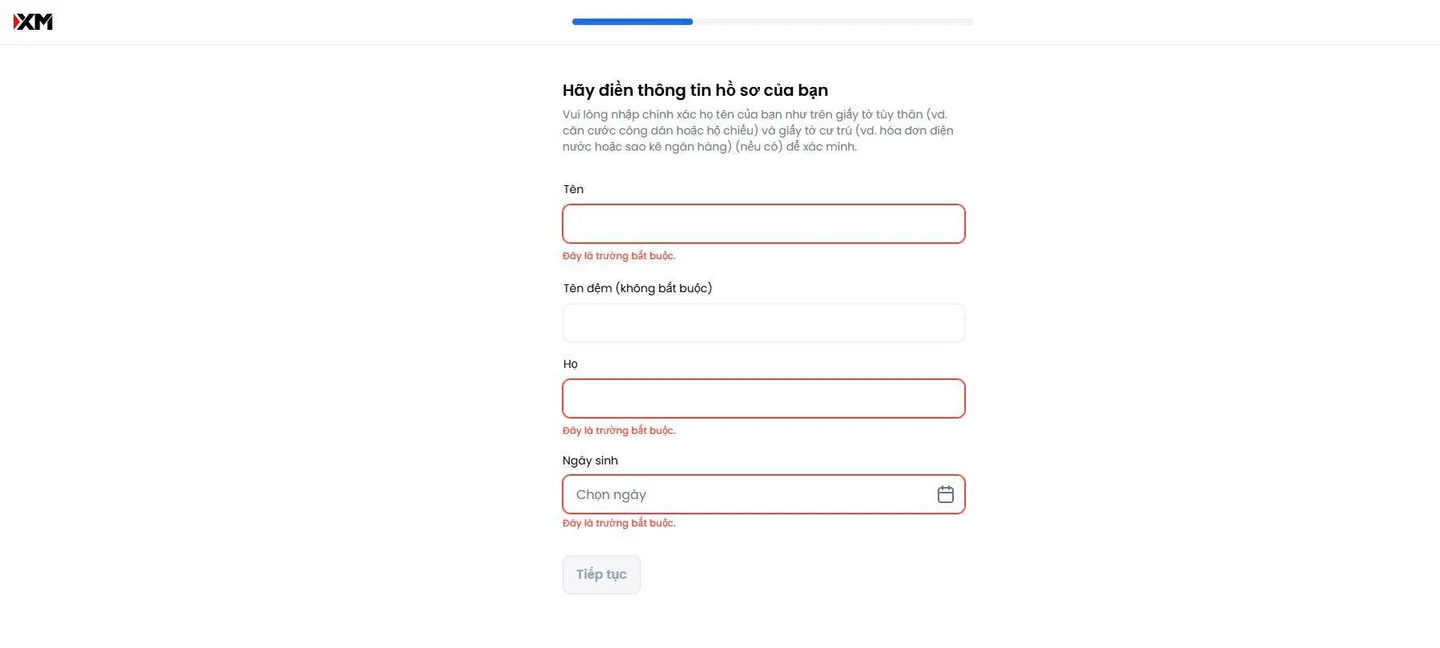
Step 2: Enter personal details
XM's form asks for some basic information, such as:
- full name;
- email address;
- phone number;
- country of residence;
- a few other items needed to set up the account.
These details should be accurate and match the trader's identity documents. If the name or date of birth differs from the documents, the later verification step is more likely to be rejected or delayed.
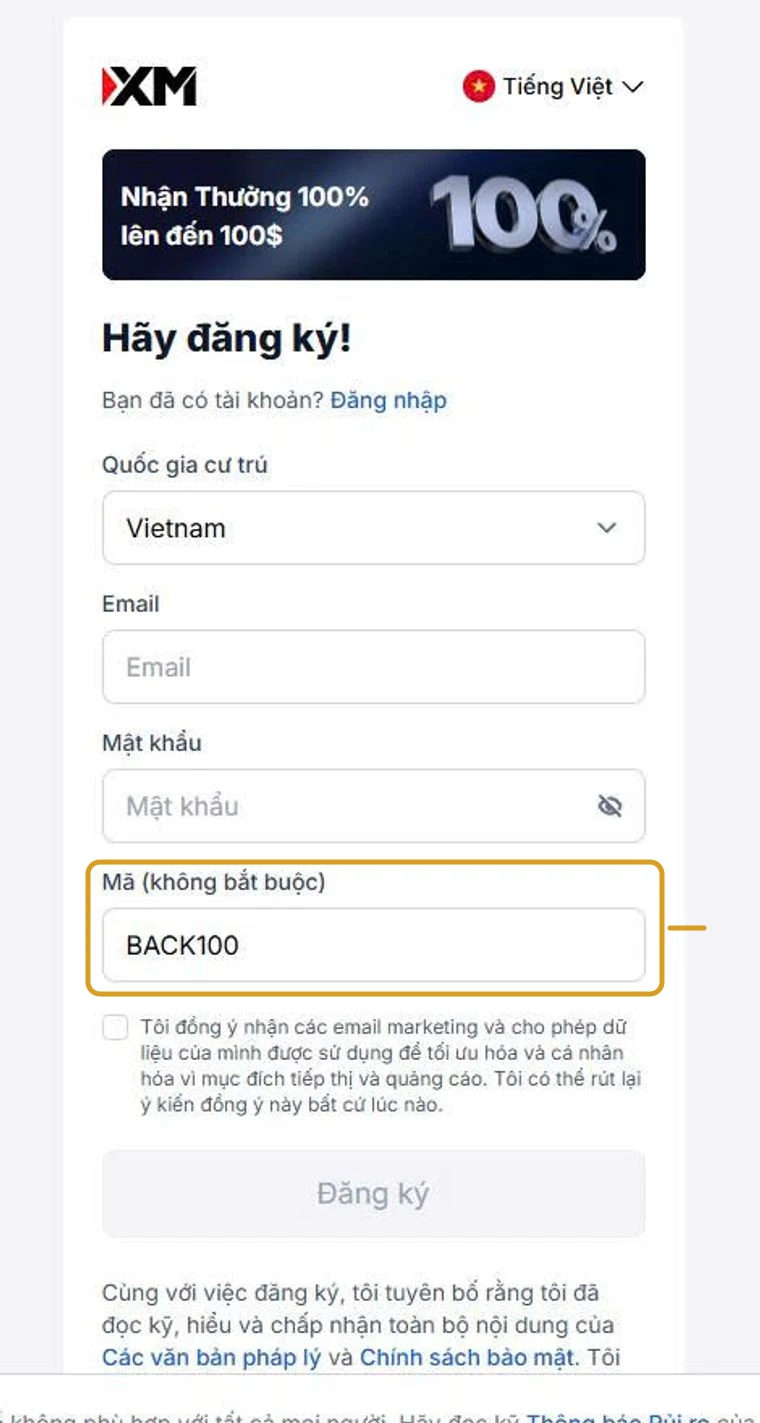
Step 3: Enter code BACK100 when asked
When XM shows a partner code field or something similar, the trader enters BACK100. This is BackcomHub's XM referral code, and filling it in links the account to the right IB even if the link failed to carry the referral information.
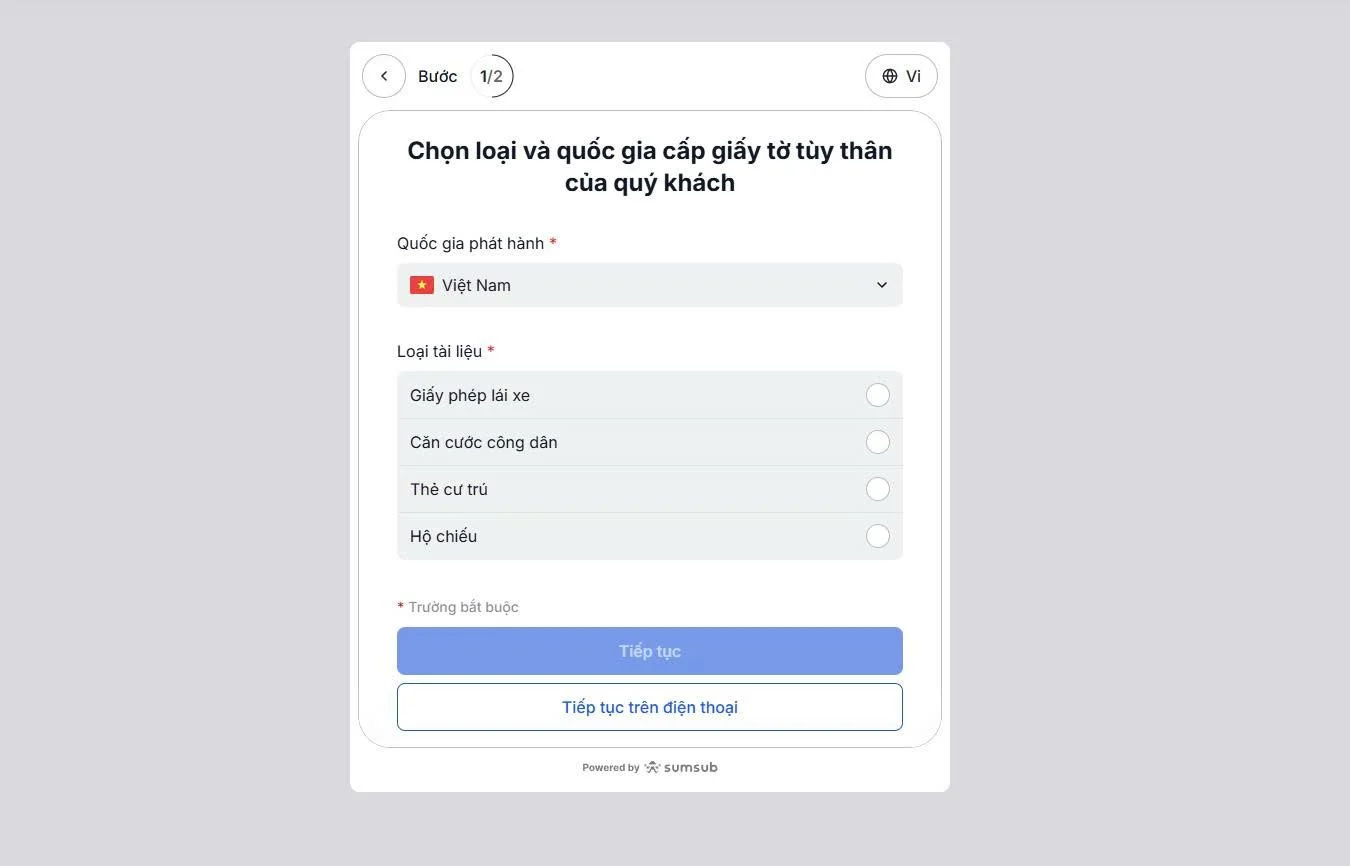
Step 4: Verify identity
After the account is created, XM may require KYC. The trader follows the instructions in the members' area and uploads the requested documents, usually a national ID card or passport.
Step 5: Choose a trading account type
Once the documents are approved, the trader chooses the account type and platform that fit their trading. The rebate rate should not be the main reason for the choice, though. Spreads, commission, product-specific conditions and trading style come first, because they determine most of the real cost.
Step 6: Deposit and trade to a plan
With those steps done, the trader can fund the account and start using it. From then on, qualifying trades earn rebates at BackcomHub's listed rates, but every trade should still come from the plan the trader has set.
BackcomHub is an IB of the brokers listed on the site, including XM, and receives IB commission from them; the rebates paid to traders come out of that commission. Traders who already hold an XM account opened directly can read the switch IB guide to see what to ask XM.
What to check before depositing
Going through an IB does not replace the trader's own assessment of the broker. Before the first deposit, the trader should look into:
- the account type to be used;
- spreads and commission on the products to be traded;
- deposit and withdrawal methods and their limits;
- swap rates, if the strategy often holds positions overnight;
- the trading rules for each product;
- XM's current terms and conditions;
- the conditions of the partner or rebate programme.
These factors directly affect real costs and the overall trading experience. Because XM's conditions can change over time, traders should confirm them on XM's official website just before opening an account. For questions about the code, link or rebates, traders can contact BackcomHub through the Telegram or email channels listed on the home page.
Frequently asked questions
Are XM partners employees of XM?
Not necessarily. IBs are usually independent individuals or companies taking part in the broker's partner or affiliate programme. They do not work for XM; XM pays them according to the clients and volume they bring.
What is BackcomHub's XM referral code?
BackcomHub's XM code is BACK100. Traders enter it in the partner code field when the XM sign-up form asks for one, so the account is linked to BackcomHub from the start.
Does receiving a rebate mean making a profit?
No. A rebate only returns part of the fees already paid. Profit or loss still depends on price movements, the strategy and the trader's risk management.
Should traders trade more to earn more rebates?
No. The trader's main job is still to protect capital and follow the strategy. Adding trades just for the rebate usually raises risk far faster than it raises the amount returned.
Key points
At its core, XM's partner mechanism means the broker records clients referred by an IB and pays that IB commission. Traders who want their XM account inside BackcomHub's rebate programme should open it through the XM link on this site and enter code BACK100 when asked.
Even so, going through an IB does not make market risk any smaller. Traders still need to review account conditions carefully, manage capital tightly and only use money they can afford to lose.
Sources
- BackcomHub rebate table, XM figures dated 10 November 2026, taken from dctoptrade.vn: /
- DCtoptrade, "Đăng ký tài khoản XM" (screenshots of the sign-up form, partner code and verification step): https://dctoptrade.vn/huong-dan/mo-tai-khoan-xm/
- XM, official website: https://www.xm.com/