
Minimalist Forex Trading
What minimalist forex trading means, why a chart with fewer indicators leads to fewer emotional decisions, and six practical steps towards a leaner routine.
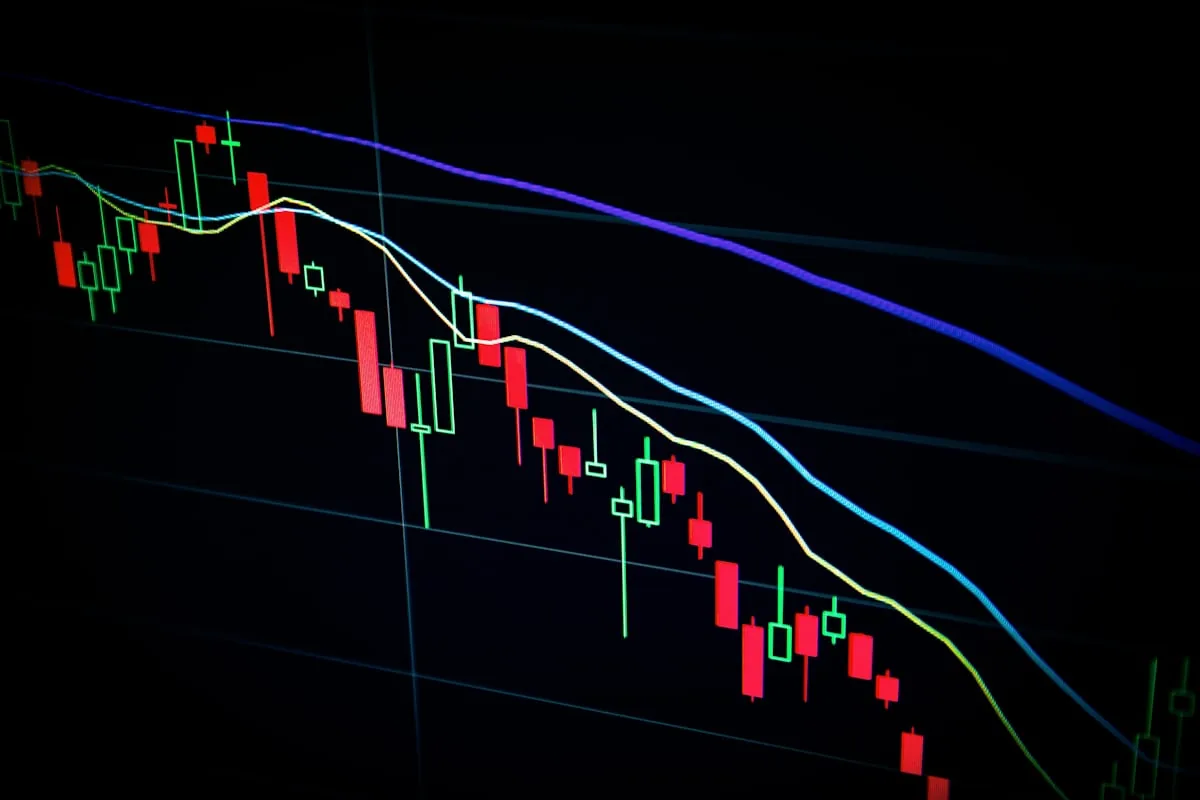
Minimalism has become a major lifestyle trend and looks likely to last. Its spirit is to keep what is basic, necessary and of good quality, and to let the rest go. Carried over to forex, that spirit becomes a trading style for traders who prefer things light: fewer tools, fewer screens, fewer indicators, with a clear reason for everything that stays.
The sections that follow explain what minimalist trading means, why the glamour of the trading profession is not a condition for making money, why removing indicators can actually improve results, and which concrete steps traders can start with.
What minimalist trading is
Minimalist trading applies the philosophy of a pared-down life to the way a trader works, and that philosophy already brings plenty of benefits in everyday life. People who live simply cut out needless spending and gain more time for themselves and their families. They also feel less stress and more peace of mind. As a result, life becomes not only more pleasant but also more balanced.
Trading follows the same logic. A trader who does not want to spend hours in front of a computer, worn out by watching charts and reading the news non-stop, needs to streamline the trading process. Moreover, success in the market does not require a big office with rows of monitors. Someone working alone with a simple set of tools can still trade profitably.
No need for grandeur
The first step is to drop the glossy image usually attached to professional traders. That image includes a luxurious office, a massive desk, a wall of screens, and the latest trading software and robots. In reality, a trader needs only three things: a laptop, free trading software such as MT4, and a strategy that works. Downloading and installing MT4 is covered in MT4 IC Markets download from start to finish.
Even so, the image of the "professional trader" remains very appealing. Expensive suits, elegant rooms and big screens covered in technical charts make viewers believe that large profits are waiting for anyone who enters the business. That is an illusion, because in practice not everyone makes money, and some people make nothing at all.
By contrast, a trader can perfectly well sit in a favourite café, dressed casually, looking out over the street with a laptop in front of them, and still trade for a living. Anyone hoping to last in the profession should therefore cut what is unnecessary and put their energy into what truly matters. There is nothing wrong with enjoying a bit of show, but it is better saved for after success, once the market has actually paid. At the start, there is no need to spend much on luxuries, since a laptop is enough.
Many professional traders and heads of large investment funds also avoid complicated techniques and work in a simple way. Warren Buffett is the example often cited: he still keeps the habit of reading printed reports on paper and rarely uses a computer. Many other investing legends share a similar style.
In Vietnam, most people in the market do not treat forex as their main job. Many come across it by chance and then want to try earning extra income from it. A lean trading style, one that does not consume all their time and money, is therefore a very good fit for this group of traders.
Fewer tools, better results
Most losing traders lose not for lack of tools but because of emotional mistakes such as greed, fear and excessive hope. In that context, a chart crowded with technical lines can contribute further to failure. The mechanism resembles shopping psychology, where people believe that owning more is always better even though it is not. In the same way, many traders believe that the more indicators they put on a chart, the more information they capture and the more likely they are to win.
Buddhism has a principle very close to this idea, namely that "less is better", seen as a key to success and happiness. In everyday life, someone with fewer worries avoids a lot of trouble, and their mind becomes clearer and calmer as a result. With a lighter mind, that person is more likely to become a better human being, and a better trader too.
A familiar cycle shows the opposite clearly. After losing, many investors conclude that the fault lies in their strategy and method. They go looking for a new method advertised as "perfect", together with a whole set of technical indicators to feel more secure. After a while, however, nothing has changed and they keep losing, because adding more tools does not mean trading better.
The deeper reason is that the decisive factor in forex is psychology. Each trader's strategy and method are in fact built on that trader's own trading psychology. When a chart carries too many indicators, the signals easily contradict each other, leaving the trader confused, hesitant, then discouraged, and finally making impulsive decisions. The more emotion takes control, the higher the risk of losing money. This psychological mechanism is examined further in the riskiest moment to trade forex.
So before adding any indicator to a chart, traders should ask themselves two questions. The first is whether it is genuinely needed. The second is what specific benefit it brings to the current way of trading. If neither has an answer, the indicator belongs off the chart, since the general rule is to trade only with what is truly necessary.
Six steps to start
The arguments above lead to six concrete steps towards a leaner way of trading. None of them costs extra money; they only require letting go of old habits:
- Clear the chart. Remove as many complex indicators and robots as possible, keeping a simple chart centred on price, shown as Japanese candlesticks. An uncluttered screen helps traders stay calm and focused when watching the market.
- Learn to read price action. Price action means making decisions from the movement of price itself rather than from indicator signals. Once surplus indicators are gone, candlesticks are the simplest and most effective tool for observing the market.
- Trade at the end of the day. Once comfortable reading price, traders find there is no need to watch the market all day. Instead, they can review the chart and decide at the end of the day, in line with their main working schedule.
- Follow only a few familiar markets. Rather than trading every currency pair, traders should focus on a few favourite pairs, plus oil and gold. Bruce Lee once said he did not fear the man who had practised ten thousand different kicks, but the man who had practised one kick ten thousand times.
- Skip expensive equipment. A powerful computer setup, a large desk or detailed paid data packages are not requirements for making money in this market.
- Keep the workspace tidy. Whether at home or in a café, the trading space should be clean, airy and uncluttered. Learning materials work the same way: a few reliable, useful sources are worth more than dozens of trading books.
Of these six steps, the first two are the foundation, because they decide the lens through which the trader views the market. For beginners, how to read Japanese candlesticks is a sensible starting point, followed by individual patterns such as the hammer candlestick or the doji candlestick.

The third step is also easy to put into practice in MT4 or MT5. Traders simply choose the daily timeframe (D1) on the toolbar, so that each candle represents a whole trading day and there is no need to watch every small move during the session.
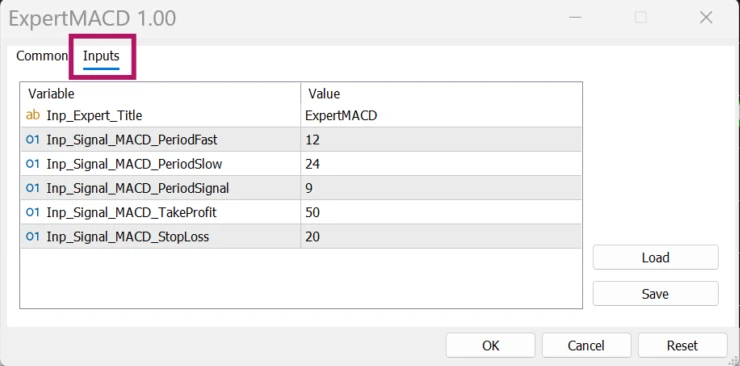
As for trading robots, meaning programs that place trades automatically (EAs), the advice to remove them does not mean that EAs are always bad. The point is that traders should not layer a system they do not fully understand on top of their chart, since every EA parameter is one more variable to monitor.
Less to carry, lighter mind
People naturally tend to accumulate, believing that more is better. Reality shows, though, that as people earn more they also spend and collect more, while most of those things are not really needed. Trading is no different, because every extra indicator, screen or data package is one more thing to worry about. Minimalist trading therefore helps traders live with less anxiety and more calm, since they no longer carry what they do not need.
Sources
- DCtoptrade (screenshots): https://dctoptrade.vn/


