Exness Zero Account Review 2026
The Exness Zero account: near-0-pip spreads plus per-lot commission, how it differs from Raw Spread, who it suits, Raw & Zero rebates and how to open one.
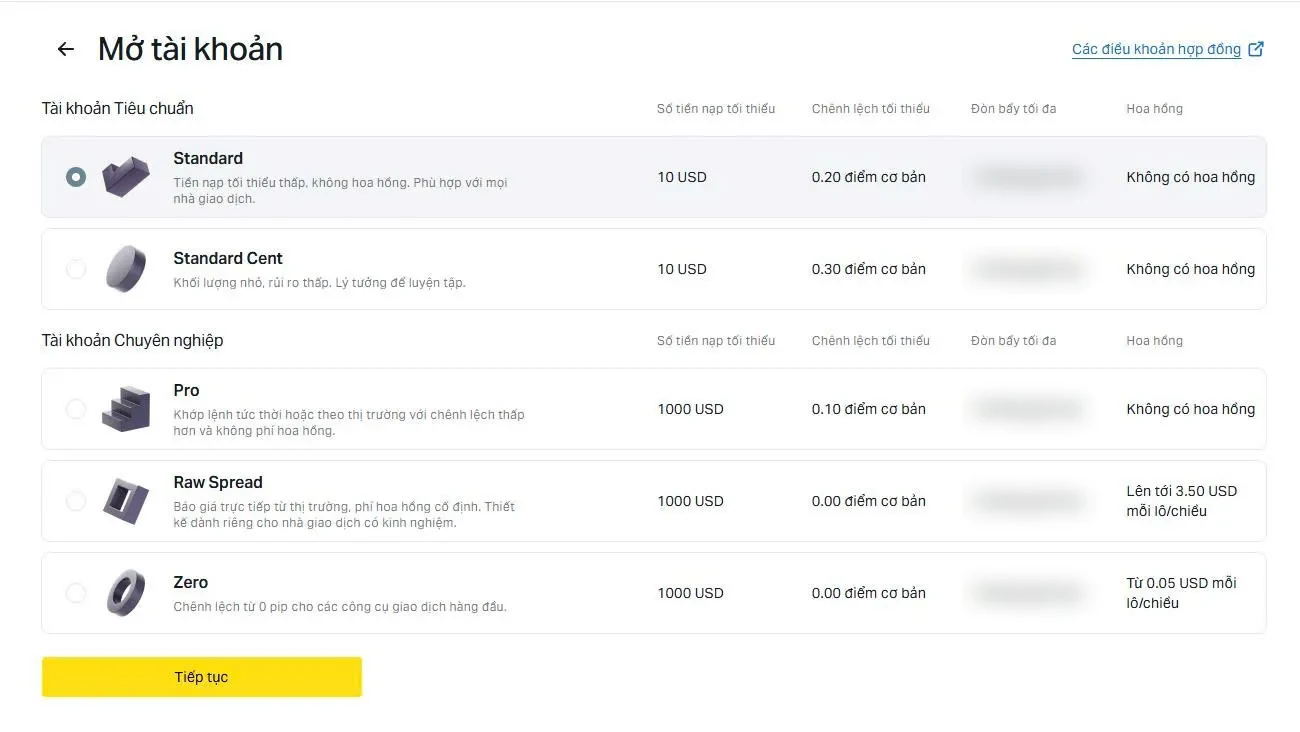
When opening an Exness account, traders see five options, two of which are easy to confuse: Zero and Raw Spread. Both offer spreads close to zero and charge an extra fee per lot, so many traders are unsure which one to pick. In reality, Zero only brings the spread down to near zero and moves the cost into a separate fee, so traders still have to add both parts to know what a trade costs.
The sections below explain how Zero works, how to estimate the cost of a trade, how it differs from Raw Spread, who should use it and how to open one. They also cover the rebate that applies to Zero and answer five common questions. Exness spreads and commissions can change with the broker's policy, so traders should confirm them on the official Exness website before trading.
What the Zero account is
The Zero account uses market execution, meaning orders are filled immediately at the available market price rather than at a price quoted separately by the broker. On major currency pairs, Zero's spread is close to 0 pips. In exchange, Exness charges a commission based on the lot size of each trade.
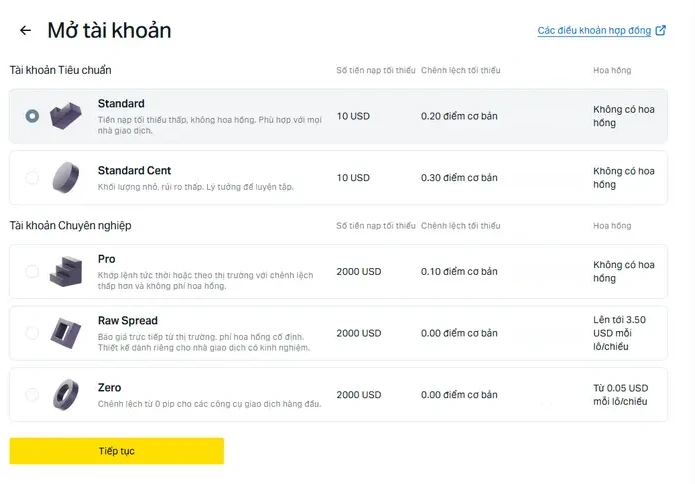
Exness added Zero to its line-up in late 2019, and it is now one of the broker's five account types. Its pricing follows the ECN/STP model used by many brokers, separating the market price from the service fee. Thanks to that separation, traders can see exactly how much they pay the broker on each trade.
The account is aimed at active traders, who need to know the precise cost of every trade to plan a strategy, while spreads on the Standard account move constantly and are hard to predict. Because Zero and Raw Spread work in very similar ways, the two are often confused, and the comparison further down shows where they differ.
Four key features of Zero
Compared with Exness's Standard or Pro accounts, Zero stands out in four ways:
- Spreads near 0 pips on many major pairs such as EUR/USD and GBP/USD when liquidity is good. Actual spreads can still widen depending on the session and market conditions.
- Fast market execution, well suited to scalping, day trading and running trading robots (EAs).
- Commission charged separately per lot, not mixed into the spread, so the total cost of a trade is easy to add up.
- A mid-range minimum deposit. The account targets traders with basic experience rather than beginners starting with very small capital.
The cost of a trade on Zero
Costs on Zero come in two separate parts: a near-zero spread and a per-lot commission. The Standard account, by contrast, has only a spread, but that spread already contains the broker's fee. Both fee types are explained in spread vs commission.
An illustrative example shows how the parts add up. Suppose a trader trades 1 lot of EUR/USD on Zero with an average spread of 0.1 pips, worth about USD 1 because each pip on 1 lot of EUR/USD is worth about USD 10. If the assumed commission is USD 3.50 per side, opening and closing the trade costs about USD 7. Altogether, the trade costs roughly USD 8.
The USD 8 figure is only there to illustrate the mechanism; it is not an official fee schedule. The actual commission for each symbol should be checked in the Exness Personal Area, because it can change with market conditions and current policy. Even so, the split pricing makes it easier to compare costs between brokers or account types, because once the spread is near zero, the unpredictable part largely disappears and the per-lot commission becomes the stable part of the cost.
Rebates on the Zero account
Because commission is charged separately, Zero users can also work out their rebate more easily. A rebate is money an introducing broker (IB) pays back to the trader out of the commission the broker shares with the IB on every lot the client trades. The general mechanism is covered in what is backcom.
Disclosure. BackcomHub is an IB for Exness and the other brokers listed in its rebate table, and earns IB commission from those brokers on accounts opened with its referral code; the rebate paid to traders comes out of that commission.
On Exness, the Zero account shares its rebate rates with Raw Spread. The table below shows rates for some popular symbols, in USD per closed lot, from the BackcomHub rebate table dated 20 November 2026 (sourced from dctoptrade.vn):
| Symbol | Raw & Zero rebate (USD/lot) |
|---|---|
| EUR/USD | 0.87 |
| GBP/USD | 1.12 |
| USD/JPY | 0.75 |
| Gold XAU/USD | 3.00 |
| UKOIL | 12.51 |
Combined with the earlier example, a lot of EUR/USD costing about USD 8 earns a USD 0.87 rebate, bringing the net cost to about USD 7.13, and the rebate is paid daily. Standard earns a higher rebate than Zero, but its underlying cost is also higher, so the figure worth comparing is the cost after the rebate, as Standard vs Raw Spread accounts explains. The full table for every symbol and account type is on the Exness rebate page.
Who should use the Zero account
Zero suits traders who need precise cost calculations and place many trades. Specifically, four groups should consider it:
- Scalpers and day traders who need low, stable spreads to protect the small profit on each trade.
- EA users trading large monthly volumes, who need realistic cost estimates when backtesting strategies on historical data.
- Traders used to the ECN/STP model at other brokers who want similar conditions after moving to Exness.
- Traders receiving Exness rebates who want an easy way to calculate them, since commission is already separate from the spread.
On the other hand, beginners with small capital, or traders not yet comfortable adding a separate commission, may find Standard easier. The reason is that on Standard all costs are already built into the spread.
How Zero differs from Raw Spread
Zero and Raw Spread share the same core: both use market execution, have very low spreads and charge a separate commission. The main differences are the exact commission rate and the range of supported products. The table below puts the two side by side:
| Criterion | Zero | Raw Spread |
|---|---|---|
| Average spread | Near 0 pips on many majors | From 0.0 pips, similar to Zero |
| Execution | Market execution | Market execution |
| Commission | Charged separately per lot | Charged separately per lot |
| Minimum deposit | Mid-range | From about USD 200 |
| Best for | Scalping, EAs, high-frequency trading | Similar to Zero, more popular with international traders |
Commission rates and product lists for each account can change over time. For that reason, before deciding, traders should check the fee schedule currently in force in the Exness Personal Area.
Steps to open a Zero account
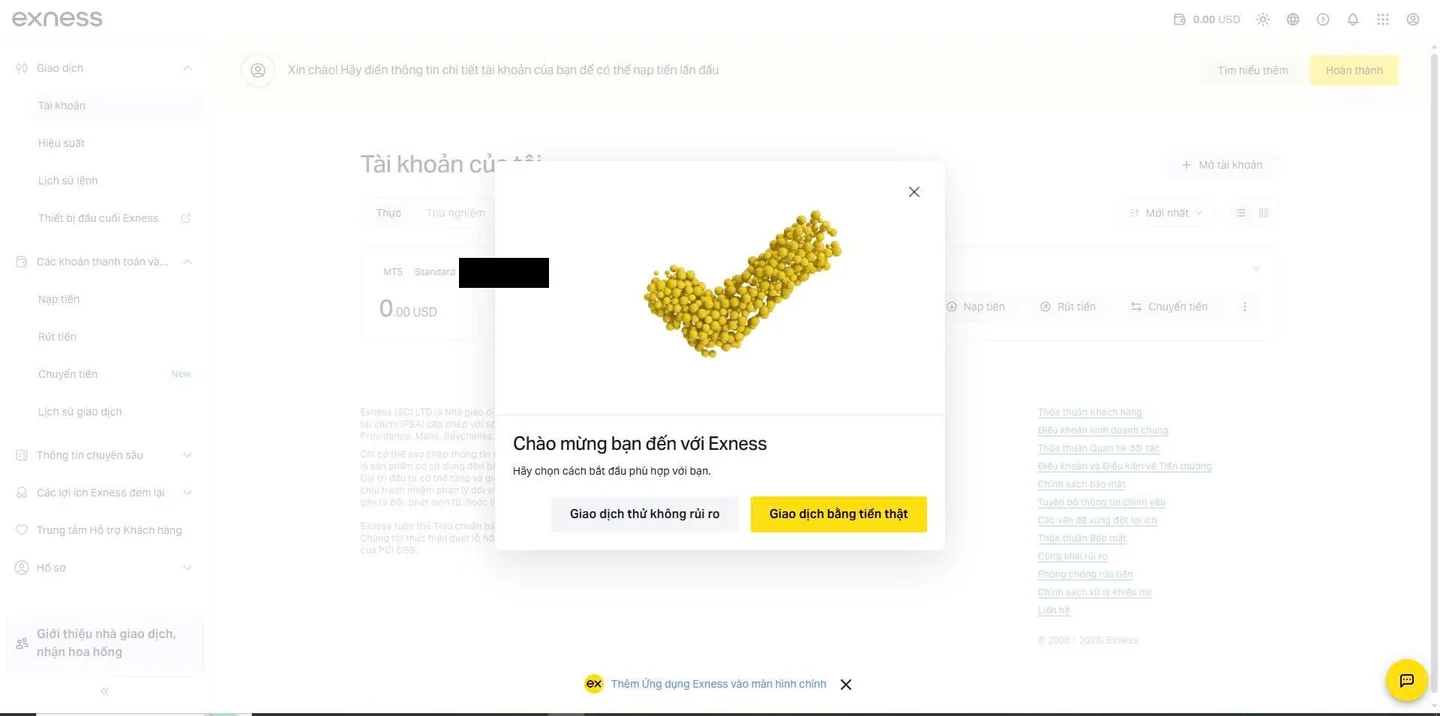
Opening a Zero account works exactly like opening any other Exness account, except for the step where the account type is chosen. Traders who want to receive rebates through BackcomHub follow five steps:
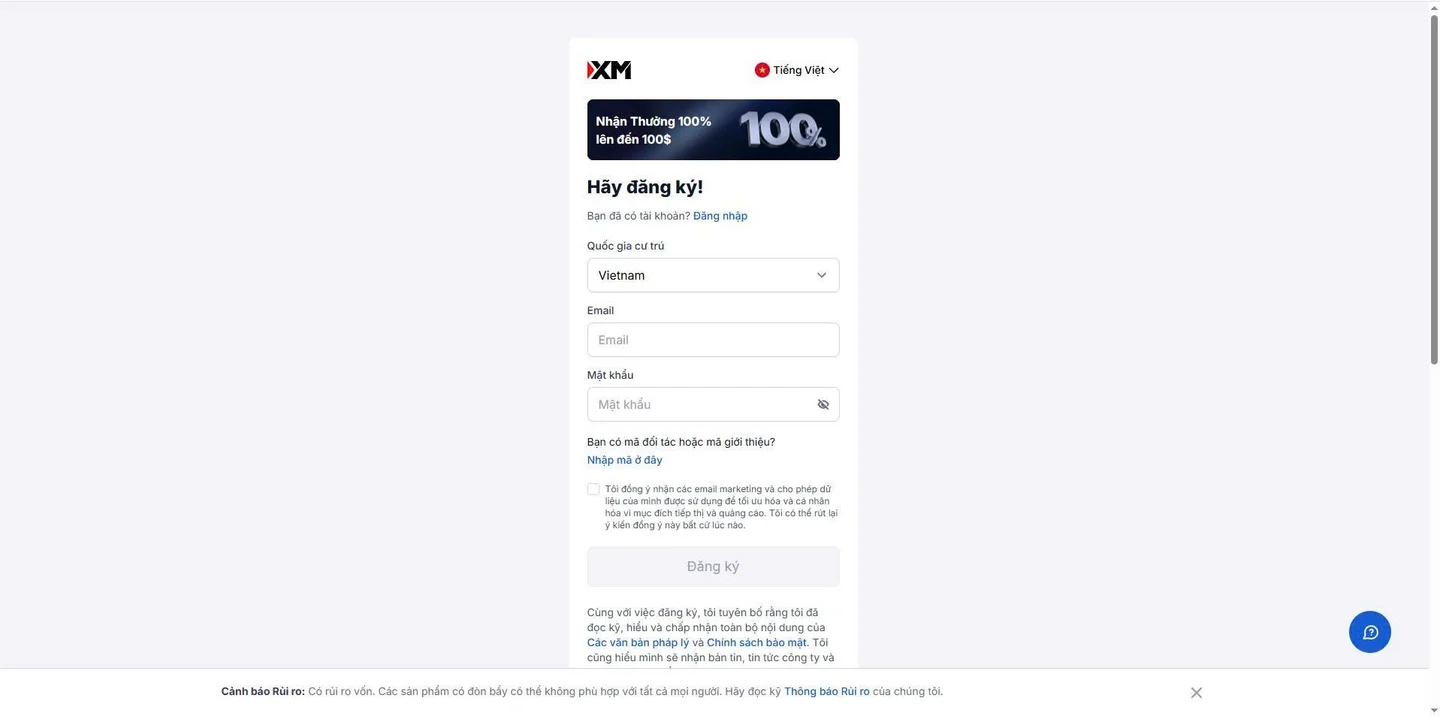
- Register an Exness account and enter the referral code oc9jb1aix4 in the partner code field, so the account is linked to BackcomHub and earns rebates.
- Fill in personal details and select the actual country of residence.
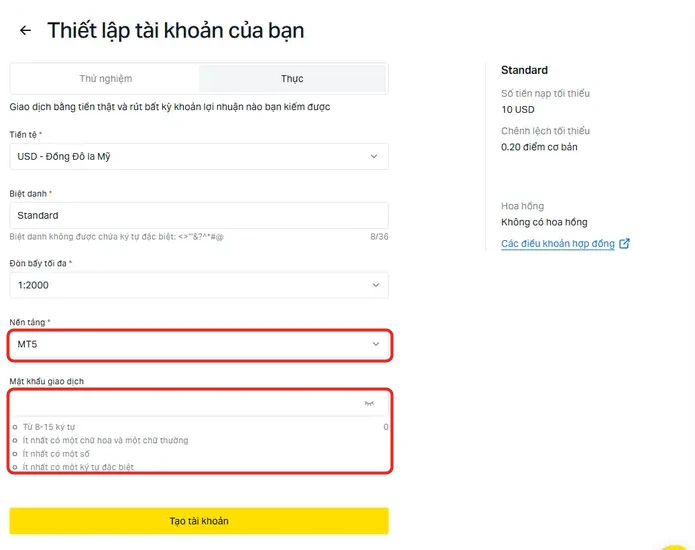
- When creating a trading account, choose Zero from the list of account types Exness offers.
- Choose MT4 or MT5, and think about the leverage level before setting it for the account.
- Complete identity verification (KYC), then deposit the minimum amount required for the Zero account.
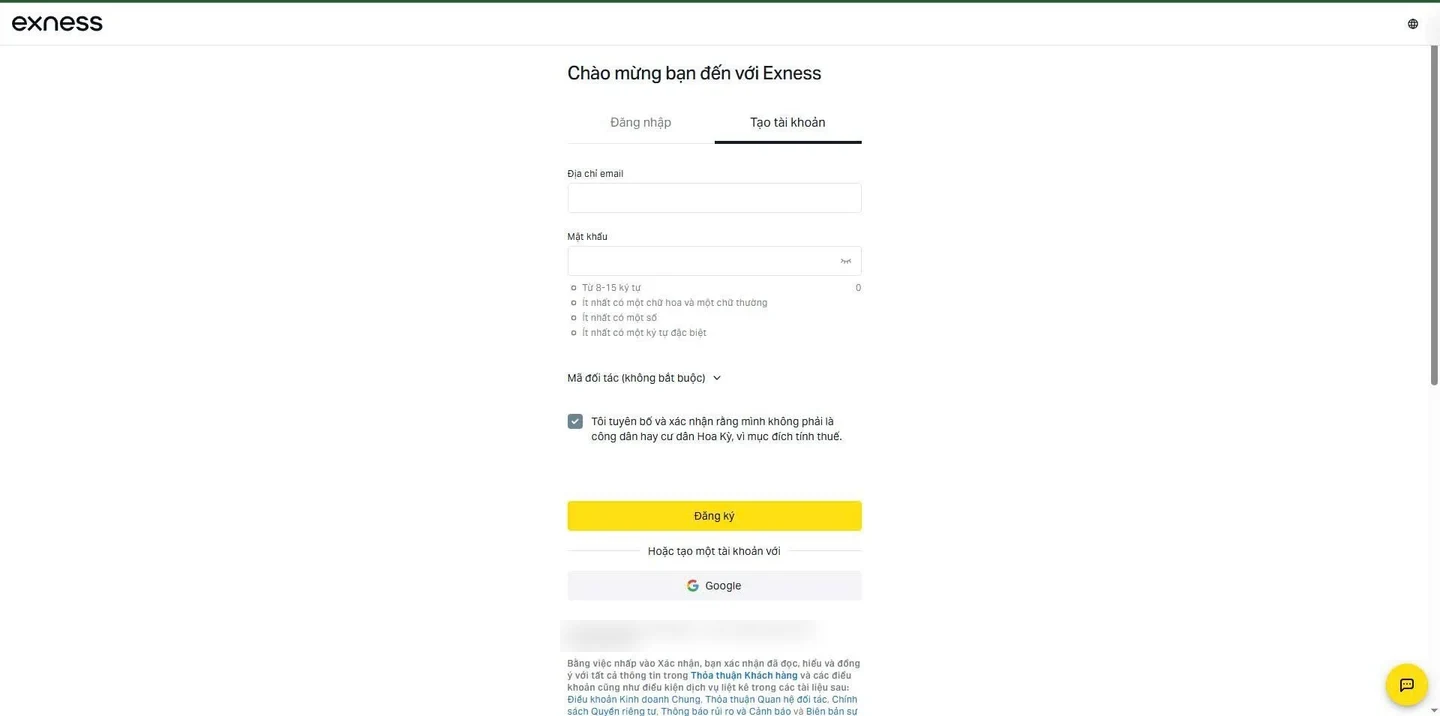
The partner code field only works at registration. Traders who already have an Exness account linked to another partner need to request a partner change and then open a new account, following the steps in switching IB.
Pros and cons
Zero has clear advantages for the right traders, but also some limits worth weighing. Its strengths are:
- Near-0-pip spreads reduce costs for active traders.
- Transparent, easy-to-calculate fees, because commission is separate from the spread.
- Fast execution, suited to scalping and EAs.
In return, the account has three drawbacks:
- Traders have to add commission to the total cost themselves, which is less simple than just reading the spread on Standard.
- Beginners unfamiliar with the ECN/STP model may find it harder to track.
- The minimum deposit is usually higher than on Standard Cent, so it is not ideal for traders starting with very small capital.
Frequently asked questions
How is Zero different from Standard?
The two differ in how fees are charged. Zero has near-0-pip spreads and a separate per-lot commission, while Standard builds all costs into the spread and charges no commission.
Should beginners use Zero?
Zero is better suited to traders with basic experience who know how to calculate commission. Complete beginners should consider Standard or Standard Cent first, then move to Zero once they are comfortable.
How do Zero and Raw Spread differ?
Their execution and fee structures are almost identical. The main differences lie in the exact commission rate and the minimum deposit, so traders should check the current specifications before choosing.
Can a Standard account be converted to Zero?
Not directly. An existing Standard account cannot be turned into a Zero account, so traders need to open a new trading account and choose Zero when creating it.
Does Zero work on both MT4 and MT5?
Yes, Zero supports both MT4 and MT5. Traders choose their preferred platform at the step where the trading account is created.
Verdict
The Exness Zero account suits traders who want low spreads and clear pricing, especially active traders and EA users. The key point to remember is that a near-zero spread does not make a trade free, because the per-lot commission still has to be added to the total cost.
Before opening an account, traders should estimate the cost of a trade using the fee schedule shown in the Personal Area, then subtract the Raw & Zero rebate to get the net cost. This content is for educational purposes and is not investment advice.
Sources
- Exness, official website, https://www.exness.com/ — where current account types, spreads and commissions are published; traders should confirm conditions there and in the Personal Area, as they can change.
- BackcomHub rebate table, Exness entry, Raw & Zero account group, data dated 20 November 2026; figures from dctoptrade.vn.