FXCM Review 2026
FXCM review 2026: FCA, ASIC and FSCA licences, products, the Trading Station, MT4 and ZuluTrade platforms, accounts, spreads, withdrawal fees, pros and cons.
FXCM has been in the market since 1999, which means it has lived through more than twenty years of ups and downs in the forex brokerage industry. Over that time the firm has been more than a broker: it is often mentioned as a pioneer in trading technology, and it now holds licences from leading financial regulators. The question for Vietnamese traders is whether that long reputation comes with trading conditions that are good enough.
The sections that follow look at what FXCM is, how trustworthy it is licence by licence, its products and platforms, account types, spreads and fees, and finally its strengths and weaknesses. Spreads, leverage and fees can change over time and by entity, so traders should check them again on the official FXCM website before opening an account.
What FXCM is
FXCM stands for Forex Capital Markets, a broker founded in 1999 and one of the oldest in the industry. After more than two decades it has a firm place in the trading community, especially among forex traders and users of contracts for difference (CFDs), contracts that make a profit or loss from price moves without owning the underlying asset.
FXCM's credibility rests mainly on three licences. They come from the UK Financial Conduct Authority (FCA), the Australian Securities and Investments Commission (ASIC) and South Africa's Financial Sector Conduct Authority (FSCA). Thanks to this set of licences, FXCM is often ranked among the most trustworthy brokers today.
The broker's stated aim is a professional and transparent trading environment. To that end, FXCM offers forex, indices, commodities, crypto and shares as CFDs. Its strength lies not only in the range but also in its in-house platforms, which serve both beginners and traders with many years of experience.
Despite rising to the top tier worldwide, FXCM still faces its own challenges. It must keep competing with rivals, from how client money is managed to keeping fees at a reasonable level. Even so, tight financial controls and modern trading features keep FXCM a reliable choice for anyone looking for a stable, safe environment.
Is FXCM trustworthy
FXCM clients' interests are placed under fairly strict international financial rules. Each region has its own subsidiary, supervised by the local regulator. The three main licences are:
- FCA in the UK: the subsidiary FXCM LTD is authorised by the FCA under registration number 217689. The regulator is known for very tight client protection rules that require brokers to treat clients fairly and disclose information openly.
- ASIC in Australia: the branch FXCM Australia Pty. Limited holds Australian Financial Services Licence (AFSL) number 309763. As Australia's main financial regulator, ASIC checks that the broker follows the client protection rules there.
- FSCA in South Africa: FXCM South Africa (PTY) Ltd holds FSP licence number 46534 from the FSCA, which helps the broker extend its reach into African countries.
This set of licences is the main basis of FXCM's reputation in forex. Traders can feel more confident that their assets are protected and that orders are handled in a supervised environment. However, each licence only covers clients of the specific subsidiary holding it, so traders should read their agreement to see which entity their account belongs to. The registration numbers can be checked directly on the FCA, ASIC and FSCA websites.
Tradable products
FXCM offers several groups of financial products, so traders can take part in different markets flexibly from one account. The main groups are:
- Forex: the business that made FXCM's name, with more than 40 pairs, from majors such as GBP/USD and EUR/USD to less common exotics. Forex leverage goes up to 1:200, suiting traders who aim to profit from small exchange rate moves.
- CFDs: the broker offers CFDs on stock indices, on commodities such as crude oil or gold, and on shares of large global companies. These let traders profit from price changes without owning the asset, which suits flexible styles and short-term speculation.
- Crypto: FXCM offers CFDs on Ethereum (ETH), Bitcoin (BTC) and some other coins. This is a way into the crypto market without holding real coins. However, clients in the United Kingdom cannot trade this group because of local regulation.
- Spread betting: available only to residents of the UK and Ireland, it allows bets on the movement of currency pairs, indices and commodities. Its special feature is that profits are not taxed, so it suits traders who want to avoid heavy taxes and fees.
- Commodities: the broker offers silver, gold and crude oil, assets often used in cautious strategies or for hedging. With high leverage and reasonable spreads, FXCM is a familiar venue for commodity traders.
Trading platforms
When choosing a broker, the trading software deserves as much weight as fees, because it is the tool traders use every day. FXCM has built a fairly complete platform line-up for both beginners and experts.
MetaTrader 4
Among trading programs, MT4 is still the most widely used, known for stability, ease of use and plenty of customisation. At FXCM, MT4 has everything forex traders need, from technical analysis tools to automated trading with robots (Expert Advisors, EAs). With MT4, traders can trade currency pairs, CFDs, silver, gold and many other products, with low spreads and fast execution.
Trading Station
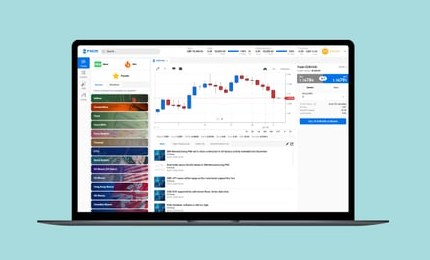
Trading Station is FXCM's own proprietary platform, aimed at both professionals and beginners. It offers in-depth analysis tools, a rich set of chart types and a layout that can be arranged at will, helping traders follow the market and place orders more efficiently. It runs in the browser, on desktop and on mobile, so it is quite flexible. The downside is that beginners may find it hard to use, while experienced traders rate it as a powerful, full-featured tool.
ZuluTrade
ZuluTrade is a social trading network where traders can copy the trades of more experienced traders. It suits beginners, or those who want their account to grow without watching charts all day. On ZuluTrade, users follow signals and copy the orders of professional traders. Even so, copying does not remove risk, because the account still takes every loss of the strategy being copied.
TradingView
TradingView is a web-based charting site that is very popular with technical chart readers. Because FXCM has linked TradingView to client accounts, traders can watch prices, draw their analysis and place orders in one place. On top of that, the TradingView community shares charts and trade ideas, a big plus for anyone who wants other perspectives.
Account types
FXCM has a few account types for different groups of traders, from a standard account to one reserved for high-volume traders. Specifically:
- Demo: ideal for beginners, because the account is funded with virtual money for getting to know FXCM's platforms without risking real money. Traders can test strategies and the broker's tools before depositing.
- Standard: the most popular account at FXCM, suitable for most traders. It charges no commission, only the spread, meaning the gap between the buy and sell price. The average EUR/USD spread is 1.3 pips, fairly competitive with other brokers, so Standard is a good choice for short-term or frequent traders.
- Active Trader: for traders with large volumes, with premium services and tailored solutions, including spreads that fall as volume rises. It suits professional traders or investment funds looking to optimise costs and returns.
On the Standard account, the cost calculation is simple. One lot of EUR/USD has a pip value of about 10 USD, so a 1.3 pip spread works out at roughly 13 USD per lot opened and closed. This conversion is explained in detail in the guide to lots, pips and pip value.
Spreads and fees
On the standard account, FXCM charges through the spread rather than commission. This pricing appeals to frequent traders, because there is only one cost to track. Average spreads on some popular products are:
| Product | Average spread |
|---|---|
| EUR/USD | 1.3 pips |
| WTI crude oil | 0.04 |
| Gold | 0.76 |
| Bitcoin | 27.13 |
High-volume traders also benefit from a discount programme that reduces spreads considerably. Even so, the figures in the table are only averages and can change with market conditions and account type.
Beyond the spread, traders need to account for two other charges:
- Withdrawal fees: withdrawals to debit cards, credit cards or wallets such as Skrill and Neteller are free. International bank transfers, by contrast, cost 25 USD if the receiving account is at the same bank and 40 USD if it is at a different bank.
- Overnight fees (swap): charged on positions held overnight, at rates that depend on the asset and market conditions. This cost weighs heavily on long-term strategies, so traders should think carefully before holding products such as commodities or crypto for long periods.
How to compare spread and commission when choosing a broker is covered in the guide to spread vs commission.
Strengths and weaknesses
Having looked at licences, products, platforms and fees, FXCM's strengths and weaknesses can be summarised as follows.
Strengths
- Licensed and supervised by the FCA, ASIC and FSCA. This gives traders confidence in the broker's legal standing, while strict rules require client money to be held in segregated accounts.
- Many platforms: MT4, Trading Station, ZuluTrade and TradingView. Traders can choose the tool that fits their strategy, with MT4 easy for forex traders and Trading Station strong in advanced technical analysis.
- Low spreads, especially on majors such as EUR/USD at 1.3 pips. The standard account charges no commission, only the spread, so costs are easy to track for frequent traders.
- Flexible leverage: from 1:30 for clients in the EU and the UK up to 1:400 for clients in Australia and South Africa. Traders can pick a level that fits their strategy to make the most of opportunities, though risk rises accordingly.
- Well-regarded support: clients can phone, email or chat with staff five working days a week. FXCM also has dedicated regional support for places such as Nigeria, Kenya and South Africa, so traders in many countries get timely help.
The leverage figures need careful reading. The products section states forex leverage of up to 1:200, while the strengths list gives a maximum of 1:400 for clients in Australia and South Africa. The two numbers only fit together if the maximum differs by entity and client category, so traders need to check the level that actually applies to their account. The risks of high leverage are analysed in the guide to forex leverage for beginners.
Weaknesses
- International wire withdrawals are costly: 25 USD at the same bank and 40 USD at a different bank. For traders who withdraw often this raises total costs, although withdrawals to cards or e-wallets are free.
- No PAMM accounts, the model in which one manager handles capital for many investors. This is a weakness for anyone who wants to delegate or join a managed fund of this kind.
- Trading Station is powerful but fairly complex for beginners. To get the most out of its advanced analysis tools, users need time to get used to it and learn how it works.
Overall verdict
More than twenty years in business show that FXCM belongs among the leaders in forex and CFD brokerage. It suits anyone who wants a strictly supervised place to trade, with quality platforms and easy-to-track spreads on the Standard account.
Before opening an account, however, traders should weigh costs such as bank withdrawal fees and swap, as well as the missing features such as PAMM. Checking the correct entity and the leverage that applies is a step worth taking before depositing.
Sources
- FXCM, official website (licences, products, platforms, accounts, spreads and fees); traders should recheck here as conditions can change: https://www.fxcm.com/
- UK Financial Conduct Authority (FCA), Financial Services Register, number 217689: https://register.fca.org.uk/
- Australian Securities and Investments Commission (ASIC), AFSL 309763: https://asic.gov.au/
- Financial Sector Conduct Authority of South Africa (FSCA), FSP 46534: https://www.fsca.co.za/
- DCtoptrade (screenshots): https://dctoptrade.vn/