
FXTF Review 2026
FXTF review 2026: Japan FSA licence, MT4 platform, spreads and swaps, leverage, stop out, deposits and withdrawals, WikiFX complaints and the risk for traders.
There are so many forex brokers on the market that new traders often struggle to tell which one deserves their deposit. FXTF is a name that has been mentioned more often lately, usually with three selling points: a head office in Tokyo, a licence from Japan's FSA and very low trading costs. Those points sound appealing, but alongside them sit a number of complaints from international clients who say they could not withdraw their money. The question, then, is whether the image of a "safe Japanese broker" actually holds for traders in Vietnam.
The sections that follow look at what FXTF is, its licence, platform and products, costs, leverage, deposits and withdrawals, community, customer support and support for beginners, and finally whether FXTF is a scam. Conditions such as fees, spreads, leverage and payment channels can change over time, so traders should check them again on FXTF's official website before opening an account. BackcomHub currently has no rebate programme with FXTF.
What FXTF is
FXTF is a forex and CFD broker headquartered in Japan that mainly serves individual clients trading currencies. A CFD (contract for difference) is a contract under which the trader gains or loses according to price movements without owning the underlying asset. Through this mechanism, FXTF clients can trade the major currency pairs, gold, oil and stock indices on MetaTrader 4 (MT4), the software most Vietnamese traders already know well.
Judged by its product list alone, FXTF looks much like hundreds of other brokers. What sets it apart is how it has grown: slowly, with little advertising, no heavy marketing spend and no reliance on a network of introducing brokers (IBs). Instead, the company has concentrated on its home market in Japan. Only recently has FXTF started to expand internationally, catching the attention of Vietnamese traders thanks to low trading costs and a promise of attentive client support.
However, a low profile does not mean the broker is free of problems. Some users have complained that they could not withdraw their funds, which has led many to ask whether hidden risks lie beneath the safe-looking surface. The following sections go through each aspect to answer that question.
Licence and reputation
On paper, FXTF is a Japanese company licensed in its own country. Specifically, it is supervised by the FSA, Japan's financial services regulator, under registration number 258. The FSA ranks among the strictest regulators in Asia, a world away from the easy-to-obtain licences issued by small island jurisdictions, often called offshore licences. As a result, FXTF's legal footing looks fairly solid on paper.
Even so, a good licence does not guarantee that every client is served well. Some international users have still filed complaints about the broker on WikiFX, a site that collects information and user reports on brokers. The most serious complaints centre on being blocked from withdrawing and being asked to pay fees before a withdrawal; some say that after paying one charge they were asked for another, and in the end never received their money.
On the same site, FXTF scores roughly 7.2 out of 10. That score is not bad, but it is not enough to feel fully reassured. The reason is that an aggregate score does not capture everything traders face in real use, such as the attitude of the support team, the time taken to process withdrawals or the way the broker handles disputes.
Trading platform and products
MT4 as the only platform
FXTF offers MT4, the platform that has become close to a universal standard for forex traders worldwide. Anyone who has traded at one or two other brokers will feel at home: it is easy to use, comes with plenty of analysis tools and runs automated trading robots (EAs, Expert Advisors). MT4's interface is dated but still effective, and for traders who run EAs or test strategies on historical data (backtesting), it remains the most stable platform.
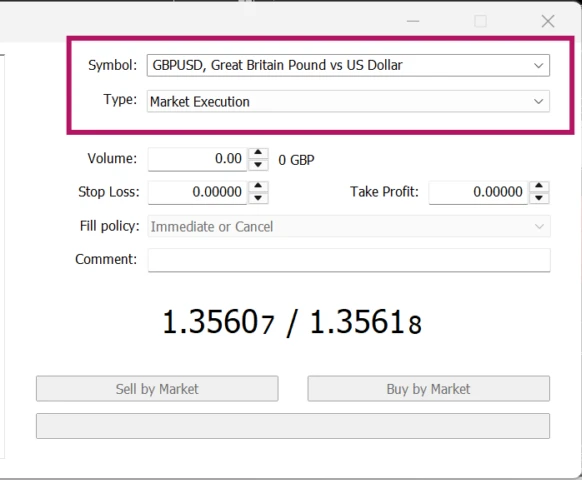
Relying only on MetaTrader brings a small advantage as well. FXTF does not push clients onto unfamiliar software or an in-house app, whereas many problematic brokers choose that route because it makes them harder to verify. With MT4, traders can check spreads themselves, review price history and use their own tools without restriction.
Product range
FXTF's core product is forex, covering major pairs, crosses and exotic pairs. Beyond currencies, the broker offers CFDs on gold, oil, indices and cryptocurrencies. Traders looking for a very broad range should think twice, however, because FXTF is not strong in international shares or ETFs the way many large European brokers are.
Execution speed
According to user feedback, execution at FXTF is fairly good, with few requotes, the situation in which a broker sends an order back and offers a new price. This holds best for major pairs such as EUR/USD and USD/JPY. Because it is a Japanese broker, its servers appear to sit close to Asia, so clients in the US or Europe may notice slightly higher latency. That delay is negligible unless a trader scalps at high speed, opening and closing positions within a few minutes.
Trading costs
Spreads and commission
On cost, FXTF belongs to the cheaper group of brokers in the basic forex segment. The spread, the gap between the buy and sell price, is advertised as very low on major pairs, with EUR/USD sometimes starting from 0.1 pip in quiet markets. In addition, the broker charges no commission, which means the spread is the only trading fee traders pay. The two pricing models are compared in detail in the article on spread vs commission.
That 0.1 pip figure needs to be read carefully, however. The lowest spread applies only to the standard account or to hours with deep liquidity. When prices move sharply or major news is released, spreads can widen considerably, a familiar pattern at brokers that charge no commission. Traders who often trade around news releases will therefore pay more in practice than the advertised figure suggests.
Overnight fees
The overnight fee (swap) is the amount charged or credited when a position is held into a new trading day. FXTF does not publish detailed swap rates on its homepage. Based on the experience of some Japanese traders and feedback on international forums, swaps here are around average. Traders who plan to hold positions for several days should therefore check the swap for each pair directly in MT4 before entering a trade.
Leverage and related policies
Leverage levels
FXTF takes a fairly traditional approach to leverage and does not chase the 1:1000 or 1:2000 figures advertised by many offshore brokers. Leverage is the ratio between position size and margin, so 1:200, the usual maximum for forex at FXTF, means 1 USD of margin opens a position worth 200 USD. For gold or cryptocurrencies, leverage may be lower still. The figure sounds modest, but anyone who has been hit by a margin call at a broker offering 1:3000 will understand that high leverage is often more of a trap than an advantage, as explained in forex leverage for beginners.
Margin call and stop out
FXTF publishes two clear margin thresholds. According to the broker, the margin call level is around 100% and the stop out level is 50%. Both are compared against the margin level, which is equity divided by used margin, multiplied by 100%.
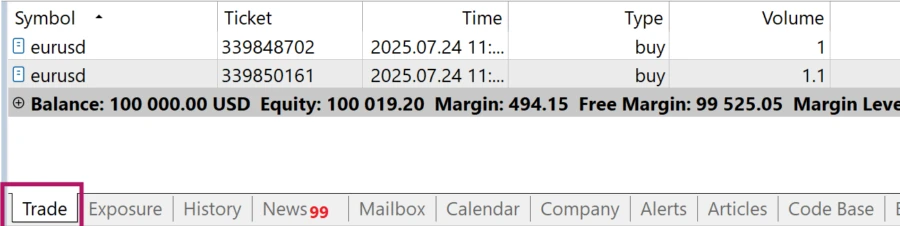
In other words, when an account falls quickly and the margin level reaches 50%, the system closes positions automatically to preserve the remaining capital. This keeps the account from being wiped out completely, but it also frustrates many traders when positions are closed midway, just as they expect the price to turn.
No negative balance protection
Unlike some European brokers, FXTF does not offer negative balance protection, the mechanism that resets the balance to zero when extreme price moves push an account below zero. As a result, if the market slips heavily, or a trader holds positions overnight through major releases such as US consumer prices (CPI) or non-farm payrolls (NFP), the account can still go negative. In that case, the trader is responsible for the shortfall.
Deposits, withdrawals and processing speed
Payment channels
In theory, FXTF offers fairly standard payment channels: bank transfer, credit card and several e-wallets popular in Japan. For clients inside Japan, deposits and withdrawals run smoothly and quickly. For international clients, by contrast, this is the area where the most worrying signs appear.
Withdrawal complaints
Some international users, especially in Southeast Asia, have written on WikiFX that they could not withdraw their money. Some say they were asked to pay an extra "withdrawal fee", "verification fee" or "minimum trading fee" before being allowed to withdraw. This pattern of holding funds and demanding fees closely resembles the methods of many scam brokers, as described in six warning signs of a forex scam broker.
One typical report says the writer was asked for a fee to verify transactions, then for a further charge described as insurance, and in the end the money still never arrived. Not every FXTF client has had this experience. Even so, the mere existence of complaints of the "pay a fee to withdraw" type is a very dangerous sign, because a transparent broker should have a clear, consistent withdrawal process with no vague charges attached.
Community and popularity
Profile in Vietnam
FXTF is not a familiar name among Vietnamese traders. Compared with large brokers such as Exness, IC Markets or XM, which appear constantly in local Telegram groups, Facebook groups and trading forums, FXTF is almost invisible.
The broker's main market is Japan, where the company has operated fairly steadily for nearly 20 years. There, FXTF has a loyal client base thanks to low spreads and fast domestic support. In international markets, especially Southeast Asia, it has made little impact and has no community strong enough for users to help one another.
Why a missing community is a drawback
Searches for FXTF on TrustPilot, Reddit or ForexPeaceArmy turn up relatively few posts, and many of those are warnings or scam allegations. This suggests the broker has not yet built a solid international client community. For traders, the lack of a community is a disadvantage in three ways:
- There are no experienced users to learn from or exchange experience with.
- When problems such as slow withdrawals or unusual spread widening occur, traders are easily left on their own, with nobody to guide or warn them in advance.
- The broker has no community channel in Vietnamese: no official Facebook page, no support group and no widely known local IB representative.
For Vietnamese clients, these three points together add up to a serious drawback, because when something goes wrong they are largely left to fend for themselves.
Customer support and Vietnamese-language help
FXTF is a Japanese broker, so it is no surprise that its support team focuses on domestic clients. Its support style is distinctly Japanese as well: polite and meticulous, but slow and inflexible when dealing with foreign clients.
On its international site, the broker offers email and a hotline. On the other hand, it has no 24/7 live chat, no Telegram and no Vietnamese-language support at all. For Vietnamese traders, especially beginners, this is a major drawback, since not everyone has enough English or Japanese to file a support ticket and then read the reply through machine translation.
The problem is clearest in the withdrawal complaints. Many users report that the support team is hard to reach, emails are answered slowly, and replies tend to be mechanical and evasive without solving the issue. This suggests FXTF lacks a dedicated support team for international clients, or has one that has not been developed as thoroughly as at Exness or IC Markets, brokers that are used to serving Vietnamese clients.
Support for beginners
People new to the market usually ask three things: does the broker have a practice (demo) account, does it teach trading and is there anyone to guide them. On all three points, FXTF is less beginner-friendly than many other brokers.
First, the broker does offer a demo account on its official website. However, the sign-up form is rather rigid, available only in English or Japanese, with no Vietnamese and no step-by-step guidance. As a result, people approaching the market for the first time can stumble at the very first step of opening a practice account.
On learning materials, FXTF has no academy, no video tutorials and no Vietnamese-language resources. The trading knowledge section on its site consists of a few basic articles and lacks the structure offered by large brokers investing heavily in content for beginners, such as Exness Academy or eToro's CopyTrader copy trading service.
On top of that, the broker has no IB programme and no one-to-one mentoring for beginners. With no support group and nobody to guide each trade, newcomers have to work everything out from scratch or search online on their own.
Is FXTF a scam
The positives
From the outside, FXTF has a fairly clean record. It holds a Japanese FSA licence, has been operating since 2006 and therefore has a long track record, and it uses MT4, a platform regarded as the industry standard. Even so, what international clients actually experience is more complicated than the picture on paper.
Complaints worth noting
On WikiFX, FXTF has been the subject of some fairly serious complaints. The main allegations are:
- Being unable to withdraw funds despite having met the trading conditions.
- Being asked for "withdrawal", "insurance", "verification" or "minimum trading" fees with unclear justification.
- Some users even suspect they fell victim to a romance scam, in which a stranger strikes up an online relationship and then persuades the victim to deposit money with the broker.
These complaints are not vague grumbles. They are documented in some detail on WikiFX, with screenshots as evidence and detailed accounts. The level of concern therefore lies not in the number of complaints, but in the fact that the allegations are systematic and repeat the same pattern.
The other side
To be fair, two points cut the other way:
- FXTF still has Japanese clients who trade steadily, withdraw normally and rate its fees and execution speed well.
- There is so far no legal finding from the FSA confirming that FXTF has broken the rules or been penalised.
Weighing both sides, it is not possible to state that FXTF is a scam. Nevertheless, it is a broker with considerable hidden risk, particularly for international clients who do not receive adequate support. Traders who want a comparison with another broker that is little known in Vietnam can read the AIMS review 2026.
What traders in Vietnam should do
Traders in Vietnam who still want to try FXTF should keep to three principles:
- Do not deposit a large amount at the start.
- Test a small deposit and withdrawal first, and check carefully how the support team responds before trading long term.
- Be wary of any stranger on social media who suggests investing through FXTF.
Overall assessment
FXTF has a notable record: a Japanese FSA licence, nearly 20 years of operation, low trading costs and a stable MT4 platform. On the other hand, warnings about blocked withdrawals, pressure to pay unusual fees and a lack of support for international clients are points traders should treat with great caution. Traders who still want to try FXTF should therefore start with a demo account or a very small deposit, complete a full deposit-and-withdrawal cycle, and only then decide whether to trade there long term.
Sources
- FXTF, official website: where the broker publishes its licence, account conditions, fees and margin thresholds; traders should check again there as conditions can change.
- FSA (Financial Services Agency, Japan), list of licensed firms: https://www.fsa.go.jp/
- WikiFX, FXTF profile and user reports: https://www.wikifx.com/
- DCtoptrade (screenshots): https://dctoptrade.vn/


