
How Trustworthy Is OANDA
OANDA holds FCA, NFA, ASIC and MAS licences, yet WikiFX flags it after 103 complaints in three months. What traders report, the warning signs and what to do.
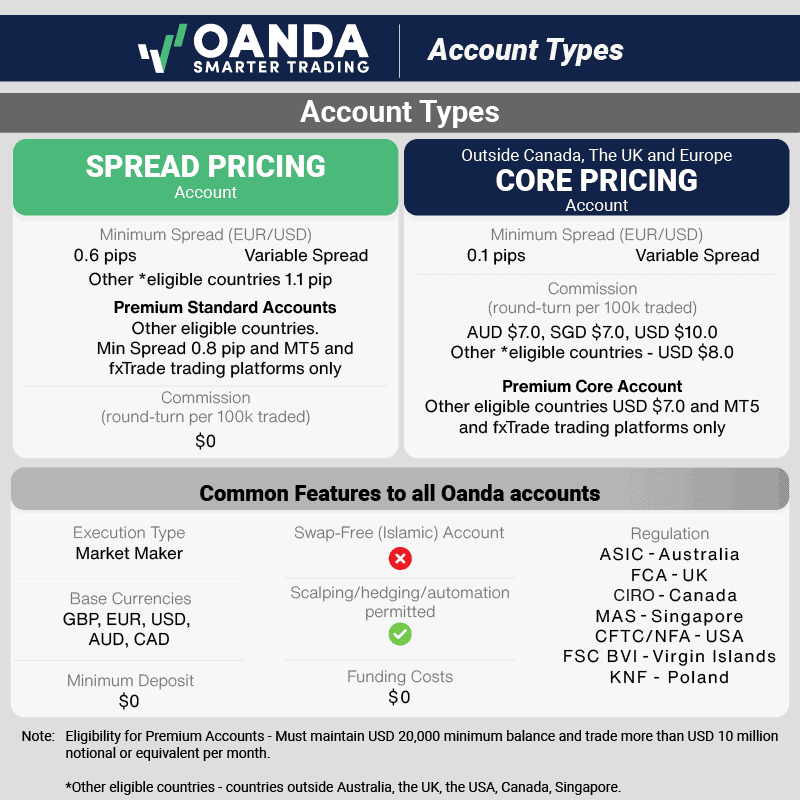
For many experienced traders, OANDA is close to a guarantee of quality. The forex broker was founded in 1996 and holds licences from some of the strictest regulators in the industry, including the FCA in the UK, the NFA in the US, ASIC in Australia and MAS in Singapore. In recent months, however, WikiFX and several international forums have filled up with negative reports, ranging from difficult withdrawals and slow support to accounts closed without warning. That raises a fair question about how far a long-established name like OANDA can still be trusted.
The sections that follow look at the warning WikiFX has attached to OANDA, the problems international traders mention most, the risk signs that Vietnamese traders should watch for, and the practical advice for each group of readers. Conditions such as fees, spreads and account policies can change, so traders should check them against OANDA's official website before making a decision. BackcomHub currently has no rebate programme with OANDA.
What WikiFX flags about OANDA
WikiFX is a site that collects licence data, ratings and user complaints about brokers. By June 2025 it had placed a risk warning directly on OANDA's profile, based on two particularly worrying findings:
- There were 103 complaints in the most recent three months. The details of each case are not public, but when a top-tier broker receives more than a hundred complaints in a single quarter, something in its operations or client support is probably not working.
- One on-site survey report came back negative. That result may stem from an office that could not be verified, or from the broker leaving certain markets without a clear announcement, as happened recently in Japan.
On top of those two points, WikiFX marks some of OANDA's licences in Japan and Singapore as "revoked" or "exited the market". For a company that operated steadily in both countries for years, that change is unusual. In short, OANDA's overall WikiFX score is still high, but the current warnings are serious enough that traders should not ignore them.
How to read a WikiFX profile, along with the general signs of a problem broker, is covered in six warning signs of a forex scam broker.
What international traders report
Beyond the WikiFX warnings, the international trading community has shared quite a few unhappy experiences with OANDA, especially during 2024–2025. The five problems mentioned most often are summarised in the subsections below.
Slow withdrawals and drawn-out verification
Many users say they had completed every verification step, meaning they had submitted identity documents and proof of address as requested. Yet when they asked to withdraw, the money was held back with reasons such as "missing information" or "under review", or the broker asked for more documents. One user on WikiFX said a withdrawal of 1,000 USD still had not arrived after almost two weeks, and that emails to support only produced an automatic reply with nobody handling the case.
Sharp spread widening and unusual fills
The spread is the gap between the buy and sell price, and it is the cost a trader pays the moment a position opens. OANDA advertises spreads of roughly 0.2–1.0 pips, but according to many traders that figure can widen sharply around news releases, at times reaching 10–15 pips on EUR/USD. One trader said they entered about two minutes before the US Non-Farm Payrolls release, suffered 12 pips of slippage and lost the whole account. As a result, the hardest hit are scalpers and news traders, who rely on tight spreads and fills close to the quoted price.
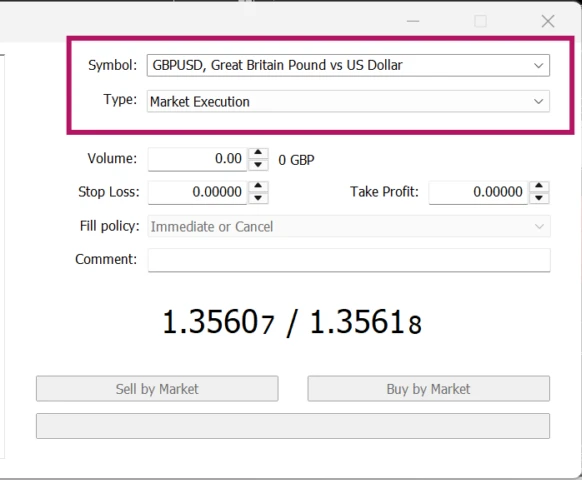
A market order like the one shown fills at whatever price is available at that moment, so when spreads widen or price gaps, the actual fill can land far from the price on screen. Why the minutes around a news release are always the riskiest is explained in the riskiest moment to trade forex.
High withdrawal fees and limits on frequent withdrawals
Some traders report being charged around 20–35 USD per withdrawal, particularly for bank transfers. For anyone who withdraws several times a month, that adds up quickly. In addition, OANDA has no local deposit or withdrawal channels, which makes things harder for Vietnamese traders.
Weak support and no Vietnamese service
OANDA does not currently have a dedicated support team for the Vietnamese market. Clients mostly reach the broker by email or support ticket, and according to the reports, replies come slowly and tend to read like templates. One trader described sending three emails without an answer, only to find that live chat said it was outside working hours.
Accounts closed without warning
Some clients say their accounts were closed for long inactivity without any clear notice beforehand. The worst damage falls on people who leave money in the account but rarely log in to check it.
Taken together, these reports do not mean every OANDA client runs into trouble. Even so, the number of complaints is clearly rising, and for a broker with such a long history that suggests service quality is slipping, or at least that the broker is no longer as client-friendly as it once was.
Warning signs for Vietnamese traders
The reports above point to five signs that traders, especially beginners, should watch if they already use OANDA or plan to open an account there:
- Accounts can be restricted after little trading. Some clients in Japan and Singapore say that after just 6–12 months without trades, their account was marked "inactive", locked automatically and even deleted without clear notice from the broker. That is a real risk for anyone holding funds long term without checking regularly.
- Verification and withdrawals lack transparency. Clients are asked for extra documents several times even after earlier verification, while the system gives no specific error, leaving users to guess or to send tickets that go unanswered.
- There are no local payment channels in Vietnam. Vietnamese traders have to use international cards or international e-wallets, which brings high currency conversion costs.
- There is no Vietnamese community or support. The broker has no Telegram group, no official Vietnamese fan page and no local introducing broker (IB) offering help, so traders are on their own when something goes wrong, which is hardest for beginners whose English is limited.
- There is no regional representative or support office. That may explain the negative on-site survey on WikiFX, since the broker may no longer have a real presence in some countries, or may be scaling back its international operations.
None of these signs on its own proves that OANDA is a bad broker. When several appear together, however, traders should reduce the amount they keep with the broker and monitor their account more closely.
What to do about OANDA
There is no denying that OANDA is a veteran broker whose regulatory base, built on FCA, NFA, ASIC and MAS licences, ranks among the strongest in the industry. In the past it was regarded as a benchmark for transparency and for the way it handled client money. The recent signs of trouble cannot be brushed aside, though, so the right move depends on where each trader stands.
Traders who already hold an account at OANDA are safer withdrawing their funds in stages and avoiding large balances at a broker showing signs of strain. They should also confirm which branch holds their account and which licence that branch carries. The way to check is to read the company name in the client agreement, then search for that name on the register of the relevant regulator, such as the FCA's Financial Services Register or the NFA's BASIC system.
Traders still weighing up an account should favour a broker with support in Vietnam and an active user community, and should test a small deposit and withdrawal before moving larger sums. Anyone who still chooses OANDA should open the account with the branch supervised by the FCA (UK) or the NFA (US), where supervision is strongest, provided that branch accepts the trader's application. The brokers already flagged in Vietnam are listed in forex scam brokers flagged in Vietnam, which helps with comparison before choosing.
For complete beginners, OANDA is not a good place to start. The broker suits professional traders who read English well and can resolve problems on their own without local support.
Sources
- WikiFX, OANDA profile and complaints section, https://www.wikifx.com/
- OANDA, official website, https://www.oanda.com/ — traders should re-check account conditions, fees and policies here.
- Financial Conduct Authority (FCA), Financial Services Register, https://register.fca.org.uk/
- National Futures Association (NFA), BASIC search, https://www.nfa.futures.org/
- Australian Securities and Investments Commission (ASIC), https://asic.gov.au/
- Monetary Authority of Singapore (MAS), https://www.mas.gov.sg/
- Image: DCtoptrade (screenshot), https://dctoptrade.vn/


