What Is Cashback Exchange in Forex
Cashback exchange returns part of the spread and commission per lot, losing trades included. How it flows via an IB, how to calculate it and how bonuses differ.
Every forex trade costs money, whether the trader wins or loses. That cost may be the spread, meaning the gap between the buy and sell price, a commission, meaning a fixed charge on each lot, or a mix of both. Cashback exchange is a way to recover part of that cost after each executed trade. Unlike a short-lived promotion, the rebate is regular and calculated directly from the volume the trader actually trades.
To use cashback properly, traders need a few core points: where the money comes from and who it passes through, how it differs from a deposit bonus, how to work out the amount received, and what to check before choosing a programme. The sections below cover each point in turn, with real figures from BackcomHub's rebate table.
What cashback exchange means
Cashback exchange, roughly "money back from the broker", is the amount returned to a trader based on the lots traded at a forex broker. The rate is usually set as a number of US dollars per lot, or as a percentage of the spread and commission paid. "Exchange" here refers to the broker where the trader places orders. It has nothing to do with a cryptocurrency exchange, even though the two terms are easy to confuse.
The same mechanism goes by several names: rebate, backcom or simply cashback. All of them describe part of the trading fee returning to the trader through an intermediary called an IB (Introducing Broker), a partner that refers clients to the broker. The commission-sharing side is explained in more detail in what is backcom.
The names differ only in emphasis. "Cashback" stresses that money comes back to the trader, while "backcom" stresses that the broker and the IB share a commission. Judged by the money that finally reaches the trader, the two words mean almost the same thing in most programmes today.
Who the cashback passes through
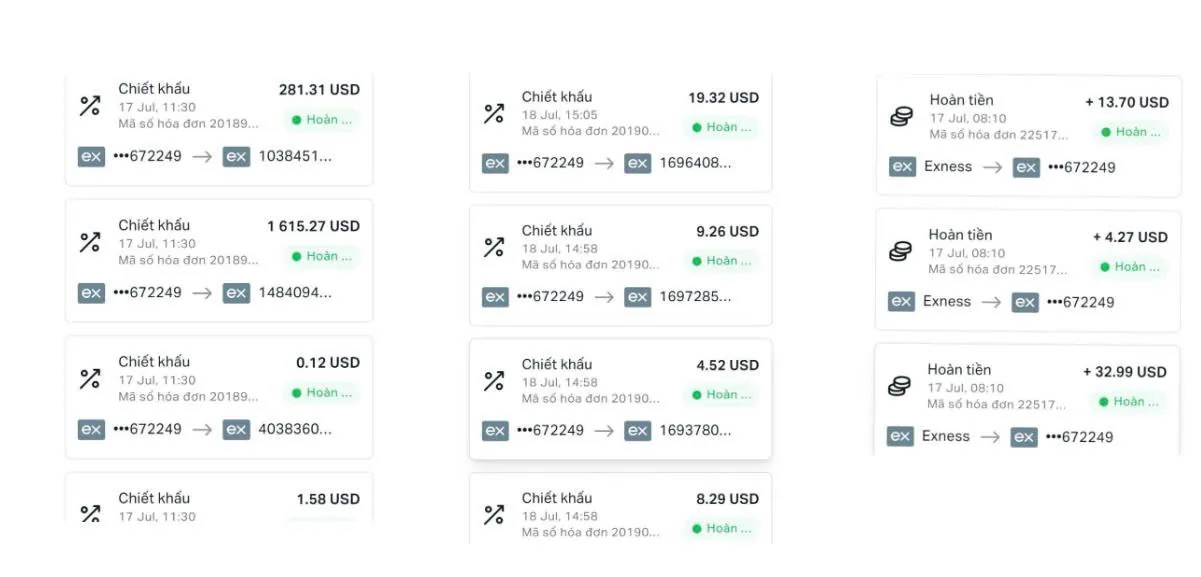
Cashback exchange runs on the IB model, the link that sits between broker and trader. When a trader opens an account through the IB's personal link, the broker records every later trade on that account and pays the IB part of its commission. Instead of keeping it all, the IB passes most of it, sometimes all of it, back to the trader.
The chain has three parties, each with its own role:
- The forex broker: earns spread or commission on every trade, then sets aside a share to pay the IB under the partner agreement.
- The IB: is paid by the broker according to the volume of the traders it referred, then shares that payment back with them.
- The trader: trades exactly like any other account holder, and the only extra step is opening the account through the IB's link; rebates arrive automatically on a cycle, commonly daily or weekly.
Most programmes today calculate cashback on lot volume, regardless of whether a trade ends in profit or loss. As a result, losing trades earn a rebate just like winning ones, and the calculation is more transparent. It also avoids a conflict of interest, because the IB gains nothing extra when the trader loses.
How it differs from a deposit bonus
New traders often confuse cashback exchange with a deposit bonus or a welcome gift for opening an account. In fact the two differ in at least three ways:
- Conditions: a bonus can usually be withdrawn only after the trader reaches a minimum number of lots before a deadline, whereas cashback builds up trade by trade with no complicated withdrawal restrictions.
- Repetition: a bonus is typically given once or in campaigns, such as when an account is first opened; cashback keeps running on every trade for as long as the account stays linked to the IB.
- Attached risk: many bonuses are only "credit", a virtual margin amount that cannot be withdrawn directly; cashback is usually real money that can be withdrawn like any other part of the balance.
The two come from separate policies. A bonus serves marketing, while cashback is partner commission shared back. As a result, if the broker's terms do not prohibit it, the same account can receive both.
One more case is worth separating. Brokers themselves sometimes use the word "cashback" for refund schemes they fund directly. Those schemes have their own conditions and usually run for a limited time, unlike cashback paid through an IB.
How to calculate the rebate
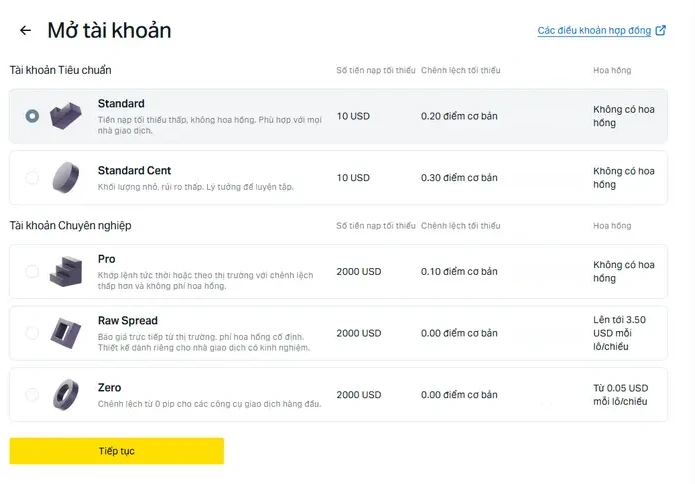
The cashback amount depends on three things. The first is the per-lot rate the IB publishes. The second is the volume the trader actually trades in the period. The third is the account type, because Standard accounts and Raw Spread or ECN accounts have different fee structures, so their rebates differ too.
The basic formula is short: cashback = total lots × rebate per lot.
Take the IC Markets Standard account, for which BackcomHub's rebate table lists a flat 4 USD per lot on all symbols, with figures dated 18 October 2026. If the trader trades 20 lots over a month, the estimated rebate is 20 × 4 = 80 USD. For other volumes, the results are:
| Monthly volume | Rebate per lot | Estimated rebate |
|---|---|---|
| 5 lots | 4 USD | 20 USD |
| 20 lots | 4 USD | 80 USD |
| 50 lots | 4 USD | 200 USD |
The figures in the table only illustrate the method. Real rates vary by broker, account type and date; at the same broker, for example, the IC Markets Raw Spread account earns only 2 USD per lot. Before opening an account, therefore, the trader should ask the IB for the exact rate, then check each payment against the same multiplication.
Cashback at popular brokers
Not every broker comes with a clear rebate programme that lasts for years. The five brokers in the following table, all well known among Vietnamese traders, have different fee structures, and that structure decides how cashback is calculated:
| Broker | Main fee type | Cashback characteristics |
|---|---|---|
| Exness | Spread (Standard), commission (Raw) | Many account types, with rebates set per type |
| XM | Mainly spread, some lines with commission | Seasonal cashback promotions alongside regular rebates |
| IC Markets | Commission (Raw Spread/ECN) | Fixed commission per lot, so easy to calculate and check |
| Tickmill | Both spread and commission (Pro) | Two account styles to compare fee models before choosing |
| HFM | Mainly spread, some Zero lines | Many account types, with rebates per product line |
Of these five, BackcomHub currently pays rebates on Exness, XM and IC Markets, while Tickmill and HFM are not in BackcomHub's table. Some reference rates from that table:
| Broker and account | EUR/USD (USD/lot) | Gold XAU/USD (USD/lot) | Data date |
|---|---|---|---|
| Exness Standard & Cent | 3.2 | 9.6 | 20 Nov 2026 |
| Exness Raw & Zero | 0.87 | 3 | 20 Nov 2026 |
| XM Standard & Micro | 8.1 | 15.3 | 10 Nov 2026 |
| XM Ultra Low | 3.15 | 9 | 10 Nov 2026 |
| IC Markets Standard | 4 | 4 | 18 Oct 2026 |
| IC Markets Raw Spread | 2 | 2 | 18 Oct 2026 |
Because the fee structure feeds straight into the calculation, traders should set their own account type against the matching rebate table instead of looking only at the biggest number. Rebates on Standard accounts are usually higher than on Raw because the underlying fees are higher too, and Standard vs Raw accounts shows how to compare net cost. The full Exness table is on the Exness rebate page, while Vantage, Ultima Markets and VT Markets have their main rates on the home page.
Besides the regular per-lot rebate, some brokers add short promotional cashback campaigns at higher rates. XM, for instance, has run an Unlimited Cashback campaign around the end of the year. Campaigns like these are funded by the broker and carry their own conditions, so traders need to read the rules of each one carefully.
Getting cashback through BackcomHub
Receiving cashback through BackcomHub takes five steps:
- Choose a broker: using the comparison above, pick a broker that suits the strategy, the account type and the pairs usually traded.
- Open the account through BackcomHub's link: this step cannot be skipped, because an account opened directly on the broker's website stays outside the rebate system. Sign-up buttons and referral codes for each broker are on the home page; for example, the XM code is BACK100 and the IC Markets code is 91994.
- Verify the account (KYC): submit an identity document and proof of address as the broker requires.
- Deposit and trade as usual: nothing else is needed, because once the account is linked to the IB, every executed trade earns a rebate automatically.
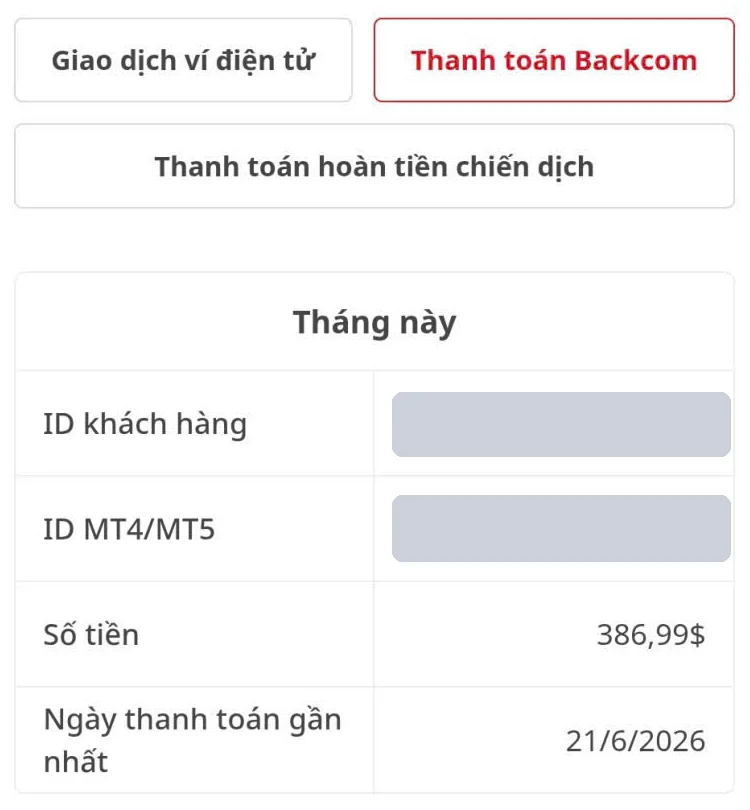
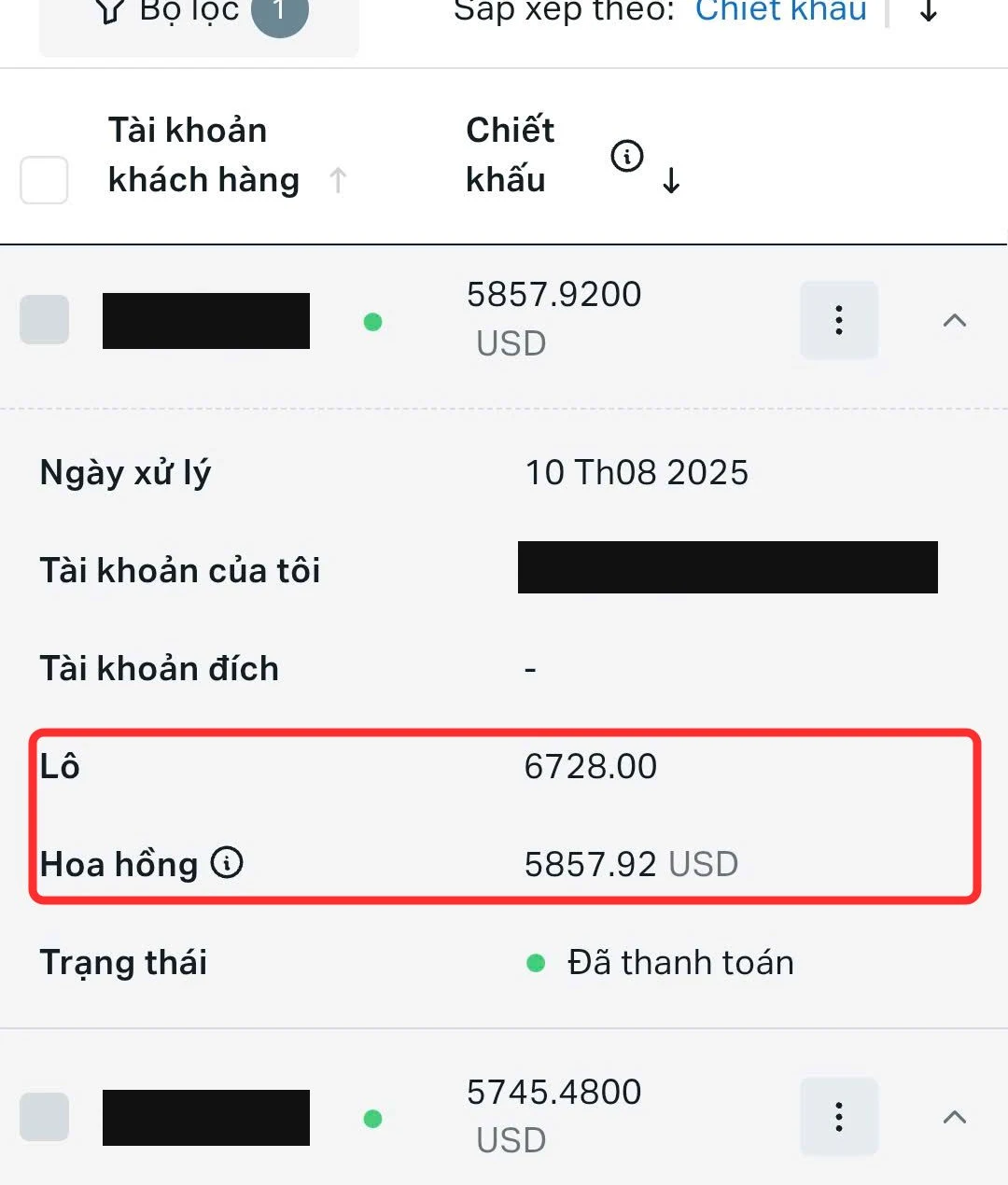
- Track and collect payments on schedule: depending on the programme, rebates arrive daily or weekly, either into a separate wallet or straight into the trading account. For all six brokers in BackcomHub's table, the payout cycle is daily.
Before signing up, traders should confirm the rebate for the exact account type they plan to open, because the broker can adjust it at any time. BackcomHub is an IB of the brokers listed on the site and receives IB commission from them; the cashback paid to traders comes out of that commission. Traders who already have an account opened directly can read how to switch IB.
What to look for in a programme
Receiving rebates is a legal and very common way for forex traders to cut costs. Even so, traders should weigh four points before choosing where to receive them:
- IB transparency: a trustworthy IB states the rebate for each account type clearly, without vague wording and without changing rates unannounced.
- Broker licensing: choose brokers licensed by well-regarded regulators such as the FCA in the UK, CySEC in Cyprus or ASIC in Australia. These bodies require brokers to follow client-protection rules, which reduces the risk to the trader's funds.
- Not letting rebates drive decisions: some traders increase position size just to earn more cashback, a habit that easily leads to poor money management and losses beyond what they can bear.
- Withdrawal terms for rebates: some programmes set a minimum withdrawal amount or a fixed payment schedule, so traders should read the terms first to avoid misunderstandings.
Finally, rebates do not make forex any less risky. Trades can still lose money, and cashback only reduces part of the cost without guaranteeing profit. This material is educational and not investment advice, and because rebate rates differ between brokers and over time, traders need to judge their own tolerance for loss and read a programme's terms carefully before joining.
Frequently asked questions
Does joining a cashback programme cost anything?
No. The only requirement is to open the account through the IB's link. Apart from the broker's normal spread and commission, the trader pays nothing extra to take part.
Does withdrawing cashback affect the trading account?
That depends on where the rebate is paid. If the programme pays into a separate wallet, the money is kept apart from the margin balance and withdrawn independently on the payment schedule, so open positions are not affected. If the rebate is credited straight to the trading account, it becomes part of the balance, and withdrawing it works like withdrawing any other part of that balance.
Which broker pays the most cashback?
No broker stays on top permanently, because the ranking changes with time and with account type. Moreover, a high rebate often comes with high underlying fees, so a big number is not necessarily better value. Traders should compare account types like for like and work out net cost before deciding.
Is cashback exchange a scam?
No, provided the IB operates openly and the broker holds a proper licence. Sharing commission this way is legal and very common. Traders should still look carefully into the referring partner, however, so as not to fall into vague schemes that nobody stands behind.
Do Raw Spread or ECN accounts earn more cashback than Standard?
Not necessarily, as every broker works differently. Raw Spread and ECN accounts usually tie the rebate to commission, which makes it easier to check, while on Standard accounts the rebate comes out of the spread. Which one is higher depends on how the broker charges; in BackcomHub's table, for example, IC Markets pays 4 USD per lot on Standard and 2 USD on Raw Spread.
Further reading
- What Is Backcom? Forex Rebates Explained
- Exness rebate
- Spread vs commission
- Monthly trading cost
- Switch IB
Sources
- BackcomHub rebate table, figures from dctoptrade.vn (Exness 20 Nov 2026, XM 10 Nov 2026, IC Markets 18 Oct 2026): /
- DCtoptrade, screenshots of the Exness partner area, XM's backcom payment screen and the Exness account-opening screen: https://dctoptrade.vn/
- FCA (UK): https://www.fca.org.uk/ · CySEC (Cyprus): https://www.cysec.gov.cy/ · ASIC (Australia): https://asic.gov.au/