Exness Backcom and How to Claim It via an IB
Exness backcom is what an IB passes back from broker commission. How it works, rates by account type, new sign-ups, partner changes and choosing a reliable IB.
Exness is one of the brokers Vietnamese traders mention most often, thanks to its long track record, fast deposits and withdrawals, and competitive trading costs. Those costs are still money traders pay on every trade, however, and there is a way to win part of it back, known as backcom. Many traders have heard of Exness backcom without being clear on where the money comes from, how much it amounts to, or whether joining makes sense.
The sections that follow answer those questions in turn: how backcom works, what drives the rate, the sign-up steps for traders with and without an Exness account, when the money arrives, and how to pick a trustworthy partner. Refunding part of a trading cost is not unique to forex; Investopedia describes a rebate as a familiar form of payback across many financial markets.
How Exness backcom works
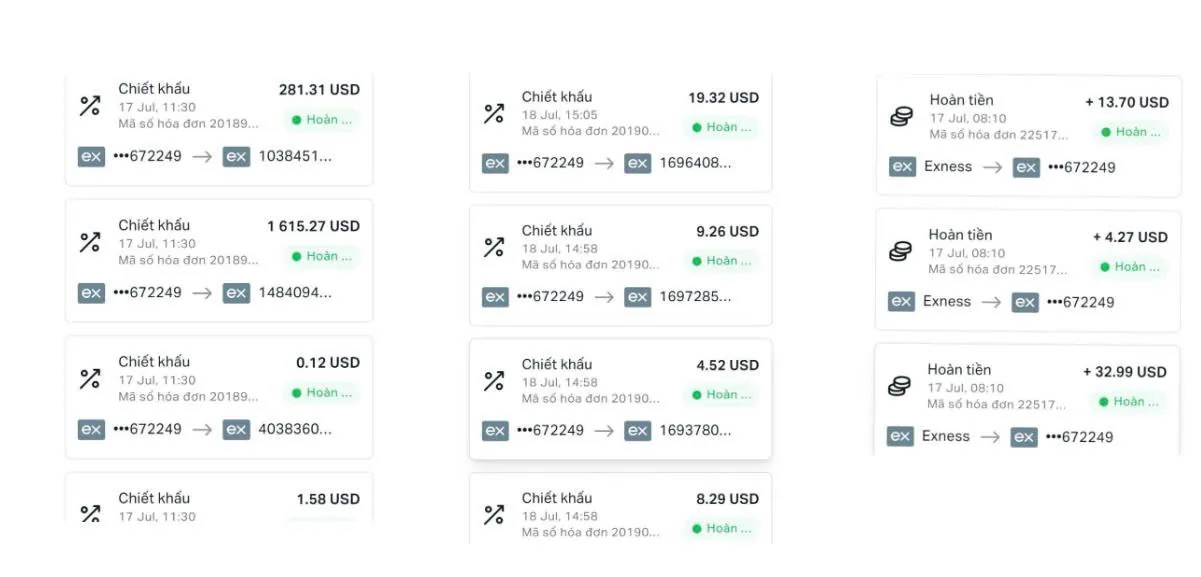
Backcom is short for back commission, meaning commission paid back to the person who traded. On Exness, backcom is the rebate a trader receives when the account was opened through the link or code of an introducing broker (IB). In other words, the broker still charges its usual fees, but part of those fees travels a loop and comes back to the trader.
The money moves in three consecutive steps:
- The trader trades on Exness with an account linked to the IB.
- Exness pays the IB commission based on those trades.
- The IB passes part or all of that commission back to the trader.
The arrangement benefits both sides. Traders pay less on each trade, while the IB gains more active clients through its link, which keeps the programme sustainable. The general concept of rebates is explained in more detail in what is backcom.
What sets the backcom rate
Exness does not fix a backcom rate for traders. The broker only pays commission to the IB, and how much of it gets shared is each IB's own decision. Across the market, many IBs keep a small cut and pass on about 95% of the commission, while some larger partners share all of it. As a result, the same trade on Exness can produce different rebates depending on who the trader signed up through.
Account type is the second factor, and often the more important one. A Standard account bundles all of its cost into a wider spread (the gap between the buy and sell price), so the commission the broker shares with the IB is larger as well. Raw Spread and Zero accounts, on the other hand, have very tight spreads and charge a separate commission, so their rebates are much smaller. Pro sits between the two groups.
The BackcomHub rebate table makes that gap clear, using figures dated 20/11/2026, quoted in USD per closed lot and paid daily:
| Account group | EUR/USD | Gold XAU/USD |
|---|---|---|
| Standard & Cent | 3.20 | 9.60 |
| Pro | 1.49 | 4.20 |
| Raw & Zero | 0.87 | 3.00 |
A higher rebate does not make an account cheaper, because Standard also carries a higher base cost. The figure worth comparing is the net cost, meaning spread plus commission minus the rebate. The full table by symbol, along with a one-month worked example, is on the Exness rebate page; the comparison between the two account styles is in Standard vs Raw Spread accounts, and details on Zero are in the Exness Zero account review.
Signing up without an Exness account
A trader who has never opened an Exness account only needs to attach the partner code during registration. The trader clicks the Exness sign-up link on the BackcomHub homepage, or goes to Exness directly and enters the code oc9jb1aix4 in the partner code field. After that, the trader fills in the details and completes identity verification (KYC, know-your-customer) as the broker requires.
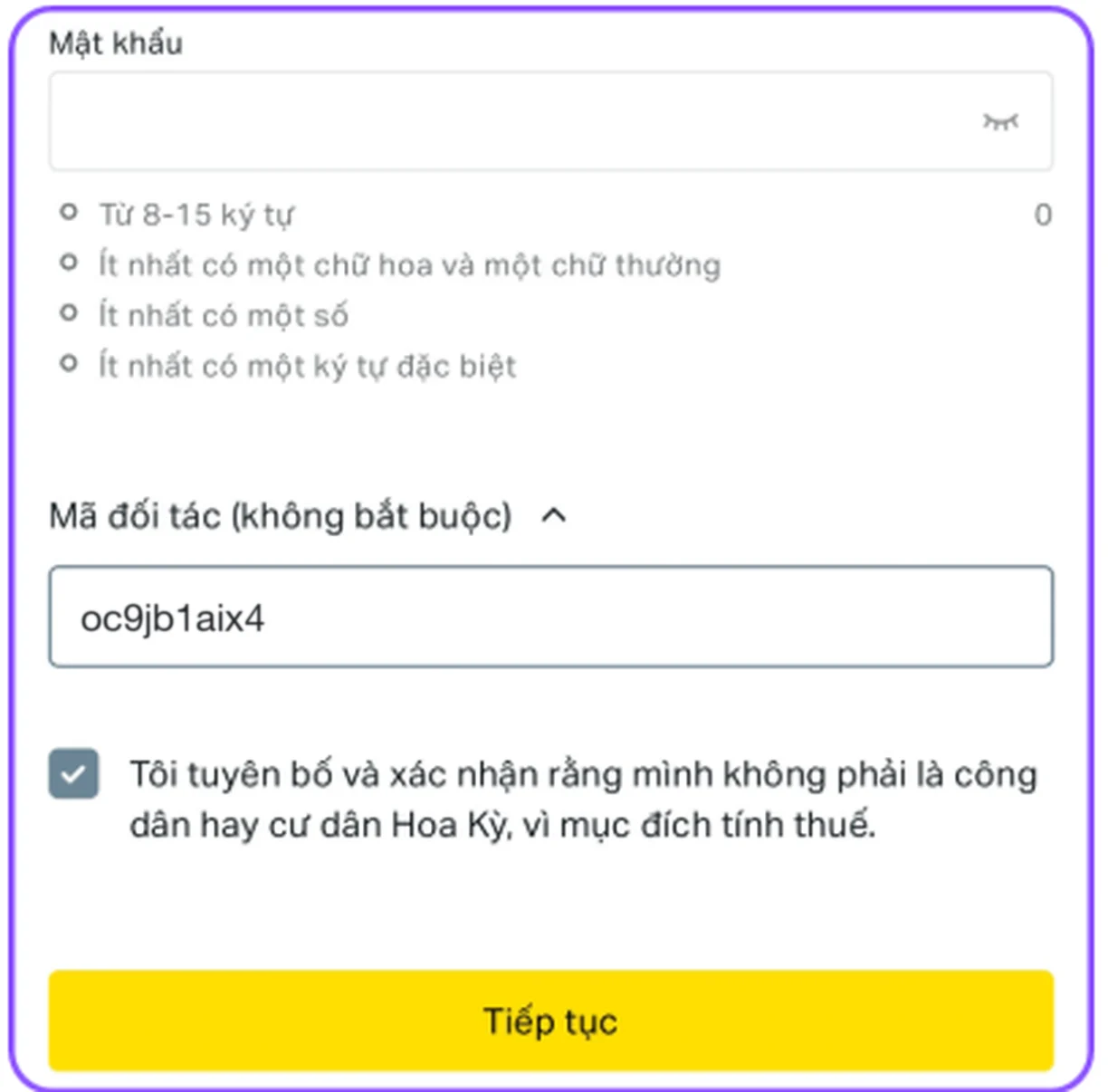
The partner code field is where Exness records the referrer, so it must be filled in correctly before the account is created. Once the trading account is open, the trader sends the account number to BackcomHub via the Telegram or email listed on the homepage so the rebate is matched to the right person.
With an existing Exness account
A trader who already uses Exness has two routes. The first is to open a new profile as described above, the only difference being a new email address, while the phone number, ID card and bank account stay the same. The second is to request a partner change on the existing profile, following the sequence below.
First, the trader logs in to the personal area, opens the live chat (LiveChat) and types "Change partner". The support bot replies with a link to a form.
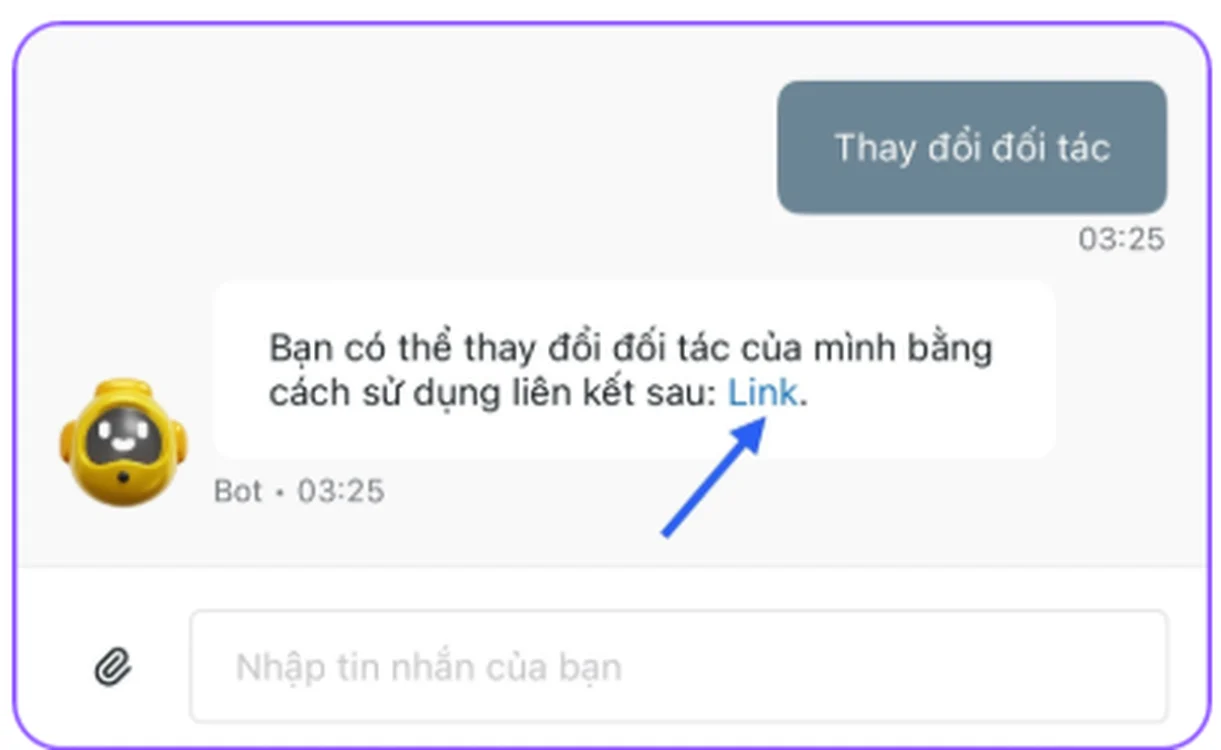
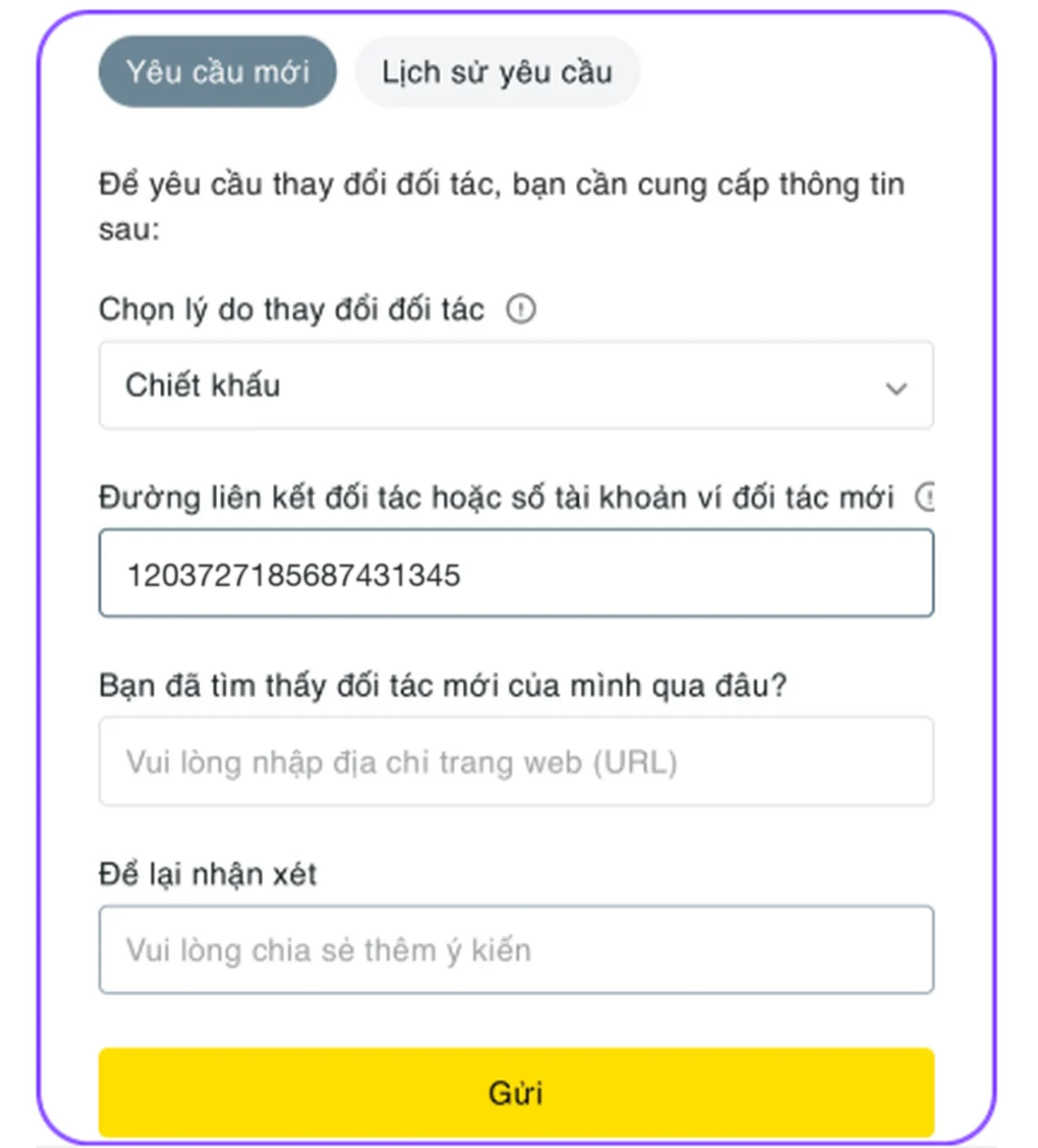
Next, the trader opens the link and fills in the form. On the first line, the reason to choose is rebates; on the second line, the trader pastes BackcomHub's Exness partner link, which is the Exness sign-up link on the homepage carrying the code oc9jb1aix4. After submitting, the trader waits roughly 24–72 hours for Exness to review the request.
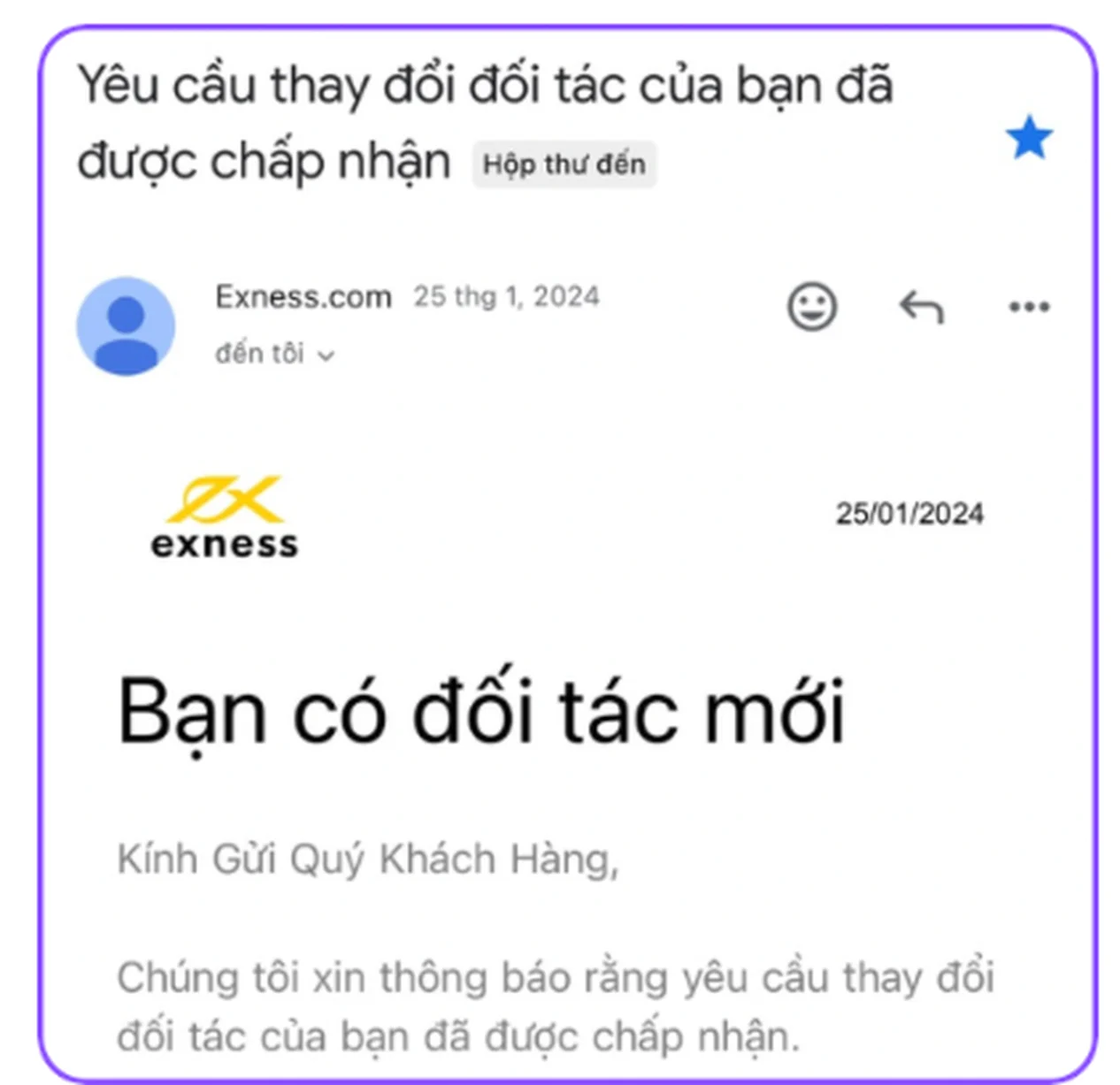
Once the notice confirming the partner change arrives, the trader opens a new MT4 or MT5 account and trades on it. This step is essential, because trading accounts opened before the change stay linked to the previous partner, so only the new account earns rebates.
A few points help avoid wasted time when changing partner:
- Not every profile is eligible for a partner change, and Exness may decline the request.
- If the request is declined, the trader falls back on the first route, opening a new profile with the code oc9jb1aix4.
- When stuck at any step, the trader can ask BackcomHub via the Telegram or email listed on the homepage.
Each broker has its own partner-change procedure, and the distinctive point on Exness is that old accounts do not move to the new partner. The general principles for switching IB across several brokers, Exness included, are gathered in how to switch IB.
When the money arrives
Timing depends on how the IB pays. With an IB that runs an automated system, the rebate is calculated and paid on a regular schedule, often straight into the trading account with no action from the trader. BackcomHub's Exness rebates, according to the site's rebate table, are paid daily.
Some IBs, by contrast, pay only manually, for example in weekly or monthly batches. In that case, traders should agree with the IB from the start on the payment schedule, the payout channel and how volume will be reconciled, to avoid disputes later.
Is it worth joining
For traders who trade often, Exness backcom offers three practical benefits. First, total trading cost falls in line with the volume closed. Second, the trader gains an extra point of contact in the IB, who can be asked about experience or trading approach. Third, backcom adds no new trading risk, since spreads and execution speed stay the same; the inherent risk of forex and CFDs, however, remains fully in place.
The real decision lies in choosing the IB. An unreliable IB may stop paying or pay late, and the trader then loses exactly the benefit that was expected. For that reason, it pays to choose a large IB that operates openly and is transparent about its calculations, so the benefit holds over the long run.
Choosing a reliable IB
A few criteria help traders screen an IB before linking an account. To begin with, an IB with a large community and plenty of positive feedback from real clients usually carries less risk than a newly appeared name. Beyond that, an IB with an automated backcom system, where each rebate is clearly recorded, is far more dependable than a verbal agreement. Finally, traders should keep a record of every exchange about rates and payment schedules, since that is the evidence if a problem arises later.
How backcom differs from partner programmes
Beyond the choice of IB, the choice of broker also shapes costs and the trading experience. Backcom is easily confused with the partner programmes brokers run for marketers, so the following table sets Exness backcom alongside the partner programmes of XM and IC Markets:
| Criterion | Exness backcom | XM partner programme | IC Markets IB |
|---|---|---|---|
| Nature | Traders get fees back through an IB | Affiliate programme paying commission and rebates to partners | Affiliate programme, IB earns commission |
| Aim | Lower spread or commission costs for traders | Help partners earn from clients who sign up via their link | Help partners earn commission by referring clients and growing a network |
| What the trader gets | Part or all of the IB commission, depending on the IB | No direct rebate; payment goes to the referrer | No direct rebate; the IB earns commission from client trading |
| What the partner gets | Commission from the broker, shared back with traders; the Exness IB scheme can share up to 40% | CPA, spread revenue share, bonuses; up to 10% from sub-affiliates | Commission based on client volume; multi-level structure and tier bonuses |
| Highlight | The IB may share all of its commission | CPA up to about USD 1,000 and spread revenue share up to USD 80 per account | Competitive IB commission plus a Tier Bonus |
| Payment | Automatically and daily into the account (with an automated IB) | Regular or daily, flexible withdrawal | On the IB schedule; bonuses by agreement |
| Intended for | Traders who want to cut fees directly | Affiliates and promotional partners | IBs seeking long-term commission |
| Sub-network | Not a focus | Yes, up to 10% of sub-affiliate earnings | Yes, multi-level with tier bonuses |
The core difference is that backcom serves the person trading, while the other two programmes serve the person referring. XM's partner model is explained separately in how the XM partner programme works.
Frequently asked questions
Is Exness backcom an official broker programme?
Not exactly. It is an arrangement between the IB and the trader, but Exness allows it to operate through the broker's partner programme.
What percentage can be rebated?
It depends on the IB, typically anywhere from half to all of the commission the IB receives. BackcomHub lists its Exness rebates in USD per lot, by account type and symbol, on the Exness rebate page.
How soon does the money arrive?
With automated backcom, the money arrives daily. With manual backcom, the IB sets the schedule, so it is worth asking at the outset.
Can an existing Exness client join?
Yes. The trader can open a new profile with a different email, or submit a partner change request and open a new trading account once it is approved.
What are the risks of joining backcom?
The main risk is picking an unreliable IB, which can lead to rebates being cut or paid late. That risk is separate from the inherent market risk of forex and CFDs.
Key points
Exness backcom benefits high-volume traders most, since the rebate grows with every lot closed. It lowers costs and creates a mutually beneficial relationship between trader and IB, provided the IB pays regularly and transparently. Traders should therefore check the rebate by account type and choose a partner with automated payouts before linking an account. BackcomHub is an IB of the brokers listed on the site, Exness among them, and earns IB commission from those brokers; the rebate paid to traders comes out of that commission.
Risk notice
Rebates do not change or reduce the inherent risk of trading forex and CFDs. They are only a partial refund of fees, not an investment that generates returns, and they guarantee no profit. Trading forex and CFDs can result in losses, including the loss of all capital, so everyone should assess the decision carefully before taking part. The content above is for reference only and is not investment advice.
Sources
- BackcomHub rebate table, Exness figures dated 20/11/2026, sourced from dctoptrade.vn
- Investopedia, "Rebate": https://www.investopedia.com/terms/r/rebate.asp
- Exness, official website: https://www.exness.com/
- DCtoptrade (screenshots): https://dctoptrade.vn/