
Is FBS a Scam Broker
Is FBS a scam? A look at the withdrawal complaints, the CySEC and IFSC licences, client fund protection, costs, leverage and how traders can check FBS.
Ask about FBS in Vietnamese trading groups and the answers tend to split into two camps. One camp points out that the broker has been around since 2009, claims more than 16 million accounts and keeps operating normally. The other camp passes on stories of "frozen funds", withdrawal requests that never arrive and cards rejected as invalid at the withdrawal stage. With two such opposite narratives, new traders struggle to know which one to believe.
The sections that follow collect the most common complaints, set them against the licences and policies FBS publishes, and then list the checks traders can run themselves before depositing. A full description of the broker's history, account types and payments is in the FBS review, so only the points that bear on safety are repeated here. Conditions may have changed, which is why traders should confirm everything on the official FBS website.
The usual complaints
Most complaints about FBS online revolve around withdrawals. Some posters say the broker deliberately makes withdrawals difficult, while others report requests refused because a card was "not valid". At the harsher end, a few posts simply label the broker a scam. This information is compiled from forums and social media and has not been confirmed by any authority.
Compiled material on the broker suggests that most cases of slow or refused withdrawals date from before 2020. On closer inspection, many of them started on the client's side: identity verification was incomplete, or money was sent back to a payment method that did not match the registered details. In other words, the withdrawal process has strict conditions, and a trader who does not know them can easily conclude that the money is being held.
On Vietnamese forums FBS still comes up often, with both praise and criticism. Even so, serious accusations such as order manipulation or disappearing with client money are rare. The remaining friction is mostly misunderstanding about withdrawal procedures or bonus terms, a bonus being extra credit the broker gives that usually comes with a trading volume requirement.
What kind of broker FBS is
FBS is a broker for contracts for difference (CFDs), contracts that let traders profit from price changes without owning the underlying asset. It was founded in 2009, which means more than 15 years in business, and it has offices in Belize and Cyprus. The figure of more than 16 million users worldwide comes from the broker itself, counted up to 2022, and Vietnam is described as one of its most active markets.
A long track record is a meaningful sign, because "ghost brokers" usually appear and vanish within a few years. Still, user numbers are self-reported, so they cannot replace a licence check. The next section therefore looks at licences first and trading conditions afterwards.
The licences on record
FBS currently operates under two main licences, according to compiled sources. Each licence belongs to a separate subsidiary, so a trader's rights depend on which company signs the account agreement:
- CySEC (Cyprus Securities and Exchange Commission), licence 331/19. This European Union regulator requires the broker to follow MiFID II and to join the Investor Compensation Fund (ICF). If the licensed company goes bankrupt, the fund pays up to 20,000 EUR per client.
- IFSC (International Financial Services Commission of Belize), licence IFSC/000102/198. This licence covers global clients. Its protection is weaker than CySEC's, but it still requires minimum capital and regular audits.
It is worth noting that the existing FBS review on BackcomHub, based on a different source, gives the CySEC number as 331/17. Because the two sources disagree, traders should look the licence up on the CySEC register rather than trust a copied number. Beyond these two, other material also mentions an Australian ASIC licence, covered in the full review.
FBS holds no licence in Vietnam. That is common, since the country has no dedicated legal framework for forex brokerage, so international brokers all operate on foreign licences. According to the compiled source, the international licences FBS holds allow a transparent level of supervision, enough to show the broker is not operating illegally.
Ranked by strictness, CySEC and IFSC are usually considered mid-tier regulators. They are not as strict as the UK or Australian authorities, yet they still provide a basic level of safety for depositors. In practice, a client who opens an account through the Belize company has no access to the 20,000 EUR ICF cover, even under the same FBS brand.
Protecting client money
Besides the licences, FBS publishes several measures meant to reduce client risk. The most important is segregated accounts: client money is kept in separate accounts, not mixed with the company's operating capital, so in principle it cannot be used to pay the broker's debts. The broker also cites a transparent privacy policy, data encryption and support for complaints in certain risk situations.
Negative balance protection adds another layer. With it, when prices reverse sharply and losses exceed the balance, the account is reset to zero instead of leaving the client in debt to the broker. For a broker offering leverage as high as FBS does, this protection matters, as the leverage section shows.
How traders can check for themselves
Rather than picking a side, traders can check a few points themselves before sending money. The following steps target the very causes of the disputes described above:
- Look the licence number up directly on the CySEC or IFSC website, and confirm that the company name there matches the company named in the account agreement.
- Complete identity verification at the start, before the first withdrawal request.
- Withdraw to the same payment method, in the same account holder's name, used for the deposit.
- Read the bonus terms before accepting one, since a bonus can restrict withdrawing profits.
- Deposit a small amount and test a withdrawal before adding more capital.
These five steps guarantee nothing, but they rule out most of the situations once rumoured to be "frozen funds". General warning signs of a dubious broker are covered in six warning signs of a forex scam broker.
Deposits, withdrawals and processing times
Because withdrawals are where most complaints arise, the payment terms deserve a close look. According to the compiled source, FBS accepts Visa and Mastercard, local bank transfers, the e-wallets Neteller, Skrill, Perfect Money and Sticpay, and the Ngan Luong gateway familiar to Vietnamese users.
As for timing, deposits usually arrive almost instantly. Withdrawals take from about 15 minutes to a few hours depending on the channel, while bank withdrawals sometimes need 1–3 business days, though major delays are rare. The minimum withdrawal is only 1 USD and there is no daily limit on the number of withdrawals, so small accounts can easily test a low withdrawal as in step 5 above.
Withdrawal fees are also disclosed in advance. Some channels are free, others charge around 1–2%, and the fee appears before the client confirms the request. The source says there are no hidden fees, but traders should still read the fee line on the confirmation screen before submitting.
Trading costs
Costs are the second thing traders compare, since they eat into the profit of every trade. FBS groups its accounts by how they charge, and the compiled source describes four groups:
- Cent, Standard, Micro, Pro: no commission, only floating spreads. For example, Cent spreads start from 1.0 pip and Standard from 0.5 pip.
- Zero Spread: a zero spread in exchange for a high commission, from 20 USD per lot round turn. It is pitched at news traders and very short-term scalpers.
- ECN: aimed at professionals, with spreads that can go as low as -1.0 pip and a commission of 6 USD per lot round turn.
- Crypto: a fixed fee of 0.05% per position.
Here the spread is the gap between the buy and sell price, and a pip is the smallest commonly quoted price step of a currency pair. This source puts the ECN commission at 6 USD, whereas the full review says 5 USD, so traders should check the current fee table. How to add the two kinds of cost together to compare accounts is explained in spread vs commission.
The overnight fee (swap) is the remaining cost. FBS does not waive swaps on every account, but it offers an Islamic account with no overnight interest for Muslim clients. Traders who hold positions for several days should therefore check the swap rates of each account type on the website before trading.
Leverage and the risk that comes with it
Leverage is the fastest route to heavy losses, so it ties directly into the feeling of "the broker took my money". FBS advertises a maximum of 1:3000, among the highest on the market. However, that level applies only to some accounts such as Cent or Standard and falls as the balance grows. On ECN or Zero Spread, leverage usually stops at 1:500 or lower to limit risk.
Another plus is that FBS does not cut leverage suddenly around major news, as some brokers do. As a result, traders keep more control over open positions when the market moves sharply. Combined with negative balance protection, the maximum loss cannot exceed the money deposited.
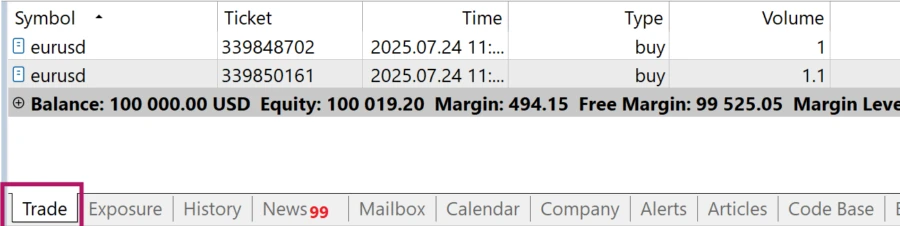
Even so, 1:3000 is no reason to commit the entire margin, the money the broker sets aside to keep positions open. The higher the leverage, the fewer pips against a position it takes to wipe out the account, and a loss like that is not fraud. Choosing a sensible leverage level is covered in forex leverage for beginners.
Platforms and products
On tools, FBS covers both beginners and traders who run robots. MT4 suits those who like a simple interface, while MT5 adds analysis tools and indicators that help users of EAs, programs that place trades automatically. The broker also offers its own FBS Trader mobile app and a CopyTrade platform for copying trades.
The product range in the compiled source has six groups:
- Forex: more than 40 major, cross and exotic pairs.
- Precious metals: gold and silver, often treated as safe havens in turbulent markets.
- Shares: hundreds of US stocks such as Apple, Tesla and Amazon, traded as CFDs.
- Indices: the S&P 500, NASDAQ, Dow Jones and others, a way into US markets without buying an ETF.
- Energy: WTI and Brent crude, which often move on geopolitical news.
- Crypto: BTC, ETH, LTC and XRP, the riskiest group.
This list differs quite a lot from the full review, which lists fewer currency pairs and no crypto. The two sources were most likely written at different times, so traders should check the product page on the website for the current range.
Customer support
When a withdrawal goes wrong, being able to reach the broker matters a great deal. FBS offers 24/5 support through live chat, the email support@fbs.com, the international line +35 7251 23212, and the Telegram, WhatsApp, Viber and Line apps. Clients can also leave a phone number for a callback, which helps those less comfortable with online tools.
The FBS Vietnam Facebook page carries a blue verification badge and regularly posts promotions, market news and replies to clients. That verification also helps traders tell the official channel apart from fake pages, a common scam that borrows the names of large brokers. User feedback rates response times as fairly good during office hours but slower at peak times.
Reach and support for beginners
The brand's reach is a secondary indicator of its real-world standing. According to the broker's own figures, the FBS Trading Broker app has more than 3.2 million downloads, FBS Trader more than 4 million and CopyTrade over 1 million. The broker is also present on Telegram, WhatsApp, Viber and Line, in addition to the Facebook page mentioned above.
For newcomers, FBS provides several tools for practising before using real money:
- CopyTrade: pick a trader with a good record and let the system copy the trades, with no deep knowledge required, although profits and losses both follow the copier's share of capital.
- Demo account: no time limit and up to 10,000 USD in virtual funds, enough to learn MT4 and MT5 and test strategies.
- Learning library: videos, articles and online seminars (webinars) from basic to advanced, available in Vietnamese and updated regularly.
- Market analysis and economic calendar: technical analysis, trend views and a calendar of financial events on the website.
These tools let beginners try the broker at low risk. In particular, the demo account allows practising order entry before having to worry about deposits and withdrawals.
Verdict on the scam allegations
Based on the compiled information, there are no grounds to call FBS a scam. The broker dates back to 2009, holds CySEC and IFSC licences, segregates client money and offers negative balance protection, while the complaints mostly concern slow withdrawals before 2020, largely linked to verification or payment methods. On the other side, competitive costs and stable MT4 and MT5 platforms keep it among the international brokers Vietnamese traders favour.
However, the history of slow withdrawals still makes some traders wary, even though service is described as clearly improved. Mid-tier licences, and the lack of European compensation cover for accounts held with the Belize company, also deserve weight. The safe approach is therefore to run all five checks, read the terms carefully and add capital only after a successful test withdrawal. Brokers that have been flagged in Vietnam are listed in forex scam brokers flagged in Vietnam.
Sources
- FBS, official website, https://fbs.com/ — licences, account types, fees, leverage and payment methods; traders should confirm details there.
- Cyprus Securities and Exchange Commission (CySEC), https://www.cysec.gov.cy/
- International Financial Services Commission of Belize (IFSC), https://www.ifsc.gov.bz/
- Image: DCtoptrade (screenshot): https://dctoptrade.vn/


