How Safe Is Pepperstone
Is Pepperstone safe: ASIC, FCA and CySEC licences, how client money is held, protection by region, Trustpilot feedback and a comparison with IC Markets and IG.

When choosing where to deposit trading money, the first question many Vietnamese traders ask about Pepperstone is not whether its fees are cheap, but whether the company can be trusted. The Australian-born broker now has clients in more than 170 countries and, according to its own figures, handles an average of over 12.5 billion USD in trading volume every day, enough to place it among the largest brokers in the world. That scale is a good sign, but the real safety of an account still depends on the licence behind it, the way the broker holds money and the region a client is assigned to.
The sections that follow work through each of those layers: background, licences, how client money is protected, user feedback, basic trading conditions, a comparison with IC Markets, IG and Windsor Brokers, and finally how traders can check things themselves before depositing. The detailed analysis of Standard and Razor costs, margin thresholds and platforms is covered in the Pepperstone review 2026, so only the points needed for the trust question are repeated here. Trading conditions can change over time, so traders should re-check them on Pepperstone's official website. BackcomHub currently has no rebate programme with Pepperstone.
Where Pepperstone comes from
From a Melbourne start-up
Pepperstone was set up in 2010 by its two founders, Owen Kerr and Joe Davenport. Their original goal was to create a place to trade with clear pricing and low fees for individual traders. Starting as a small business in Melbourne, the company grew into a broker with a global presence within about ten years.
For the trust question, an operating history of more than fifteen years carries its own weight. A broker that has survived several volatile cycles, including sharp market crashes, has usually had to prove to regulators that it can keep its capital intact and manage risk.
Offices in several countries
Pepperstone currently has offices in Australia, the UK, Germany, Cyprus, Dubai, Kenya and the Bahamas. This network lets the broker serve many groups of clients, each under the rules of its own region. As a result, the same brand applies somewhat different policies to European and international clients, as the following sections show.
Daily trading volume
The figure of more than 12.5 billion USD a day, published by the broker itself, points to very large-scale operations. High volume usually goes hand in hand with close relationships with banks and liquidity providers, the parties that quote buy and sell prices. That makes it easier for client orders to find a counterparty, especially on major currency pairs.
The licences behind the brand
Licences are the most important basis for judging whether a broker can be trusted. Pepperstone does not hold a single licence but a whole set, issued by authorities in several countries to individual subsidiaries. People in the industry often sort regulators into tiers: tier 1 covers those with the strictest rules on capital and client protection, while lightly regulated jurisdictions are usually called offshore.
ASIC in Australia
At home, Pepperstone is supervised by ASIC, Australia's leading financial and securities regulator, which is ranked tier 1. To keep that licence, the broker must maintain a high minimum capital level and apply strict client protection policies. In other words, if it falls short on capital or mishandles client money, the company risks fines or losing its right to operate.
The FCA in the UK and CySEC in Cyprus
In Europe, Pepperstone is regulated by the UK's FCA and by CySEC in Cyprus, so its activity there must follow common European rules. For clients in those regions, the broker guarantees that accounts cannot go negative, and clients are covered by an investor compensation fund. A compensation fund is money set aside by the state or an industry body to pay clients if a broker goes bankrupt.
BaFin, DFSA, CMA and SCB
Besides those three regulators, Pepperstone holds licences from BaFin in Germany, the DFSA in Dubai, the CMA in Kenya and the SCB in the Bahamas. These allow the broker to serve clients outside Australia and the EU, each under local law. Among them, the SCB in the Bahamas is the hub for international clients, and that is the point Vietnamese traders need to watch most closely.
The number of each licence, along with the name of the subsidiary that contracts with Vietnamese clients, is listed in full in the Pepperstone review 2026 mentioned at the start. The key point is that each licence only protects clients of the specific company holding it, rather than covering every account that carries the Pepperstone name.
How client money is held
Segregated accounts
The most basic layer of protection is the segregated account. Under this arrangement, client deposits are kept at large banks in a separate account, not mixed with the company's operating funds. As a result, if the broker runs into financial trouble, client money in principle cannot be used to pay the broker's creditors.
Negative balance protection
The second layer is negative balance protection, which applies to retail traders in the EU and the UK. Take a concrete case: a trader has 500 USD in the account, holds a position over the weekend, and Monday's opening price gaps so far that the account loses 650 USD. With negative balance protection, the balance only falls to 0 instead of -150 USD, meaning the trader loses the whole deposit but owes the broker nothing more. These two layers contribute a great deal to the safety of deposits.
Protection differs by region
Because policies follow local law, the safety level of Pepperstone clients splits into two clear groups:
- Traders in the EU, the UK and Australia: they get negative balance protection, access to an investor compensation fund and a leverage cap of 1:30 under the rules of ESMA (the European securities watchdog) and ASIC. Safety for this group is very high.
- International traders under the Bahamas company (SCB): they can use higher leverage, with many summaries quoting up to 1:500, but the protection is weaker than for FCA or ASIC clients.
These two groups show that Pepperstone belongs among the most trustworthy brokers, but the concrete cover depends on the subsidiary a trader signs up with. On leverage for international retail clients specifically, the 2026 review records a current level of around 1:200, lower than the 1:500 often seen in older summaries. Traders should therefore check the figure that actually applies in their client area. What each leverage level means is explained in forex leverage for beginners.
What users say about Pepperstone
Trustpilot score
Trustpilot is a site where customers rate and review businesses themselves. There, Pepperstone scores 4.4 out of 5 from more than 2,000 reviews. Users praise its professional and helpful staff. On the other hand, the most common criticism is that requests sent by email are sometimes handled slowly.
Deposit and withdrawal experience
On money moving in and out, many Trustpilot reviews confirm that withdrawals are fast and transparent. Only a few people complain that transfers abroad arrive slowly. The cause usually lies with intermediary banks, the banks that relay an international transfer along the way, rather than with the broker. For the trust question this is a positive sign, because difficult withdrawals are always the most common complaint about problem brokers.
Basic trading conditions
Products
Pepperstone offers trading through CFDs, contracts on price differences that do not require the trader to own the real asset. The range covers five groups:
- Forex: dozens of major, minor and exotic pairs, enough for many trading styles.
- Stock indices: major benchmarks such as the S&P 500, NASDAQ, DAX, FTSE and Nikkei.
- Commodities and metals: gold, silver, crude oil and natural gas.
- Share and ETF CFDs: more than 900 US, European and Australian shares, plus many large ETFs.
- Crypto CFDs: Bitcoin, Ethereum, Ripple and Litecoin, available only in some regions outside the EU and the UK because local rules prohibit them.
With this range, traders can follow many international markets while using a single account. Even so, every product is a leveraged CFD, so the risk of loss comes with every group.
Platforms
Traders have five software options: MT4 for forex, with trading robots (EAs), strategy testing and custom indicators; MT5, with more order management tools and access to shares and indices; cTrader, with fast and transparent ECN-style execution favoured by scalpers and algorithmic traders; TradingView, integrated directly for placing orders on the chart; and WebTrader plus a mobile app for traders on the move. The number of platforms does not directly make the broker safer, but it shows that major software developers are willing to connect with it.
Two account types
The broker offers two account types. Standard has spreads from 1.0 pip and no commission, so its fee structure is simple and suits beginners. Razor has spreads from 0.0 pips but charges a commission of 3.5 USD per lot per side, which suits scalpers and algorithmic traders.
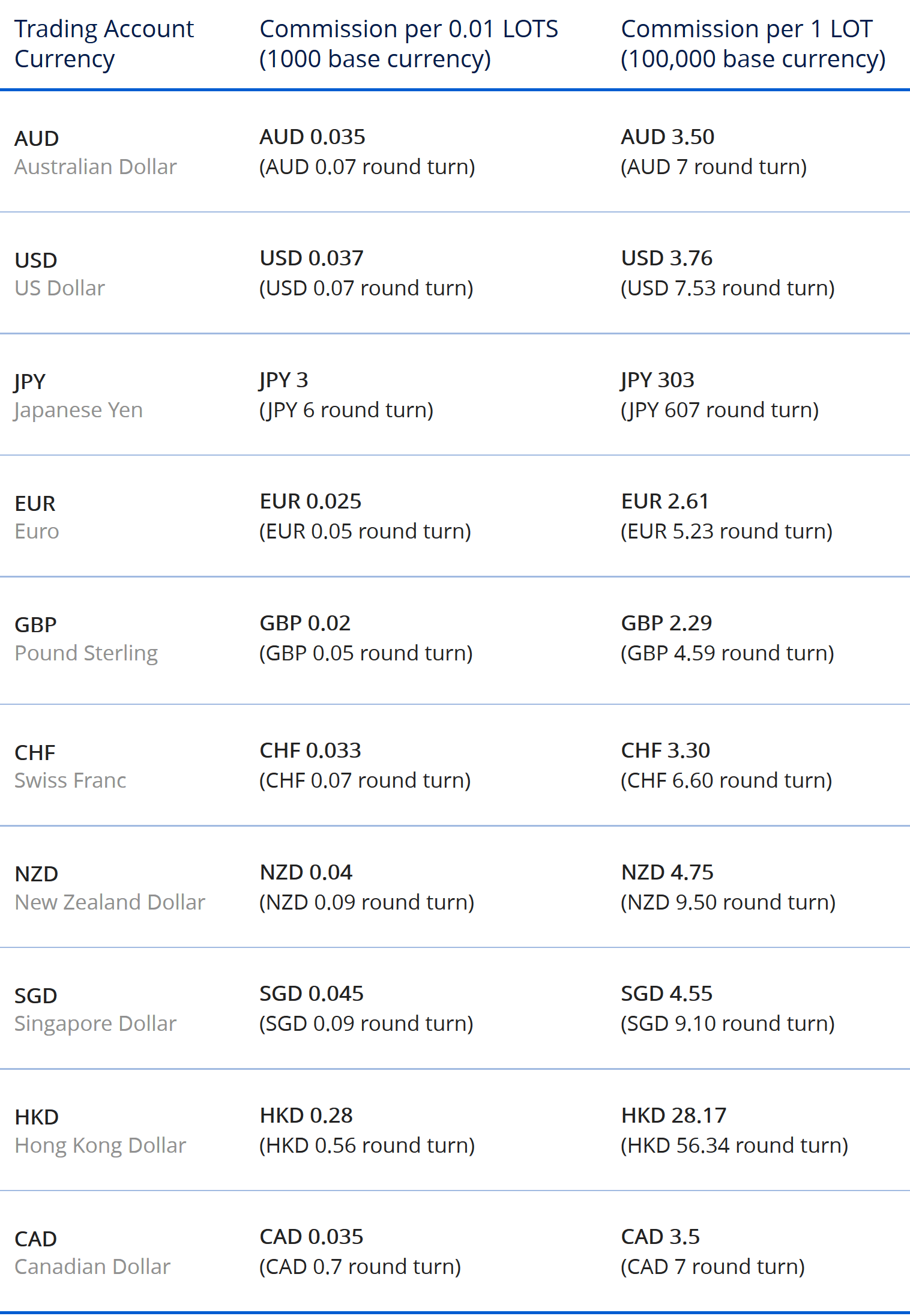
In other words, Standard has wider spreads but no separate fee, while Razor has tighter spreads plus a volume-based charge. How to compare the two fee models to see which is cheaper for a given style is covered in Standard vs Raw Spread accounts.
Minimum deposit, leverage and swap
Pepperstone sets no minimum deposit, so traders can open an account with 0 USD. Maximum leverage is 1:30 for clients in the EU, the UK and Australia, while international clients under the SCB get higher limits as described above. The broker also charges an overnight fee (swap) on positions held into the next day, and swap costs are fairly high for traders who hold positions long term.
Deposits, withdrawals and support
Payment channels and processing times
Traders can deposit and withdraw via Visa, MasterCard, bank transfer, PayPal, Skrill, Neteller, POLi, BPay and UnionPay. Deposits usually arrive instantly, except international bank transfers, which take 2–5 days. Withdrawals are usually processed within 24 business hours. The broker charges no internal fee, though intermediary banks may still deduct their own. The 2026 review notes that processing a withdrawal can currently take up to about 3 business days, so traders should allow extra time when they need money urgently.
Contact channels
Pepperstone lists three main support channels. The hotline +61 1300 033 375 runs 24/5, meaning 24 hours a day across the five working days. The email address is support@pepperstone.com. Live chat on the website usually answers within 1–2 minutes. The support team works in many languages, including English, German, Spanish, Italian, Chinese and Arabic. In general, chat responds quickly while email tends to be slower at weekends. The broker's dedicated Vietnamese channel is listed in the 2026 review.
Comparison with IC Markets, IG and Windsor Brokers
To see where Pepperstone stands, it helps to place it next to two tier-1 names, IC Markets and IG, and Windsor Brokers, a long-running broker that relies mainly on offshore licences:
| Criterion | Pepperstone | IC Markets | IG | Windsor Brokers |
|---|---|---|---|---|
| Founded | 2010, Melbourne (Australia) | 2007, Sydney (Australia) | 1974, London (UK) | 1988, Limassol (Cyprus) |
| Main licences | ASIC, FCA, CySEC, BaFin, DFSA, CMA, SCB | ASIC, CySEC, FSA Seychelles | FCA, BaFin, ASIC, CFTC (US, via another entity), MAS | FSA Seychelles, CMA Kenya, FSC BVI, JSC Jordan |
| Trust level | High, several tier-1 licences | High, close ASIC and CySEC supervision | High, long-established tier-1 broker | Medium, mainly offshore or tier 3 |
| Products | Forex, indices, commodities, 900+ share CFDs, ETF CFDs, crypto CFDs | Forex, indices, commodities, share CFDs, crypto CFDs | 18,000+ products incl. forex, indices, shares, ETFs, crypto, options, bonds | Forex, indices, commodities, share CFDs |
| Platforms | MT4, MT5, cTrader, TradingView, web and app | MT4, MT5, cTrader | IG's own platform, MT4, ProRealTime | MT4 (desktop, web, mobile) |
| Account types | Standard, Razor | Standard, Raw Spread | Single account, costs per product | Prime, Zero, VIP Zero |
| Spreads and fees | Standard from 1.0 pip; Razor from 0.0 pips + 3.5 USD/lot/side | Raw Spread from 0.0 pips + commission; Standard wider spreads | Spreads vary by product, competitive fees | Zero from 0.0 pips + commission; Prime wider spreads |
| Maximum leverage | 1:30 (EU, UK, Australia); 1:500 (international, SCB) | 1:30 (EU, Australia); 1:500 (international, Seychelles) | 1:30 under ESMA, some non-EU entities higher | 1:500 (outside the EU, by entity) |
| Minimum deposit | 0 USD | About 200 USD | None | 20 USD |
| Deposits and withdrawals | No internal fees, processed within 24 hours | No internal fees, 1–2 days | No internal fees, fast, many channels | Deposit bonus but hard withdrawals, many negative reports |
| Support | 24/5 hotline, email, chat; Trustpilot 4.4/5 | Hotline, email, chat; Trustpilot about 4.3/5 | 24/5 hotline, chat, email; Trustpilot about 4.0/5 | Basic support, many negative reports |
| Best for | Scalpers, algo traders, professionals and beginners | Traders wanting low costs and good liquidity | Investors wanting a very wide range | Small-capital traders trying a long-running broker |
The table shows Pepperstone on a par with IC Markets and IG for trustworthiness, and well ahead of Windsor Brokers on almost every criterion. Pepperstone's big advantage is supervision by several tier-1 regulators at once, including ASIC, the FCA, CySEC and BaFin, whereas Windsor relies mainly on offshore licences. IG has the longest history and the widest range, but its trading costs are usually higher than Pepperstone's. Readers who want a closer look at the nearest competitor can read the IC Markets review 2026.
Strengths and weaknesses
Strengths
The points that place Pepperstone among trustworthy brokers are:
- Supervision by several tier-1 regulators, including ASIC, the FCA, CySEC and BaFin.
- Very low spreads on the Razor account.
- More than 1,200 CFD products.
- No required minimum deposit.
- Professional, multilingual client support.
- Fast, transparent deposits and withdrawals with no internal fees.
Weaknesses
On the other hand, traders should weigh four points:
- The broker does not accept clients from the US.
- Swap costs are high on positions held for many days.
- International clients under the Bahamas company are less protected than FCA or ASIC clients.
- Withdrawals abroad can be slow because of intermediary banks.
Of these four, the third matters most for Vietnamese traders, because it decides their rights if something goes wrong. The rest are mainly matters of cost and time and do not affect the safety of funds.
How to check before depositing
A brand's reputation only helps once a trader is sure the account sits in the right place. A simple check involves five steps:
- Open the Client Agreement during sign-up and note the name of the company that contracts with the trader.
- Look up that company name and licence number on the website of the correct regulator, such as the FCA register or the SCB Bahamas site.
- Compare the website domain listed on the register with the domain being used, to avoid sites impersonating the brand.
- Deposit a small amount and try withdrawing it straight away, noting how long it takes and whether intermediary fees are deducted.
- Use only bank accounts or wallets in the trader's own name, to avoid extra verification requests when withdrawing.
After these five steps, traders will know which protection group they belong to and can decide how much money it makes sense to deposit. If the company name or licence does not match the register, that is a reason to stop before depositing more.
Frequently asked questions
Is Pepperstone legal and closely regulated?
Yes. The broker is licensed by several leading financial authorities, including ASIC, the FCA, CySEC and BaFin. However, international clients usually belong to the Bahamas company, so the supervision that applies to their accounts is the SCB's.
Is there a minimum deposit to open an account?
No. Pepperstone sets no minimum deposit, so traders can open an account first and then deposit whatever amount they choose.
Which account should beginners choose?
Standard suits beginners, with spreads from 1.0 pip and no commission. Because there is only one fee to watch, beginners can easily work out the cost of each trade.
Who is the Razor account for?
Razor suits scalpers, algorithmic traders and high-volume traders. Spreads start at 0.0 pips and the commission is competitive, so the more they trade, the clearer the savings become.
How long do deposits and withdrawals take?
Deposits arrive almost instantly, except international bank transfers, which take 2–5 days. Withdrawals are usually processed within 24 business hours, not counting the time banks take to deliver the money.
Does Pepperstone offer crypto trading?
Yes, but only as crypto CFDs. The product is not available to EU and UK clients because of the regulations there.
Verdict
Judged on its licences, the way it holds money and user feedback, Pepperstone is one of the most transparent and trustworthy brokers around today. It has operated since 2010, holds licences from several tier-1 regulators, offers a wide product range and many platforms such as MT4, MT5, cTrader and TradingView, and suits both beginners and professional traders.
Even so, the group's reputation does not automatically translate into strong protection for every account. Vietnamese traders should identify the subsidiary they sign up with, check that company's own licence, and only then decide how much capital to deposit.
Sources
- Pepperstone, official website, https://pepperstone.com/ — where licences, account conditions, fees and support channels are published; traders should re-check them here because conditions can change.
- Australian Securities and Investments Commission (ASIC), https://asic.gov.au/
- Financial Conduct Authority (FCA), Financial Services Register, https://register.fca.org.uk/
- Cyprus Securities and Exchange Commission (CySEC), https://www.cysec.gov.cy/
- Federal Financial Supervisory Authority (BaFin), https://www.bafin.de/
- Dubai Financial Services Authority (DFSA), https://www.dfsa.ae/
- Capital Markets Authority Kenya (CMA), https://www.cma.or.ke/
- Securities Commission of The Bahamas (SCB), https://www.scb.gov.bs/
- Trustpilot, Pepperstone review page, https://www.trustpilot.com/
- Image: DCtoptrade (screenshot), https://dctoptrade.vn/