Pepperstone Review 2026
Pepperstone review 2026: licences and the Bahamas entity for international clients, Standard vs Razor costs, leverage, stop out, platforms, funding and support.
Traders looking into Pepperstone usually hear two selling points: it is an Australian broker with ASIC and FCA licences, and it is cheap for short-term traders. Both claims have a basis, but neither answers the most important question, which is which company actually holds a given client's account and which regulator supervises it. Pepperstone is a group of several legal entities, so the protection a client gets depends on the company named in the contract, not on the best-known licence in the group.
The sections below cover the entity that serves Vietnamese clients, how orders are executed, the real cost of the Standard and Razor accounts, leverage, platforms and funding, and then the strengths, weaknesses and the kind of trader the broker suits. Conditions such as fees, spreads and leverage can change over time, so traders should check them on Pepperstone's official website before opening an account.
What Pepperstone is
Pepperstone is a forex and CFD broker founded in 2010 in Melbourne, Australia. A CFD, or contract for difference, is a contract in which the buyer never owns the underlying asset and simply gains or loses with its price movement. Because of that structure, a single Pepperstone account can trade currencies, stock indices, gold, oil, shares, ETFs and cryptocurrencies without owning any of them.
After more than fifteen years, the broker ranks among the larger international CFD providers. The group says it serves more than 900,000 traders, handles over AUD 947 billion in monthly trading volume and lists more than 1,350 CFD instruments.
On the product side, there are only two main account types. Standard builds all costs into the spread, the gap between the buy and sell price, while Razor offers raw spreads from 0 pips plus a separate commission per lot. Pepperstone also lets clients choose between MT4, MT5, cTrader, TradingView and its own platform, a much longer list than at brokers that only offer MetaTrader.
Pepperstone's licences and entities
Pepperstone does not operate through a single company but through several entities in Australia, the UK, Europe, Dubai, the Bahamas, Kenya and elsewhere. Each entity holds its own licence, issued by the regulator of its jurisdiction. The main licences are summarised below:
| Jurisdiction | Regulator | Licence number |
|---|---|---|
| Australia | ASIC | 414530 |
| United Kingdom | FCA | 684312 |
| Cyprus (EU) | CySEC | 388/20 |
| Germany | BaFin | 151148 |
| Dubai | DFSA | F004356 |
| Bahamas | SCB | SIA-F217 |
| Kenya | CMA | 128 |
This list gives Pepperstone a firmer regulatory base than brokers that rely on a single licence from a lightly regulated offshore jurisdiction. However, each licence only protects clients who sign with the entity that holds it. The following subsections therefore look at each major licence and identify the entity that actually applies to Vietnamese traders.
ASIC in Australia
The group's parent company, Pepperstone Group Limited, is regulated by the Australian Securities and Investments Commission (ASIC) under Australian Financial Services Licence 414530. ASIC sets fairly strict requirements on capital, handling of client money, risk disclosure and maximum leverage for retail clients.
This licence carries a lot of weight in Pepperstone's overall structure. Even so, most Vietnamese traders do not sign with the Australian entity, so ASIC rules do not apply directly to their accounts.
FCA in the UK and the FSCS
In the UK, Pepperstone Limited is supervised by the Financial Conduct Authority (FCA) under registration number 684312. Eligible clients of this entity are also covered by the Financial Services Compensation Scheme (FSCS), which pays up to GBP 85,000 if the firm cannot return client money.
That protection is tied to the UK entity. In other words, an account opened under the Bahamas company is not automatically covered by the FSCS, even though it carries the same Pepperstone brand.
CySEC in Europe and the ICF
Pepperstone EU Limited serves European clients and holds CySEC licence 388/20, granted on 3 August 2020. Eligible retail clients of this entity can claim from the Investor Compensation Fund (ICF), up to EUR 20,000 depending on the value of a valid claim.
Beyond the compensation fund, accounts under the EU entity are subject to leverage caps and other retail protections under European Union rules. These limits are tighter than what international clients usually see.
The entity that contracts with Vietnamese traders
Pepperstone's Vietnamese-language website is currently linked to Pepperstone Markets Limited, registered in the Bahamas under number 177174 B. This entity is regulated by the Securities Commission of The Bahamas (SCB) under licence SIA-F217. It is the single most important point in this review, because it determines the real rights of Vietnamese clients.
When the Client Agreement names Pepperstone Markets Limited, the account falls under the supervision of the SCB in the Bahamas. As a result, the UK's GBP 85,000 FSCS cover and Europe's EUR 20,000 ICF limit do not apply directly. Vietnamese traders should read the agreement to find the name of their entity instead of assuming the account is protected by the FCA or ASIC.
How client money is protected
The first layer of protection is segregation. Retail client money is held in separate accounts, apart from Pepperstone's operating capital, which makes it harder for the broker to use client funds for running costs or other liabilities.
The second layer is negative balance protection, which applies to retail clients under the terms of each entity. It means that if prices move so sharply that an account falls below zero, the broker resets the balance to zero. For example, a USD 1,000 account hit by a price gap could see its equity drop to -USD 200. With valid negative balance protection, the trader does not have to pay in an extra USD 200 to cover the deficit.
On top of these two mechanisms, the broker uses two-factor authentication, data encryption, fraud controls and identity verification. Still, none of these account protections removes the risk of losing money on leveraged CFD trading, because that risk comes from the market itself.
How Pepperstone executes orders
Pepperstone is often described as an ECN or STP broker, meaning one that passes client orders to the market instead of taking the other side itself. That label does not accurately describe the contract the Bahamas entity signs with clients. In practice, Pepperstone Markets Limited acts as the direct counterparty to its OTC (over-the-counter) contracts.
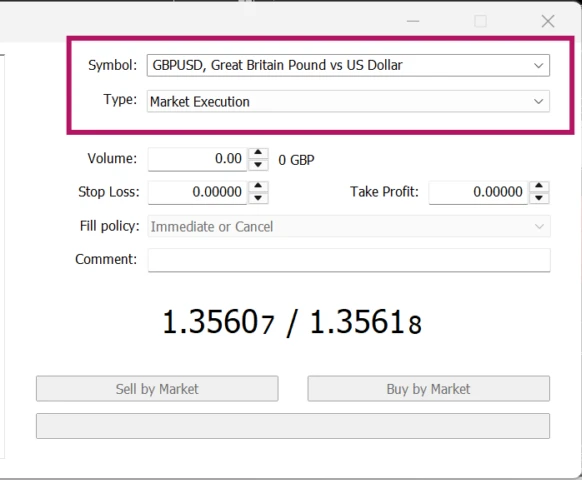
Specifically, prices may be aggregated from several liquidity providers, and the broker may pass risk on to third parties. The contract, however, is still between the trader and Pepperstone, so it is not a pure ECN in the narrow sense. This is not a flaw, but traders should understand who sits on the other side of their orders.
On execution quality, there is no dealer intervening in individual orders. Some Q1 2026 data put the fill rate at about 99.32%. Slippage can still occur during sharp moves, thin liquidity or major news. The absence of requotes only means an order is not sent back for a new price; it does not guarantee a fill at exactly the price on screen.
Two account types: Standard and Razor
Pepperstone focuses on two account types. Standard and Razor give access to the same markets but charge differently, and that difference decides which one is cheaper for a given trading style. Readers unfamiliar with pip value can start with lots, pips and pip value.
Standard: costs inside the spread
The Standard account charges no separate commission on forex. Instead, the broker's fee is added to the spread. For EUR/USD, May 2026 data showed a minimum spread of about 1 pip and an average of about 1.1 pips.
That allows a quick cost estimate per trade. One lot of EUR/USD has a pip value of roughly USD 10, so a 1.1-pip spread works out to about USD 11 per lot. Because there is only one number to watch, Standard suits beginners and occasional traders who want to know their cost without adding any other fee.
Razor: raw spread plus commission
Razor uses raw spreads from 0 pips and charges commission separately. The average EUR/USD spread on this account is currently about 0.1 pips. On MT4/MT5, commission is about USD 3.50 per lot per side, so a 1-lot trade opened and closed costs about USD 7.
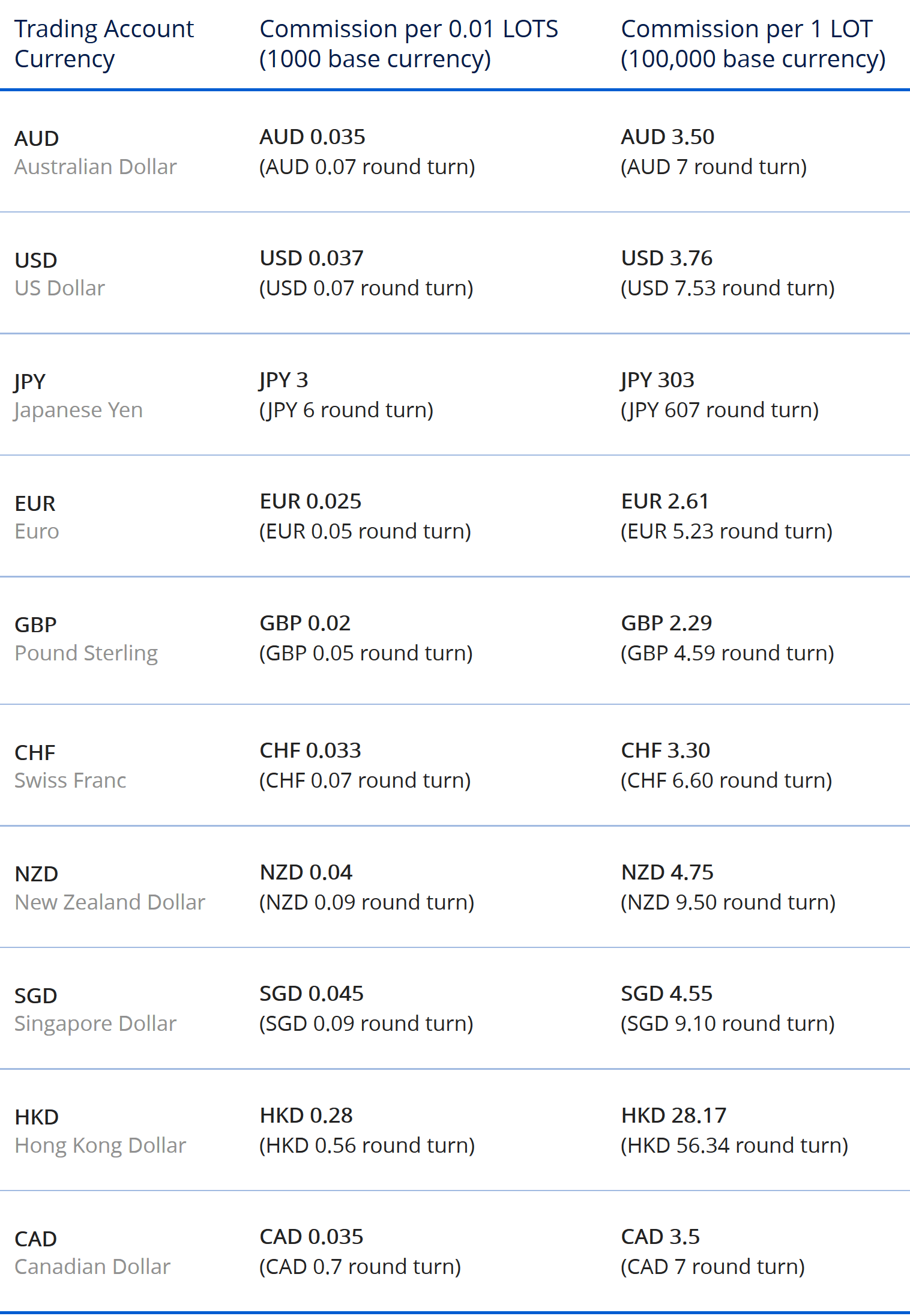
Adding the two parts gives the full cost of a trade. A 0.1-pip spread, about USD 1 on 1 lot, plus USD 7 in commission comes to roughly USD 8, before overnight financing (swap) and slippage. Compared with about USD 11 on Standard, the saving is only a few dollars per lot. However, scalpers, day traders, users of trading robots (EAs) and high-volume traders place many orders each month, so those few dollars add up. The comparison is covered in more depth in Standard vs Raw Spread accounts.
Trading costs in detail
Spreads and commission by symbol
Pepperstone's spreads are floating, which means they widen and narrow with liquidity and market conditions rather than staying fixed. The table below shows Razor spreads from May 2026 data:
| Pair | Razor spread (pips) |
|---|---|
| EUR/USD | ~0.1 |
| GBP/USD | ~0.2 |
| AUD/USD | ~0.1 |
| USD/JPY | ~0.3 |
| USD/CAD | ~0.3 |
On the Standard account, each pair is typically about 1 pip wider than on Razor, since the broker's fee is already built in. Razor commission varies by platform. Specifically, MT4/MT5 charges about USD 3.50 per lot per side, or USD 7 round turn. cTrader is slightly cheaper at about USD 6 per lot round turn depending on the account currency, while TradingView is usually around USD 7.
Gold has its own Razor pricing as well. For XAU/USD, the minimum spread is about 0.08 and the average about 0.12, plus commission of about USD 3.50 per lot per side. With fees separated this way, frequent gold traders can calculate costs more easily than with a spread that already includes the broker's markup. Both fee types are explained in spread vs commission.
Swap, inactivity and funding fees
Swap is the fee charged or credited for holding a position past the daily rollover, usually around 5 p.m. New York time. The rate depends on the instrument, the direction of the trade, market interest rates and timing. For that reason, traders planning to hold positions for several days should check swap rates in the platform first.
On its common account types, Pepperstone currently charges no inactivity fee. That helps traders who trade in bursts and sometimes leave the account idle.
Most deposits and withdrawals carry no direct fee from Pepperstone. Even so, international bank transfers may cost around USD 20 in bank or intermediary charges, depending on the method and region. The full monthly cost of running an account is broken down in monthly trading cost.
Leverage and margin thresholds
Leverage limits
Retail clients in the international flow currently get maximum leverage of about 1:200 on forex and gold. Leverage is the ratio between position size and margin, so 1:200 means USD 1 of margin can open a position worth USD 200.
Some asset classes have lower limits. Share CFDs are usually around 1:20, and BTC/USD is also around 1:20 because of its volatility. By contrast, clients classified as Pepperstone Professional can access much higher leverage: up to 1:1000 on forex and gold, up to 1:500 on some commodities and up to 1:400 on some indices.
Margin call and stop out
On MT4 and MT5, Pepperstone sets the margin call level at about 90% and the stop out level at 50%. Both thresholds are compared with the margin level, which is equity divided by used margin, multiplied by 100%.
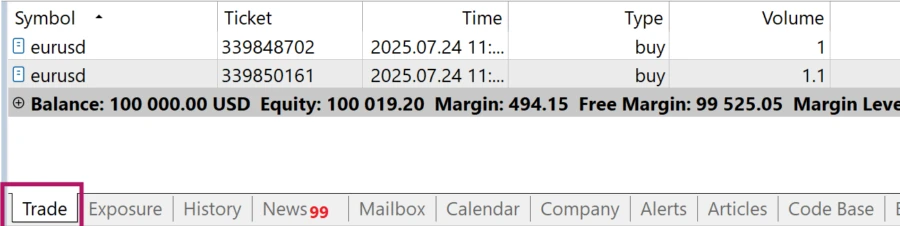
An example makes the 50% threshold concrete. If an account has USD 500 of equity while used margin is USD 1,000, the margin level is 500 divided by 1,000, times 100, or 50%. At that point the account has reached stop out, and the system may start closing positions to reduce the margin requirement.
On cTrader, the broker uses Smart Stop Out, also at 50%. Instead of closing an entire position at once, this mechanism can close only part of it, just enough to bring the margin level back to a safe range.
Product range
With more than 1,350 CFD instruments, Pepperstone lets one account follow and trade many markets at the same time. The product groups are:
- Forex: over 90 pairs, from majors such as EUR/USD, GBP/USD and USD/JPY to many crosses and exotics.
- Indices: over 20 markets, including NAS100, US30, US500, GER40, UK100 and AUS200.
- Commodities: about 40 instruments, including gold, silver, WTI and Brent crude, natural gas, copper and some agricultural products.
- Share CFDs: the largest group, with over 1,100 stocks from the US, UK, Australia, Germany and other markets, plus more than 90 ETF CFDs.
- Crypto CFDs: Bitcoin, Ethereum and others, with lower leverage than forex because prices are more volatile.
Trading platforms
The range of platforms is one of Pepperstone's clearest strengths. Each platform suits a different type of trader, so the choice depends on strategy and on the tools a trader already knows.
MetaTrader 4
MT4 suits forex traders, scalpers and anyone running EAs written in MQL4. Its library of indicators, robots and add-ons is very large. As a result, long-time MT4 users can move to Pepperstone and keep their entire setup unchanged.
MetaTrader 5
MT5 offers more timeframes, more order types and more asset classes than MT4. It therefore suits users of MQL5 EAs, or traders who want forex, gold, indices and shares in one piece of software.
cTrader
cTrader is seen as a major advantage for Pepperstone, since relatively few brokers offer it. It has a modern interface, a Depth of Market panel showing the volume waiting at each price level, many order types, algorithmic trading in C# and the cTrader Copy service. That gives scalpers and algorithmic traders who dislike MetaTrader a serious alternative.
TradingView
When connected to Pepperstone, TradingView lets traders analyse and place orders directly on the chart. Its strengths are the Pine Script language, a large library of community indicators, flexible chart layouts and the ability to watch many markets at once. It suits in-depth technical analysts and traders who already used TradingView before opening a Pepperstone account.
Pepperstone's own platform
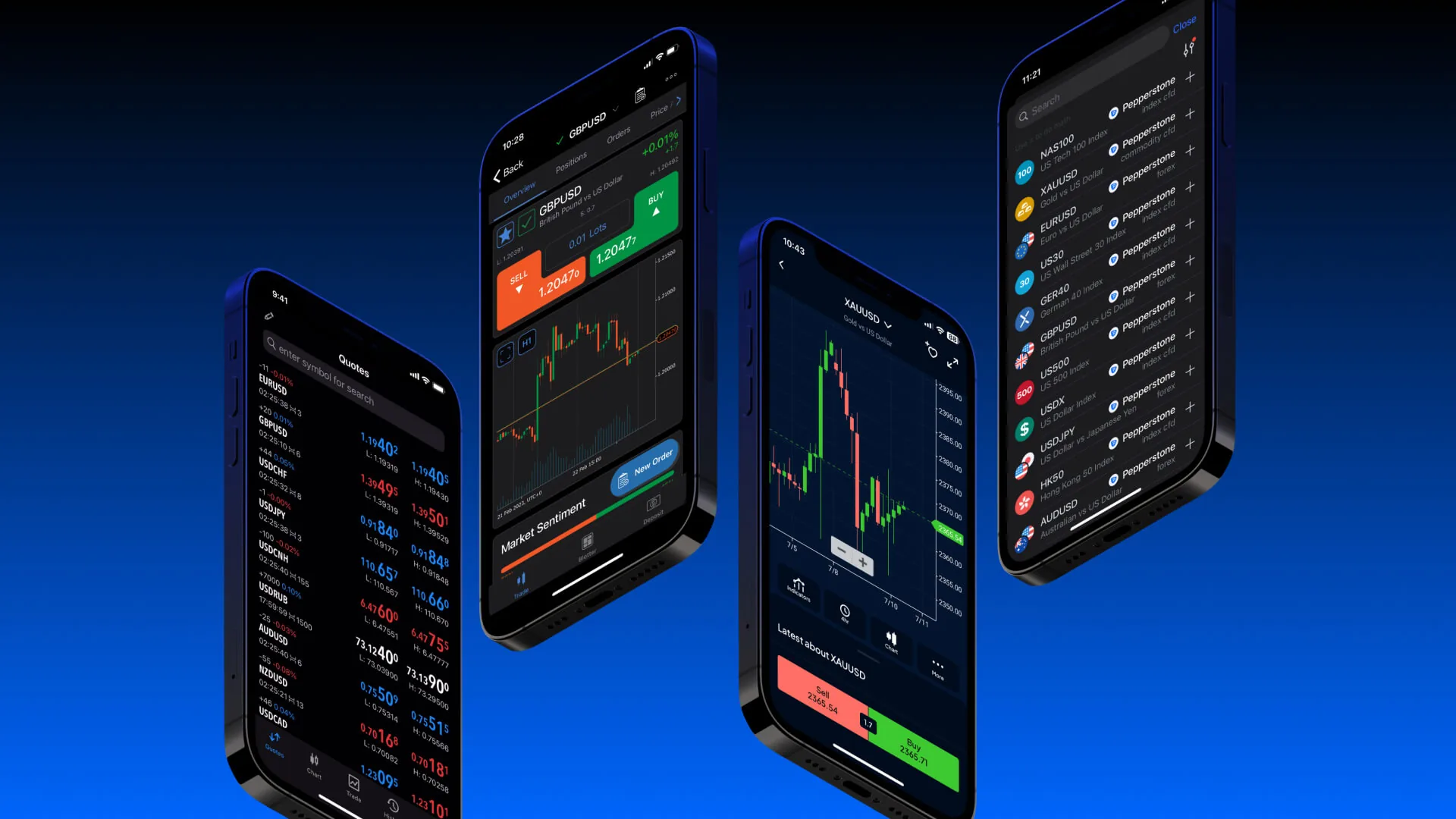
Besides third-party software, Pepperstone has its own platform for browser and mobile. It is designed for traders who want a clean interface and quick order management without installing MetaTrader or cTrader. Overall, the broker's advantage is that it does not force clients onto a single platform, so each trader can pick the tool that fits their strategy and habits.
Copy trading
Pepperstone supports several copy trading services, including cTrader Copy, CopyTrading by Pepperstone, Signal Start and MT4 Signals. A follower chooses a strategy provider, allocates part of their capital, and the system then copies that provider's trades into the account automatically.
The service saves traders the work of analysing and placing orders, but it does not remove risk. Followers still pay spread, commission and swap, and still bear slippage and the drawdown of the strategy they copy. When choosing a strategy provider, it therefore makes sense to look at maximum drawdown, track record length, leverage and risk management before looking at returns. For example, a strategy that gained 100% in a few months but once fell 70% can be far riskier than one that gained only 20–30% while keeping drawdown consistently low.
Deposits and withdrawals
The broker accepts bank transfers, Visa/Mastercard cards, e-wallets, crypto and some local payment methods depending on the region. Limits differ by channel, so traders should check the one they plan to use before funding. The main thresholds currently are:
- Some newer payment flows allow deposits from about USD 10.
- Some QR or local transfer gateways: minimum about USD 10, maximum about USD 800 per transaction, with no fee from Pepperstone.
- Some USDT gateways: minimum about USD 25, with a per-transaction limit of up to USD 500,000.
On withdrawals, Pepperstone may take up to about 3 business days to process a request. After that, timing depends on the bank or payment provider, and card withdrawals may take about 5 more business days. To avoid extra checks under anti-money-laundering (AML) and know-your-customer (KYC) rules, traders should deposit and withdraw using bank accounts or wallets in their own name.
Vietnamese-language support
Pepperstone has a dedicated support team for Vietnamese clients. Contact channels include the email address vietnamese@pepperstone.com and the hotline 1800 4929, with Vietnamese-language support from about 08:00 to 22:00, Monday to Friday. Outside those hours, clients can still use the English channels.
Support in Vietnamese is a clear advantage when problems come up with account verification, funding, platforms or trades. For money-related matters, email also keeps a clearer record than Live Chat alone.
Strengths and weaknesses
Strengths
Pepperstone's main strengths come down to four points:
- Wide platform choice: MT4, MT5, cTrader, TradingView and its own platform are all available, so the broker suits many trading styles.
- Competitive Razor pricing: EUR/USD averages about 0.1 pips with MT4/MT5 commission of USD 7 per lot round turn, a structure well suited to scalping, day trading and EAs.
- More than 1,350 CFDs: beyond forex, shares, ETFs, crypto, commodities and indices are all on one system.
- Long track record: operating since 2010, licensed in many countries and offering Vietnamese-language support.
Weaknesses
On the other hand, there are three points Vietnamese traders should weigh:
- The entity: Vietnamese clients' accounts usually sit with Pepperstone Markets Limited in the Bahamas, so they do not benefit directly from the FSCS or ICF schemes available to UK and EU clients.
- Commission is not the lowest: Razor's USD 7 per lot round turn is not the cheapest on the market, as some brokers' Raw accounts now charge about USD 6.
- Retail leverage: the 1:200 maximum is lower than offshore brokers offering 1:500 or 1:1000, which limits margin efficiency for some professional traders, though it also discourages oversized positions.
Who Pepperstone suits
Pepperstone suits scalpers, day traders and users of automated trading best. Each group benefits in a different way:
- Scalpers can use Razor's tight spreads, while EA traders can choose between MQL4, MQL5 and cTrader Automate.
- TradingView users can connect their account directly and trade from the chart.
- Multi-asset traders benefit from more than 1,350 CFDs, especially the fairly large selection of shares and ETFs.
- Beginners can still start with Standard or Pepperstone's own platform. For this group, however, understanding margin, leverage and the loss per lot size matters more than a low minimum deposit.
Verdict
Pepperstone is a forex and CFD broker with more than fifteen years in operation, licences in many countries and standout support for multiple platforms. Of its two account types, Razor is the most interesting for active traders. On EUR/USD, an average spread of about 0.1 pips plus USD 3.50 per side commission on MT4/MT5 gives a theoretical total cost of about USD 8 per lot, before swap and slippage.
The MT4, MT5, cTrader, TradingView and in-house platform line-up makes the broker a good fit for scalping, EAs, algorithmic trading and traders who want to choose their own tools. For Vietnamese clients, though, accounts currently sit mainly with Pepperstone Markets Limited, regulated by the SCB in the Bahamas under licence SIA-F217. Protection should therefore be judged by that entity, not by the FCA or ASIC licences of other companies in the group.
Taken as a whole, Pepperstone fits experienced traders, scalpers, EA users, cTrader or TradingView users and multi-asset CFD traders best. The three points to weigh before opening an account are Razor commission of about USD 7 per lot round turn, maximum retail leverage of 1:200 and the scope of protection under the Bahamas entity.
Sources
- Pepperstone, official website, https://pepperstone.com/ — where entities, account conditions, fees and support channels are published; traders should re-check conditions there, as they can change.
- Australian Securities and Investments Commission (ASIC), AFSL 414530, https://asic.gov.au/
- Financial Conduct Authority (FCA), Financial Services Register, number 684312, https://register.fca.org.uk/
- Cyprus Securities and Exchange Commission (CySEC), licence 388/20, https://www.cysec.gov.cy/
- Securities Commission of The Bahamas (SCB), licence SIA-F217, https://www.scb.gov.bs/