
Ivy Markets Risk Warning
Ivy Markets has no licence, an unknown web platform and is accused of blocking withdrawals, deleting trades and luring deposits via chat groups.
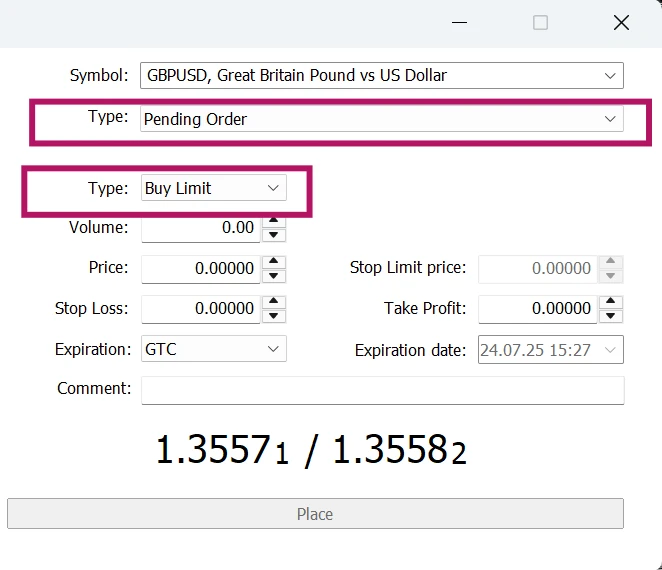
For newcomers to financial investing, picking the wrong broker can mean more than a losing trade: it can mean losing the entire deposit. Ivy Markets is a name increasingly mentioned in exactly that context. The broker has not risen to attention for good products or service, but because of a wave of accusations that it blocks withdrawals, deletes trades and seizes accounts. While holding no licence and using no standard trading platform, it actively courts investors through Telegram and other messaging-app groups.
The sections that follow explain how Ivy Markets presents itself, its legal status, the tactics most often reported, the cases users have described and whether its platform is genuine at all. The accusations covered are information compiled from user reports and scam-warning groups, not a legal finding by any authority.
How Ivy Markets presents itself
Ivy Markets calls itself an international broker offering investment services in forex, indices, shares and cryptocurrencies. On several websites and social media pages, it advertises that investors can "reach global markets in just a few simple steps". That pitch sounds impressive, especially to people who have never traded before.
A closer look, however, quickly reveals many irregularities. The broker does not state clearly which company operates it, has no verifiable office address and holds no licence from a reputable regulator such as the FCA, ASIC or CySEC. In addition, its website changes constantly, the domain lacks legal information and the terms are anything but transparent.
On top of that, Ivy Markets does not appear on any list of reputable international brokers. Many people therefore ask where the broker really comes from, and whether it exists as a business at all or is just a shell set up to collect money.
In the view of those making the complaints, Ivy Markets does not operate as a real broker. They see it as a scheme dressed up as financial investment, using the language of trading to draw people in and then keep their money. So when someone promotes a broker as "international, new but very trustworthy", the first question to ask is where the licence is. If no licence can be produced, traders should not take a single step further.
No clear legal standing
Anyone searching the Ivy Markets website will find no trustworthy operating licence, company address or registration number. In other words, every basic piece of legal information a lawful broker has to publish is missing.
Specifically, the broker is not authorised by any reputable financial authority, from the UK's FCA, Australia's ASIC and Cyprus's CySEC to the US NFA. These are the bodies that legitimate brokers usually rely on to show they are transparent and have mechanisms to protect clients. Without any of these licences, the broker offers traders nothing to check against.
As a result, Ivy Markets operates outside any supervisory framework. It has no compensation fund for clients and no independent audit, so when a dispute arises, depositors are left to fend for themselves or report the matter to the police.
In addition, the website keeps switching domains, has no clear terms of use and names no legal entity behind it. According to scam-warning groups, these are all familiar signs of a fraud scheme posing as an investment.
Ivy Markets therefore has no legal footing on which investors could place their trust. Depositing money with such a broker is like handing cash to a wallet with no owner. Traders do not know who holds the money, nobody is accountable, and when they want to withdraw, what they usually get back is silence. How to check a licence, along with other warning signs, is covered in six warning signs of a forex scam broker.
Common tactics
According to the reports, Ivy Markets does not collect money in a quick hit-and-run fashion. Instead, it is said to run a structured process of luring clients, moving from building trust to cutting off the way out. The tactics that the broker or its affiliated IBs reportedly use include:
- Pulling people into Telegram or other messaging-app groups with "experts" who constantly show off winning trades and steadily profitable accounts to build trust.
- Promising very high returns, sometimes 20–30% a week, a level no market can guarantee.
- Inviting clients to copy an expert's trades, where they only need to deposit and "leave the rest to the expert", though the usual outcome is a blown account.
- Offering deposit promotions with large bonuses, then attaching absurd conditions so the bonus can never be withdrawn.
- Blocking withdrawals on the grounds of a system error, then demanding a further deposit to "unlock" the withdrawal.
- Deleting trade history or locking the account when a client asks questions or demands their capital back.
These steps are described as running very smoothly, with a team of smooth-talking IBs doing the persuading. An IB (introducing broker) is someone who refers clients to a broker and earns a commission for it. At a legitimate broker, an IB only makes the referral and never needs a client's password or money, as explained in what is an IB in forex. Here, by contrast, anyone who lets their guard down can easily get caught in a loop of depositing, losing, depositing again, blowing the account and then getting no reply.
What users report
The warnings about Ivy Markets are not mere rumours. Many investors have publicly denounced the broker on social media and forums and sent complaints straight to groups that specialise in scam alerts. The following three cases come up most often:
- One person says they deposited 50 million dong through an IB on Telegram after being promised "20% profit in 5 days". After a few profitable test trades, they were asked to deposit more to "upgrade to VIP". Once they did, the account was locked and the IB vanished.
- Another person copied an "expert's" trades, watched the account rise steadily for a few days and then saw it wiped out overnight. When they asked for an investigation, the broker did not respond and the entire trade history had been erased.
- Several victims could not withdraw even after meeting the "conditions" the IB had described. When they contacted support, they were told to deposit more to unlock the withdrawal, and the account was then suspended.
These stories share one script. Participants are manipulated psychologically, led to deposit several times and in the end cannot recover their capital. The broker's silence or evasion of responsibility further convinces users that this is a disguised fraud scheme rather than a real trading venue. The pattern of IBs taking control of client accounts has been reported at another broker as well, as described in the KVB Prime risk warning.
A real platform or an in-house system
Reputable brokers usually rely on international platforms such as MetaTrader 4 (MT4) or MetaTrader 5 (MT5). This software is developed by a third party, keeps a clear record of trades and is hard for a broker to tamper with. According to the reports, Ivy Markets does not work this way.
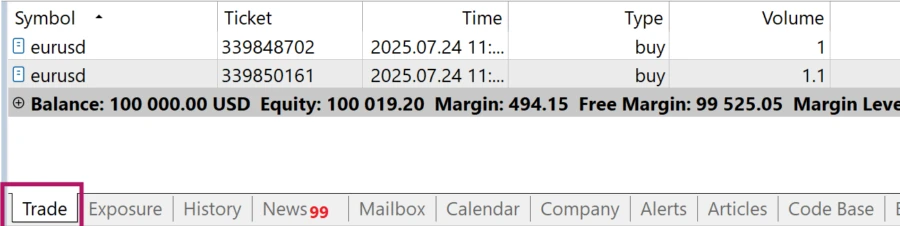
Instead of MT4 or MT5, the broker uses its own web platform of unknown origin, with a crude interface, slow performance and easy room for manipulation. Clients can only log in through an unfamiliar website that lacks security and offers no two-factor authentication. Moreover, the broker cannot show where client data is stored.
That raises a serious suspicion. The broker may have built an in-house trading system in which execution prices, charts and account balances are all in its own hands and can be edited at will.
Some victims even say the charts on the Ivy Markets platform look completely different from the real market. In their words, trades "win on TradingView but blow up on Ivy". If that is true, it is a sign the broker can create its own prices, manipulate trades and delete data whenever it likes.
For these reasons, the Ivy Markets platform cannot be trusted. What clients see may be nothing more than a simulation controlled from behind the scenes. Putting money into it is like sitting down at a card table where the dealer is also the opponent.
Conclusion
Taking every factor together, from the missing licence and murky platform to the familiar luring tactics and the many user reports, Ivy Markets shows serious signs of fraud. According to the reports, it is not a genuine trading venue but a disguised investment scheme. That scheme relies on IBs, "expert" chat groups and tempting promotions to draw in the trusting.
Once money has been deposited, getting it out is described as extremely difficult, if not impossible. The safest course is therefore not to deposit with Ivy Markets and to stay away from any invitation coming from chat groups that promise high returns. Traders who want to see other brokers that have been flagged can read forex scam brokers flagged in Vietnam, while beginners unsure of the risks of leverage should read forex leverage for beginners before choosing a broker.
Sources
- Reports by Vietnamese investors on social media, forums and scam-warning groups about Ivy Markets (compiled information, with no regulatory finding yet).
- FCA, Financial Services Register (where traders can check a licence themselves): https://register.fca.org.uk/
- ASIC, Professional Register Search (where traders can check a licence themselves): https://connectonline.asic.gov.au/
- DCtoptrade (screenshots): https://dctoptrade.vn/


