EBC Financial Group Review 2026
EBC Financial Group review: FCA and ASIC licences vs the offshore entity used for Vietnamese clients, Standard and Pro accounts, fees, leverage and funding.
Over the past few years, the number of international brokers targeting forex and CFD traders in Vietnam has grown quickly, and EBC Financial Group (EBC for short) is one of the names that comes up most often. The main reason is the group's set of licences, which includes two regulators held in very high regard across the financial industry: the UK's FCA and Australia's ASIC. Even so, the question "is EBC trustworthy" can only be answered once it is clear which entity actually holds a Vietnamese trader's account, because the group's strongest licence is not necessarily the one that applies to that client.
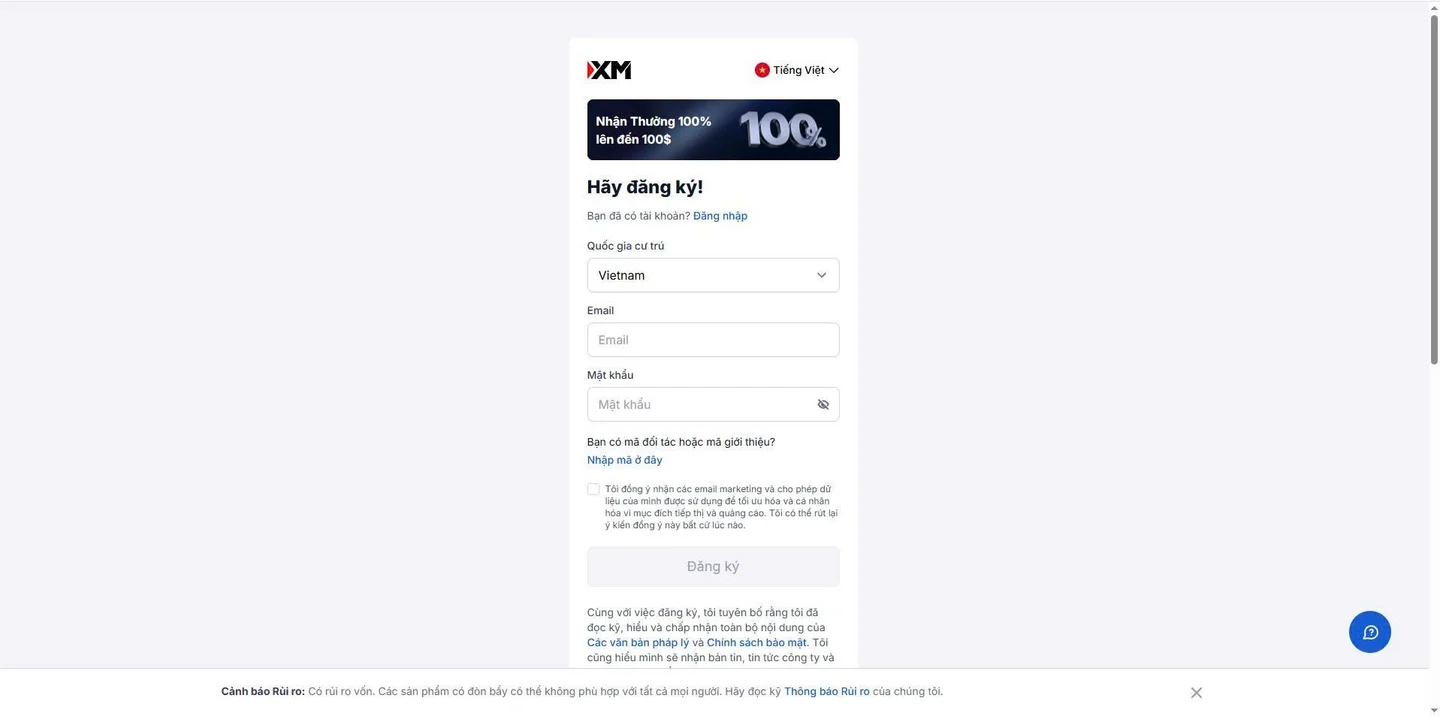
The sections that follow cover licences, entities, platforms, accounts, costs, funding and support, then compare EBC with Exness and IC Markets. Fees, spreads and leverage can change over time, so traders should check current conditions on EBC's official website before opening an account.
What EBC is
EBC Financial Group is a forex and CFD broker founded in 2020 and headquartered in London, United Kingdom. A CFD, or contract for difference, is a contract in which the trader never owns the underlying asset and simply gains or loses with its price movement. Besides London, the group has representative offices in Australia, the Cayman Islands, Mauritius, St. Vincent and the Grenadines, and Comoros.
According to the information it publishes, EBC serves clients in more than 50 countries. Some markets are excluded for legal reasons, namely the United States, Canada and Malaysia, so residents of those countries cannot open an account.
From the start, EBC has presented itself as an international broker that values transparency and professionalism. In its few years of operation it has collected several financial industry awards. Its main target audience is intermediate and professional traders rather than beginners alone.
EBC's licences and entities
EBC does not operate through a single company but through several entities, each holding a licence from the jurisdiction where it is registered. The licences the group currently lists are:
- FCA (UK), number 927552.
- ASIC (Australia), number 500991.
- CIMA (Cayman Islands), number 2038223.
- FSC (Mauritius), number GB24203273.
- Offshore registrations in St. Vincent and the Grenadines (SVG) and in Comoros.
That list gives EBC a deeper regulatory base than many brokers that rely on one licence in a loosely regulated jurisdiction. Still, each licence only protects clients who sign with the specific entity holding it.
Why the FCA and ASIC carry weight
The FCA (Financial Conduct Authority) and ASIC (Australian Securities and Investments Commission) are usually ranked among the strictest and most respected regulators in the world. A broker supervised by them must keep client money in separate accounts, apart from the company's operating funds. In addition, it must undergo regular audits and offer a compensation mechanism when disputes arise. For that reason, holding both licences is a clear plus for the group's reputation.
The entity Vietnamese traders usually join
In practice, most Vietnamese traders who open an EBC account do not sign with the UK or Australian entity. Instead, their accounts are usually placed under the offshore entities in SVG or Comoros, jurisdictions with much looser rules. Those jurisdictions offer no investor protection comparable to the FCA or ASIC.
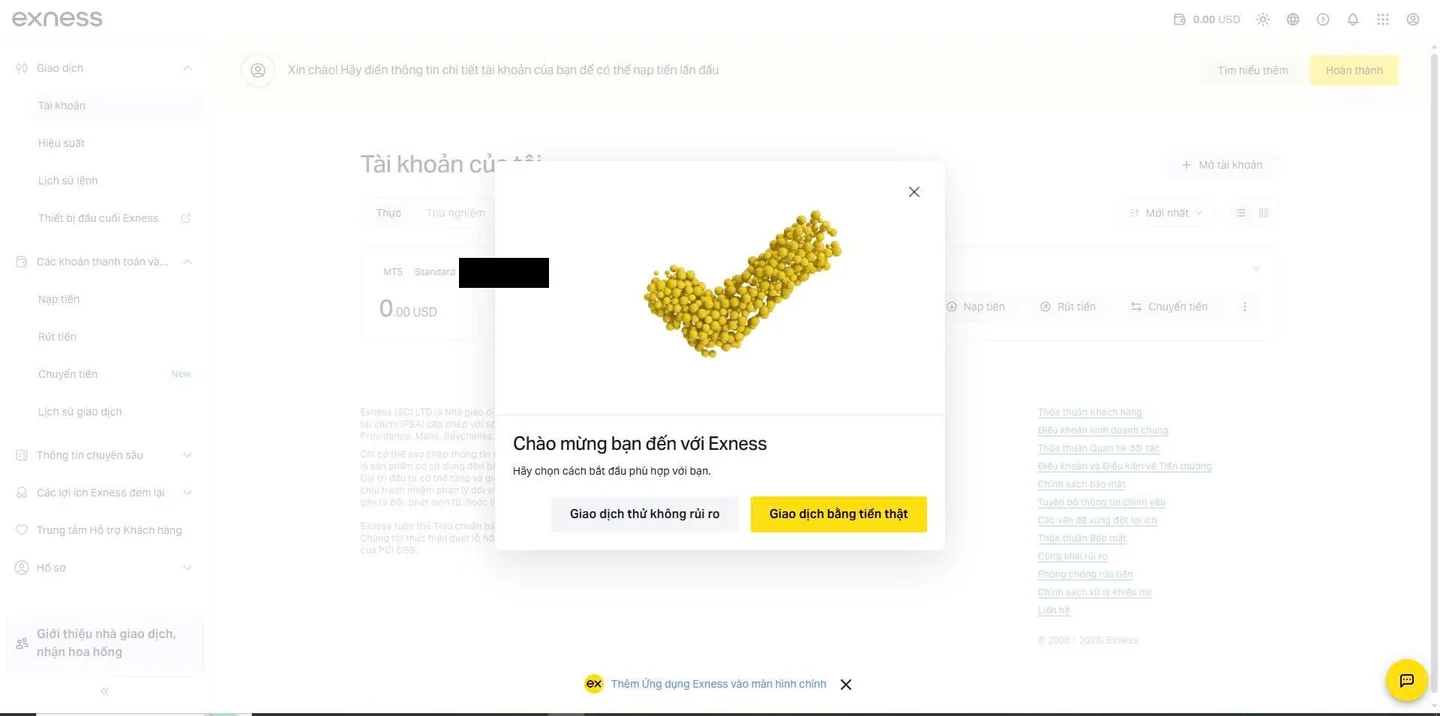
This means a Vietnamese account is less protected than one held by a European or Australian client, even under the same EBC brand, so traders should read the client agreement to find the name of their entity. How to spot a broker without real licences is covered in six warning signs of a forex scam broker.
Trading platforms
EBC uses the two most familiar platforms in the industry, MetaTrader 4 and MetaTrader 5.
MetaTrader 4 (MT4) is the most widely used forex platform and suits both newcomers and experienced traders. On MT4, traders can place orders manually, run automated trading robots (Expert Advisors, or EAs), install custom indicators and use many built-in technical analysis tools.
MetaTrader 5 (MT5) is MT4's successor with a more modern feature set. For example, MT5 can test strategies on historical data (backtesting) using several processing threads at once, so tests run faster. It can also trade instruments beyond forex, such as shares and ETFs, which is why professional traders often choose it.
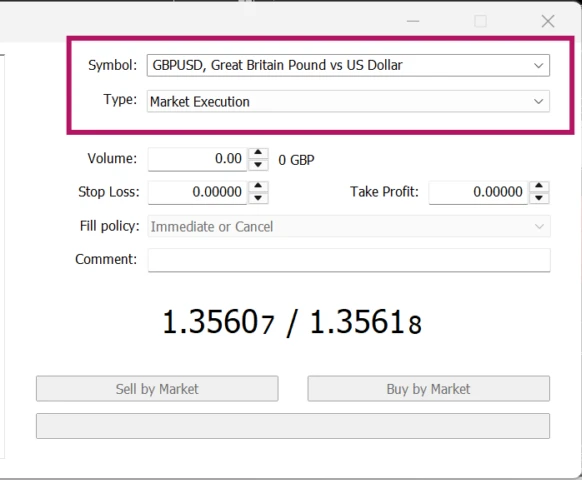
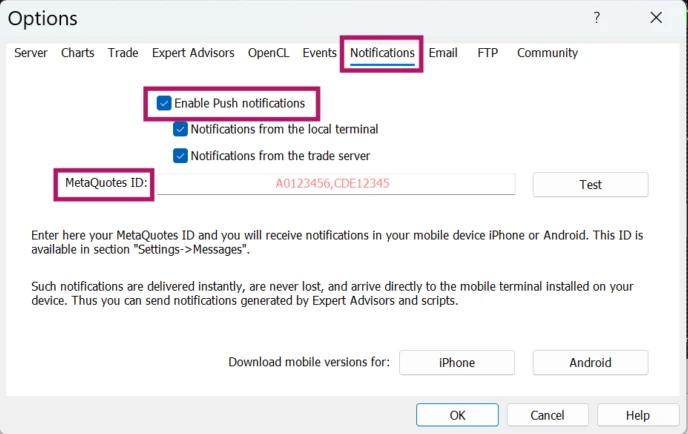
On execution quality, feedback from the international trading community suggests EBC's speed is fairly stable and slippage, meaning a fill at a different price from the one shown when the order was sent, is uncommon. Besides direct trading, the broker offers copy trading and PAMM accounts, where one manager trades pooled capital on behalf of several investors.
Tradable products
EBC's range covers five main asset groups, enough for most retail traders. In forex, the broker offers more than 35 currency pairs, including majors such as EUR/USD, minors and less liquid exotic pairs.
For stock indices, traders can access major global benchmarks such as the Dow Jones and S&P 500 in the US, the DAX in Germany and the Nikkei in Japan. The commodities group includes gold, silver, crude oil and gas, the instruments that attract the most interest from Vietnamese traders.
EBC also offers CFDs on many US shares and a number of international ETFs. However, the broker does not currently offer cryptocurrency products.
Standard and Professional accounts
EBC splits clients into two account groups, which differ mainly in minimum capital and in how fees are charged.
Standard for beginners
The Standard account requires a minimum deposit of around 100 to 200 USD. The average spread on EUR/USD starts at about 1.1 pips, where the spread is the gap between the buy and sell price. No commission is charged on this account.
Because the trading cost sits almost entirely in the spread, Standard is simple and easy to calculate, which suits beginners or anyone testing the service with a small balance. The trade-off is that its spreads are usually wider than those of the professional account. Readers who are not yet comfortable converting pips into money can start with lots, pips and pip value.
Professional or Raw for experienced traders
The second account type, called Professional or Raw, requires a minimum deposit of 5,000 USD. Spreads here are very tight and can fall to 0.0 pips. In return, the broker charges a commission of about 6 USD per lot for a round turn, meaning both opening and closing the trade.
This account is aimed at high-volume traders and scalpers who trade fast, short-term moves. The reason is that as volume grows, spread plus commission is usually noticeably lower than the all-in cost of Standard. A detailed comparison of the two pricing models is available in Standard vs Raw Spread accounts.
Spreads and fees
On the Standard account, a EUR/USD spread of about 1.1 pips is average for the market, neither cheap nor expensive. By contrast, the Professional or Raw account offers spreads from 0.0 pips, a level widely seen as very competitive.
Commission applies only to Professional or Raw, at about 6 USD per lot round turn. That is in line with leading ECN brokers, the group of brokers that route client orders to the interbank market and charge a separate fee. To see why spread and commission must be added together to get the real cost, traders can read spread vs commission.
Beyond those two items, EBC charges overnight financing (swap) on positions held past the daily rollover, and the swap rate varies by product. The broker does not publish an inactivity fee for dormant accounts. On funding, EBC itself basically charges nothing, although banks or payment intermediaries may still apply their own fees.
Leverage and risk management
Leverage is the ratio between the size of a position and the margin required to open it, so 1:500 means 1 USD of margin can control a position worth 500 USD. At EBC the maximum is 1:500, but the actual figure depends on the entity that holds the account.
Clients in the UK or Australia are usually capped much lower, commonly at 1:30 for retail clients, because of FCA and ASIC rules. On the other hand, international traders, especially those under offshore entities, can use higher leverage. Higher leverage means less margin is needed, but it also lets an account blow up faster when price moves the wrong way, as explained in forex leverage for beginners.
For the margin call level and the stop-out level at which positions are closed automatically, EBC applies thresholds similar to other large brokers. However, it does not publish these levels in detail across every page of its website. Traders should therefore ask directly or check the trading conditions documents before placing large trades.
Deposits and withdrawals
EBC accepts a range of payment channels, from traditional banking to e-wallets and cryptocurrency. The main methods are:
- Bank transfer.
- Visa or Mastercard cards.
- UnionPay.
- SticPay and Binance Pay e-wallets.
- Cryptocurrency through the 1BitPay gateway.
In terms of speed, deposits by e-wallet or card are processed almost instantly. Withdrawals usually take one to three business days. EBC does not charge deposit or withdrawal fees, but banks and payment gateways may charge their own, so the amount received can be slightly lower than the amount requested.
Customer support
EBC runs three official support channels on a 24/5 schedule, meaning they are closed at weekends. Specifically, the channels are:
- Live Chat on the ebc.com website.
- Email at support@ebcfin.com.
- An international phone line, +44 20 3376 9662.
According to many international traders, EBC's support team is professional and quick to respond, especially through Live Chat. On the other hand, these channels are not open all week, and the broker has no dedicated staff based in Vietnam.
Strengths and weaknesses
Strengths
EBC's main strengths can be grouped as follows:
- FCA and ASIC licences give the group a strong reputation.
- MT4 and MT5, two popular and stable platforms.
- A broad product range covering forex, indices, commodities, shares and ETFs.
- Competitive spreads and commission.
- Many funding methods, with no fees charged by the broker itself.
- Positive reviews from the international trading community.
Weaknesses
Vietnamese traders should also weigh several drawbacks:
- Their accounts are usually held by an offshore entity, so legal protection is weaker.
- No cryptocurrency products yet.
- Some reports of slow withdrawal processing.
- The Professional account requires a large balance, from 5,000 USD.
- No 24/7 customer support.
EBC vs Exness and IC Markets
The table compares EBC with two long-established brokers that have many Vietnamese clients, across the main criteria:
| Criterion | EBC Financial Group | Exness | IC Markets |
|---|---|---|---|
| Licences | FCA, ASIC, CIMA, FSC, offshore | FCA, CySEC, FSCA | ASIC, CySEC, FSA |
| Founded | 2020 | 2008 | 2007 |
| Max leverage | 1:500 | 1:2000 | 1:500 |
| Minimum deposit | 100–200 USD | 1 USD | 200 USD |
| Platforms | MT4, MT5 | MT4, MT5, WebTerminal | MT4, MT5, cTrader |
| Products | Forex, indices, commodities, shares, ETFs | Forex, indices, commodities, shares, crypto | Forex, indices, commodities, shares, crypto |
| Reputation | High but still young | Very high, long-standing | Very high, long-standing |
The table shows that EBC does not fall behind on licences, but it trails the other two in track record and lacks crypto. Exness has the lowest minimum deposit and the highest leverage, while IC Markets adds the cTrader platform. Traders who want a closer look at the other two can read the Exness review and the IC Markets review.
Frequently asked questions
Is EBC trustworthy?
EBC is generally regarded as reputable because the group holds FCA and ASIC licences, two of the strictest regulators. Even so, Vietnamese traders usually trade under an offshore entity, so the protection they actually get is lower than those two licences suggest.
Is EBC a scam?
There is currently no evidence that EBC defrauds its clients. Negative feedback mostly concerns slow withdrawals, or the fact that offshore accounts are less protected than accounts in the UK and Australia.
What is the minimum deposit at EBC?
It depends on the account type. The Standard account requires around 100 to 200 USD, while the Professional account requires 5,000 USD or more.
Are deposits and withdrawals fast?
Deposits are fairly quick, especially by e-wallet or card. Withdrawals usually take one to three business days, and some traders report that processing occasionally runs slower than that.
Is EBC suitable for beginners?
EBC is a reasonable choice for beginners who want to try it, since the Standard deposit is low and both MT4 and MT5 are familiar. However, beginners still need to understand the risk of the offshore entity before depositing a large sum.
Verdict
EBC Financial Group is a young international broker that has already made a strong impression thanks to licences that include the FCA and ASIC. However, Vietnamese traders are usually placed under an offshore entity, where protection is far weaker than for clients in the UK or Australia. EBC therefore suits traders who value a strong regulatory base and mainly trade forex, provided they have weighed the entity risk carefully before committing significant capital.
Sources
- EBC Financial Group, official website, https://www.ebc.com/ — where licences, account conditions and support channels are published; traders should double-check here because conditions can change.
- Financial Conduct Authority (FCA), Financial Services Register, number 927552, https://register.fca.org.uk/
- Australian Securities and Investments Commission (ASIC), licence number 500991, https://asic.gov.au/
- Cayman Islands Monetary Authority (CIMA), number 2038223, https://www.cima.ky/
- Financial Services Commission Mauritius (FSC), number GB24203273, https://www.fscmauritius.org/
- DCtoptrade (screenshots): https://dctoptrade.vn/